 English
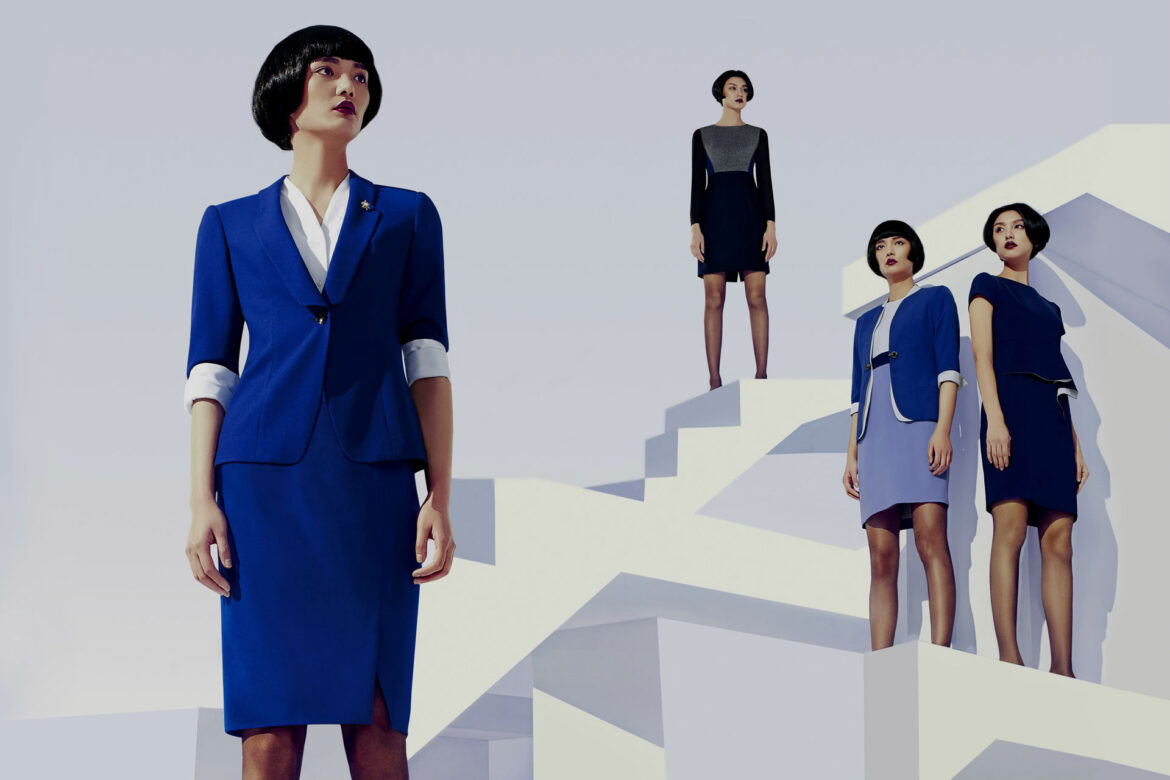


Find Out Corporate Uniform Design & Production Services
THE CORPORATE DESIGN EDIT | CREATIVE UNIFORM CONCEPTS, TEXTILE INNOVATION & PROFESSIONAL GARMENT MANUFACTURING
A corporate uniform should never be just another shirt with a company logo. Discover how Velcoor transforms your company’s identity into professionally designed clothing through creative concepts, intelligent fabric selection, personalised fitting and coordinated uniform production services.
What makes a company instantly recognisable?
Sometimes it is the logo. Sometimes it is the colour. But often, it is the people wearing the uniform.
Imagine entering a luxury hotel where the receptionists wear elegantly tailored jackets, the concierge team wears distinctive corporate suits, and the service staff wear coordinated uniforms in the same signature colour palette.
Every employee looks different because their responsibilities are different.
Yet every garment belongs to the same corporate identity.
That is the power of thoughtful Corporate Uniform Design.
A great uniform should do more than identify the company. It should communicate professionalism, represent brand values, support employee comfort and create a memorable impression.
However, transforming an idea into a finished uniform requires more than selecting a garment from a catalogue.
Behind every successful corporate uniform is a process involving design development, material selection, pattern making, sizing, sample production, branding and manufacturing.
At Velcoor, we bring together corporate uniform design and production services to help businesses create coordinated workplace clothing that reflects their identity.
From executive suits and office attire to hotel uniforms, restaurant apparel, industrial workwear and contemporary polo shirts, our approach focuses on developing the right clothing for the right purpose.
Because a professional uniform should be designed for your company, tailored around your employees and produced with attention to every detail.
01 | Corporate Uniform Design Begins with Understanding Your Brand
We Design Corporate Identity, Not Just Clothing
Every company has its own personality.
A financial institution may require a refined, formal appearance.
A technology company may prefer contemporary, minimalist uniforms.
A luxury hotel needs elegant clothing that complements its service environment.
An engineering company may prioritise durability, movement and technical practicality.
These businesses should not be expected to wear identical uniform designs.
A professional Corporate Uniform Design service begins by understanding the organisation before developing the garment.
What Should the Design Communicate?
We consider the brand’s visual character, corporate colours, employee responsibilities and working environment.
The design should answer several questions.
What impression should customers receive?
Should the uniforms feel formal, contemporary, approachable or luxurious?
Which departments require tailored garments?
Which employees need practical clothing that supports frequent movement?
And how can different uniform categories remain visually coordinated?
The answers help establish a clear design direction.
Beyond Ordinary Catalogue Uniforms
Ready-made clothing can be convenient, especially for straightforward uniform requirements.
However, businesses looking for a distinctive identity may prefer greater customisation.
Corporate Uniform Design creates opportunities to explore unique colour combinations, garment silhouettes, collars, pockets, buttons, contrast panels and other selected details.
The objective is to create an appearance that belongs to the company rather than simply copying conventional uniform designs.
THE DESIGN PHILOSOPHY
“A uniform should not only show your company logo. Its colour, cutting and details should already express your corporate identity.”
02 | Colour Matching: Creating One Recognisable Corporate Identity
The Secret Behind a Professionally Coordinated Team
Colour is one of the most important elements in Corporate Uniform Design.
But effective colour matching involves more than selecting the exact shade of the company logo.
A beautiful corporate colour may become overwhelming when applied to an entire garment.
A more sophisticated approach considers how primary colours, supporting shades and accents work together.
For example, a company using navy blue and light grey may create several coordinated uniforms.
Management can wear navy suits with light-grey shirts.
Reception staff may wear grey blouses with navy skirts or trousers.
Sales representatives can wear navy polo shirts with grey collar details.
Technical employees can wear practical dark uniforms with coordinated branding.
The garments are different, but the overall appearance remains consistent.
Modern Corporate Colour Combinations
Navy + Ice Blue + White
Professional, clean and suitable for corporate offices, management and customer service.
Charcoal + Teal + Silver Grey
Contemporary and distinctive for technology, engineering and professional services.
Forest Green + Beige + Cream
Natural and sophisticated for hospitality, wellness and lifestyle businesses.
Black + Burgundy + Champagne
A refined palette for luxury retail, formal hospitality and executive apparel.
Mustard + Navy + Charcoal
Creative and modern for businesses seeking a more expressive corporate identity.
At Velcoor, colour coordination is part of our uniform design approach.
Different garments can share a common colour theme while using different proportions and styling details.
THE COLOUR PRINCIPLE
“Corporate uniform design is not about making every employee look identical. It is about creating a recognisable connection between every department.”
03 | Uniform Design for Every Department
One Company, Different Responsibilities, One Brand
One of the most common corporate uniform mistakes is expecting all employees to wear the same garment.
A receptionist, technician, sales representative and warehouse employee have different responsibilities.
Their uniform requirements should reflect those differences.
Velcoor’s Corporate Uniform Design services can help businesses explore coordinated apparel across multiple departments.
Management — Executive and Professional
Tailored suits, blazers, formal shirts, trousers and waistcoats provide a refined corporate appearance.
The emphasis is on proportions, fabric drape and professional finishing.
Reception — Elegance and First Impressions
Reception uniforms may include tailored blouses, dresses, jackets, skirts and trousers.
The design should create a polished, welcoming appearance while allowing everyday comfort.
Sales — Contemporary and Comfortable
Corporate shirts, short-sleeved shirts and polo shirts can provide a smart but less formal appearance.
Fabric comfort, suitable colours and practical fit are important for employees who frequently meet customers.
Warehouse and Operations — Functionality First
Practical T-shirts, work shirts, trousers and selected workwear can be designed around comfort and movement.
Material durability and suitable garment construction become especially important.
Technical and Maintenance Teams — Designed to Work
Work jackets, functional shirts and work trousers may require additional attention to pockets, seams, fabric performance and mobility.
Where specialised protective clothing is required, applicable safety standards take priority over ordinary styling.
Hospitality and Food Service — A Complete Visual Experience
Hotels, restaurants and cafés may require different uniforms for concierge teams, waiters, chefs, housekeeping and management.
Each role needs an appropriate garment while maintaining the organisation’s identity.
ONE CORPORATE BRAND. MULTIPLE DEPARTMENTS. DIFFERENT DESIGNS. ONE PROFESSIONAL IMAGE.
04 | Fabric Selection: The Foundation of Good Uniform Production
The Right Fabric Can Change Everything
A beautiful uniform design can fail when the material is unsuitable.
Imagine a corporate shirt that looks excellent during the first fitting but wrinkles heavily after sitting for an hour.
Or a hotel uniform that loses its shape after repeated washing.
Perhaps an outdoor employee is given a thick fabric that feels uncomfortable in Malaysia’s tropical weather.
These problems demonstrate why fabric selection should be considered before finalising the garment.
At Velcoor, our uniform design services include fabric selection for different corporate and industry requirements.
Cotton and Cotton Blends
Suitable cotton materials offer a comfortable natural feel and are widely used in shirts, polo shirts and casual workplace clothing.
Cotton blends can provide different combinations of comfort, durability and maintenance characteristics.
Polyester-Cotton Fabrics
Selected polyester-cotton constructions are commonly considered for corporate shirts, hotel apparel and operational uniforms.
The composition and fabric finish influence wrinkle resistance, drying behaviour and durability.
Polyester-Viscose Fabrics
These materials can provide a smooth appearance and attractive drape for selected corporate shirts, trousers and formal uniforms.
Lightweight Functional Fabrics
Appropriate performance materials can offer moisture management, quick drying or stretch properties.
They may be suitable for employees who move frequently or work in warmer conditions.
Suiting Fabrics
For executive suits and blazers, suitable wool blends, polyester-viscose and other suiting materials provide different options for structure, drape and formality.
Durable Workwear Fabrics
Selected twills, technical polyester fabrics and other engineered textiles may be appropriate for uniforms exposed to repeated activity and wear.
Industrial Laundry Fabrics
For businesses requiring frequent commercial laundering or hot washing, material selection must reflect the actual temperature, detergent, drying and finishing requirements.
Suitability should be confirmed using relevant technical specifications and testing rather than assumed from fibre composition alone.
THE FABRIC PHILOSOPHY
“A beautiful uniform attracts attention. The right fabric determines whether employees remain comfortable wearing it every day.”
05 | Functional Uniform Fabrics for Malaysia’s Working Environment
Cooling, Stretch, Durability and Easy Maintenance
Modern Corporate Uniform Design increasingly considers the functional characteristics of the selected fabric.
For Malaysia’s hot and humid working environment, comfort is particularly important.
However, different employees require different material performance.
Cooling Fabrics
Selected lightweight and breathable constructions may support airflow and moisture management.
For outdoor workers, appropriate quick-drying and moisture-wicking materials can be useful.
The term cooling should be assessed according to actual fabric properties rather than marketing claims alone.
Wrinkle-Resistant Fabrics
Suitable polyester blends and specially finished fabrics may help garments maintain a presentable appearance with reduced ironing requirements.
These materials can be attractive for office staff, receptionists, sales teams and frequent travellers.
Stretchable Fabrics
Selected fabrics incorporating elastane or mechanical stretch structures can provide additional flexibility.
They may be suitable for fitted corporate shirts, trousers and garments used during frequent movement.
Durable Fabrics
Appropriate durable textiles can provide resistance to abrasion, tearing and repeated wear.
The ideal performance requirements depend on the workplace.
Easy-Care Fabrics
For large corporate teams, practical washing and ironing requirements can simplify everyday uniform management.
The right material should support the company’s maintenance procedures without unnecessarily increasing the workload of employees.
THE FUNCTIONAL FABRIC RULE
“The future of corporate uniform design is not simply fashionable clothing. It is fashionable clothing engineered for the way people work.”
06 | Personalised Sizing and Fitting: Every Employee Is Different
Why One Standard Pattern Cannot Fit Everybody Perfectly
A company may employ 20, 200 or 2,000 people.
Each individual has different body proportions.
Some employees have broad shoulders.
Others have fuller waistlines or different hip proportions.
Some require shorter sleeves, while others need additional garment length.
Even employees wearing the same size label may require different fitting allowances.
Professional Corporate Uniform Design should therefore include an appropriate sizing strategy.
Standard Uniform Sizes
For large teams, graded standard sizes can provide an efficient purchasing solution.
Actual garment measurements should be checked rather than relying exclusively on the size label.
Extended Size Requirements
Employees who fall outside common size ranges may require additional size options or special arrangements.
Availability depends on the garment category and chosen production specifications.
Individual Measurements
Tailored suits, blazers and selected formal uniforms may benefit from individual measurements.
The fitting process can consider shoulder slope, chest, waist, hips, garment length and preferred ease.
Digital Measurement Options
Supported mobile measurement and digital sizing workflows can provide additional convenience for selected uniform projects.
However, the suitability of digital measurements depends on the garment type, capture method and fitting requirements.
The Importance of Fit
A uniform should look professional while allowing reasonable movement.
A shirt that is excessively tight may restrict reaching.
Trousers with insufficient thigh or crotch ease may be uncomfortable during sitting.
A poorly proportioned blazer may lose its intended silhouette.
The correct fit combines appearance and function.
THE FITTING PRINCIPLE
“Corporate uniform design should create consistency in appearance without expecting every employee to have the same body.”
07 | From Design Concept to Pattern Making
Turning Creative Ideas into Real Garments
A uniform design may begin as a sketch, reference photograph or visual concept.
But an attractive illustration is only the beginning.
Before the garment can be produced, its design must be translated into practical manufacturing specifications.
Technical Design Development
Important details include collar shape, sleeve length, body proportions, pocket placement, closures, colour panels and finishing.
For formal garments, additional considerations may include shoulder structure, lining and internal construction.
Pattern Making
Patterns determine the shape and dimensions of each garment component before cutting.
They must account for body measurements, fabric behaviour and the intended silhouette.
Size Grading
For garments produced across several sizes, the approved pattern may be graded according to the required size specifications.
Proper grading is important because simply enlarging every part of a garment equally can create unsuitable proportions.
Fabric Behaviour
Different materials require different construction considerations.
A soft, fluid fabric may behave differently from a structured woven material.
Stretch fabrics and non-stretch fabrics may also require different ease allowances.
Production Documentation
Clear technical specifications help ensure that the final uniform reflects the approved design.
This is particularly important for projects involving multiple departments or repeat orders.
THE PRODUCTION NOTE
“A beautiful sketch becomes a successful uniform only when its design can be translated accurately into fabric, patterns and workmanship.”
08 | Uniform Sampling: Why the First Garment Matters
Design Approval Before Full Production
One of the most important stages of custom uniform production is sample evaluation.
A garment can look excellent in a digital illustration but behave differently when made from actual fabric.
The collar may appear larger than expected.
The pocket may sit too low.
A colour combination may look different under natural lighting.
The selected fabric may require more ease through the shoulders or sleeves.
A physical sample helps identify these issues before larger quantities are produced.
What Should Be Evaluated?
Overall Appearance
Does the garment reflect the approved corporate identity?
Fit and Movement
Can the wearer sit, walk and perform normal activities comfortably?
Fabric Suitability
Does the material have the desired texture, drape and structure?
Colour Matching
Are the primary and accent colours appropriately coordinated?
Branding Position
Are the logo size, embroidery location and printing specifications correct?
Construction Quality
Are the seams, collars, pockets and closures finished appropriately?
The Importance of Sample Approval
For large orders, small design mistakes can become costly when repeated across hundreds of garments.
A structured sample review can reduce avoidable production errors.
The exact number of samples, revisions and fitting arrangements should be agreed before production begins.
THE SAMPLING RULE
“It is better to improve one sample than repeat the same mistake across an entire uniform order.”
09 | Corporate Uniform Production: From Cutting to Finished Clothing
Where Design Becomes Manufacturing
After the design, fabric, sizing and samples are approved, the project moves into production.
A professional uniform production process requires coordination between technical specifications, materials, cutting, sewing, finishing and quality control.
Fabric Preparation
The selected material must be prepared according to its construction and production requirements.
Fabric inspection may be necessary to identify defects, shade variations or other issues before cutting.
Cutting
Garment components are cut according to the approved patterns and size distribution.
Accurate cutting contributes to consistent measurements and garment proportions.
Sewing and Assembly
Individual components are assembled into shirts, jackets, trousers, dresses or other garments.
The sewing method depends on the fabric and design.
Branding Applications
Embroidery, printing and selected labels are applied according to the approved specifications and appropriate production sequence.
Pressing and Finishing
Garments may require pressing, shaping, thread trimming and other finishing operations.
Quality Inspection
Finished clothing should be evaluated for relevant measurements, workmanship, material defects and compliance with approved specifications.
Packing and Delivery
Garments are organised according to order requirements before delivery.
For corporate programmes, packing by department, size or employee reference may simplify distribution.
Velcoor’s Corporate Uniform Design and production services aim to connect these stages into a more organised purchasing experience.
The exact manufacturing arrangement, lead time and production scope depend on the confirmed project.
10 | Corporate Branding: Embroidery, Printing, Labels and More
Your Logo Should Become Part of the Garment
A company uniform is incomplete without careful consideration of branding.
However, simply making the logo larger does not necessarily produce a better corporate appearance.
In many cases, subtle and thoughtfully positioned branding creates a more refined impression.
Embroidery
Embroidery provides a textured appearance and can complement shirts, polo shirts, blazers and selected workwear.
Thread colour, stitch density and logo placement should be compatible with the garment.
Screen Printing
Screen printing can be suitable for selected T-shirts, polos and promotional uniforms, depending on the design and fabric.
Digital Printing and Transfers
Suitable digital printing and heat-transfer methods can accommodate different artwork styles and production requirements.
Silicone Labels and Dimensional Branding
Selected silicone or dimensional logo applications can introduce a contemporary appearance.
These must be compatible with the material and intended laundering process.
Woven and Personalised Labels
Custom labels can reinforce corporate identity and assist garment identification.
For larger uniform programmes, appropriate identification systems may also support employee distribution and garment record management.
QR-Based Garment Identification
Where included in a project, QR labels may be used to connect garments with approved internal reference information such as uniform specifications or sizing records.
Any personal measurement information should be stored and accessed with suitable privacy safeguards.
THE BRANDING PRINCIPLE
“A great corporate uniform is not simply a garment carrying a logo. Every design detail should belong to the same corporate identity.”
11 | Ready-Made Uniforms vs Custom-Made Uniform Production
Which Solution Is Better for Your Company?
Not every corporate project requires fully customised garment manufacturing.
For some organisations, ready-made uniforms offer an efficient solution.
For others, a custom-made programme provides more design control.
| Consideration | Ready-made uniforms | Custom-made uniforms |
|---|---|---|
| Garment design | Existing styles | Selected personalised designs |
| Fabric selection | Usually limited to available collections | Broader possibilities depending on project |
| Brand identity | Logo and selected customisation | More integrated design options |
| Size options | Existing size range | Graded or selected individual specifications |
| Sampling | May not require new development | Often useful for custom designs |
| Production planning | Typically more straightforward | Requires design and specification approval |
| Best suited for | Standard staff clothing and straightforward orders | Distinctive corporate collections and specialised requirements |
A Combined Uniform Strategy
Some companies may benefit from combining both approaches.
Management can wear tailored corporate suits.
Reception staff can use customised blouses or dresses.
Sales teams may wear coordinated ready-made polo shirts with personalised branding.
Operations personnel can use practical standard workwear in approved corporate colours.
This creates a balanced uniform programme without requiring every garment to be manufactured using the same method.
THE PROCUREMENT INSIGHT
“Smart corporate uniform design is not about customising everything. It is about knowing where customisation creates the greatest value.”
12 | Consistent Uniform Production for Growing Companies
Your Uniform Programme Should Grow with Your Business
Uniform purchasing rarely ends with one order.
New employees join.
Existing garments need replacement.
Departments expand.
Additional branches open.
And staff measurements or job responsibilities may change.
Without proper records, repeat orders can become complicated.
The originally selected fabric may be difficult to identify.
A replacement logo may be produced in a different size.
A shirt collar may change between batches.
These inconsistencies can gradually weaken the corporate identity.
Maintaining an Approved Uniform Specification
A useful uniform production record should include:
Approved garment designs and pattern references.
Fabric type, composition and colour specifications.
Size charts and garment measurement details.
Logo artwork and branding placement.
Buttons, trims and selected finishing requirements.
Relevant care and washing instructions.
Previous production and order references.
For companies managing many employees, organised size records can make purchasing more efficient.
At Velcoor, repeat-order support and retention of relevant uniform specifications are part of our published service approach.
Future material availability and exact design reproduction should still be confirmed when reordering.
THE LONG-TERM UNIFORM PRINCIPLE
“A professional uniform system should not only look consistent today. It should remain manageable as the company grows.”
13 | Why Businesses Choose Velcoor for Corporate Uniform Design
Design, Function and Manufacturing in One Direction
At Velcoor, we understand that corporate uniforms are more than work clothing.
They form part of the company’s professional identity.
Our published services include corporate uniform design, colour matching, fabric selection, measurement and fitting, custom branding, ready-made apparel options and coordinated garment production.
Creative Corporate Uniform Design
We help organisations explore garment concepts that reflect their brand and working environment.
Professional Colour Coordination
Our approach considers how different garments can share a recognisable colour palette while remaining appropriate for each department.
Extensive Fabric Choices
Businesses can explore different textiles according to comfort, maintenance, durability, styling and intended use.
Tailored and Ready-Made Options
From formal executive attire to practical staff clothing, suitable custom or ready-made solutions can be considered according to the project.
Measurement and Fitting
Appropriate sizing and fitting arrangements help accommodate different employee body proportions.
Custom Branding
Embroidery, printing and selected label applications can help integrate the company’s identity into the garment.
Production Coordination
Approved designs and technical specifications guide the manufacturing process, from garment development to finishing.
Repeat Orders
Maintaining garment specifications supports future purchases and ongoing corporate uniform programmes.
For organisations in Kuala Lumpur, Petaling Jaya, Selangor and throughout Malaysia, Velcoor offers a coordinated approach to Corporate Uniform Design and custom clothing requirements.
VELCOOR — WHERE CORPORATE UNIFORM DESIGN MEETS PROFESSIONAL PRODUCTION.
Explore our Corporate Uniform Design Collection and Custom Corporate Uniform Services.
14 | Before You Order: The Corporate Uniform Design Checklist
Ten Questions Every HR and Procurement Team Should Ask
1. Does the uniform reflect the company identity?
Confirm the colour palette, visual style and branding direction.
2. Is the design suitable for each department?
Management, reception, sales and operations may require different garments.
3. Is the fabric appropriate for daily use?
Consider breathability, durability, maintenance and workplace requirements.
4. Are the sizes suitable for employees?
Review the actual garment measurements and necessary sizing arrangements.
5. Is the construction appropriate?
The garment should balance appearance with comfort and movement.
6. Has the company approved a physical sample?
Where sampling is required, evaluate fit, colour and workmanship before bulk production.
7. Are branding details confirmed?
Review the logo artwork, colours, placement and application method.
8. Is the quotation transparent?
Confirm the garments, fabric, quantities, customisation, sampling and possible additional charges.
9. Is the production timeline realistic?
Allow sufficient time for design approval, materials, sampling, manufacturing and delivery.
10. Can the uniforms be reordered?
Maintain approved garment references and clarify future material availability.
A clear uniform specification helps businesses make better purchasing decisions and reduces avoidable misunderstandings during production.
The Final Edit | Corporate Uniform Design Is Where Brand Identity Becomes Wearable
A company can spend years developing its brand identity.
The logo is carefully designed.
The corporate colours are selected.
The office is decorated to reflect the organisation’s personality.
Marketing materials are developed to communicate the company’s professionalism.
Yet the employees who represent the company every day may still be wearing ordinary uniforms with little connection to that identity.
This is why Corporate Uniform Design deserves a more thoughtful approach.
A professional uniform should bring together visual design, fabric performance, individual fitting and reliable production.
Its colour should represent the brand.
Its cutting should complement the wearer.
Its fabric should support the working environment.
Its workmanship should reflect the intended quality.
And its production specifications should help maintain consistency as the organisation grows.
At Velcoor, we believe corporate uniform design is not simply the process of making shirts, jackets or trousers.
It is the process of translating a company’s identity into clothing that employees can wear with confidence.
Because your employees are the people behind your brand. Their uniforms should represent that importance.
Velcoor — Designed for Your Identity. Tailored for Your People. Produced for Your Business.
THE CORPORATE DESIGN EDIT | One Brand. Different Departments. One Complete Uniform Solution.
Frequently Asked Questions About Corporate Uniform Design
What is Corporate Uniform Design?
Corporate Uniform Design is the process of developing workplace clothing that reflects a company’s brand identity, employee roles, garment requirements, fabric preferences and visual standards.
Does Velcoor provide Corporate Uniform Design in Malaysia?
Yes. Velcoor publishes corporate uniform design, colour matching, tailored garment, fabric selection and custom uniform services for businesses in Malaysia.
What is included in a Corporate Uniform Design service?
Depending on the project, services may include consultation, garment design, colour coordination, fabric selection, sizing, branding development, sample review and production arrangements.
Can different departments have different uniform designs?
Yes. Management, reception, sales, operations and technical teams can wear different garments while maintaining a coordinated corporate appearance.
What fabrics are best for corporate uniforms in Malaysia?
Suitable cotton blends, polyester-cotton fabrics, polyester-viscose, lightweight suiting fabrics and selected performance textiles may be considered. The choice depends on the garment and working conditions.
Does Velcoor offer ready-made and custom-made uniforms?
Velcoor’s published services include ready-made options and custom-made or tailored corporate clothing, depending on customer requirements.
Can uniforms include company logos and personalised labels?
Yes. Suitable garments can incorporate embroidery, printing and selected branding or label applications according to the project specifications.
Can Velcoor design corporate suits and blazers?
Yes. Corporate suits, blazers, trousers, shirts and selected formal garments are part of Velcoor’s published tailoring services.
How long does custom uniform production take?
Production time depends on garment complexity, quantity, fabric availability, sampling and approved specifications. A project-specific timeline should be confirmed during the quotation process.
Can companies reorder the same uniform design?
Velcoor supports repeat-order enquiries and maintains relevant design, fabric and sizing records. Exact reproduction is subject to material availability and confirmed specifications.
How can we request a Corporate Uniform Design quotation?
Prepare your preferred garment types, number of employees, design references, company logo, fabric requirements, size distribution and intended delivery date.
Contact Velcoor through the uniform consultation page to discuss your project.