 English
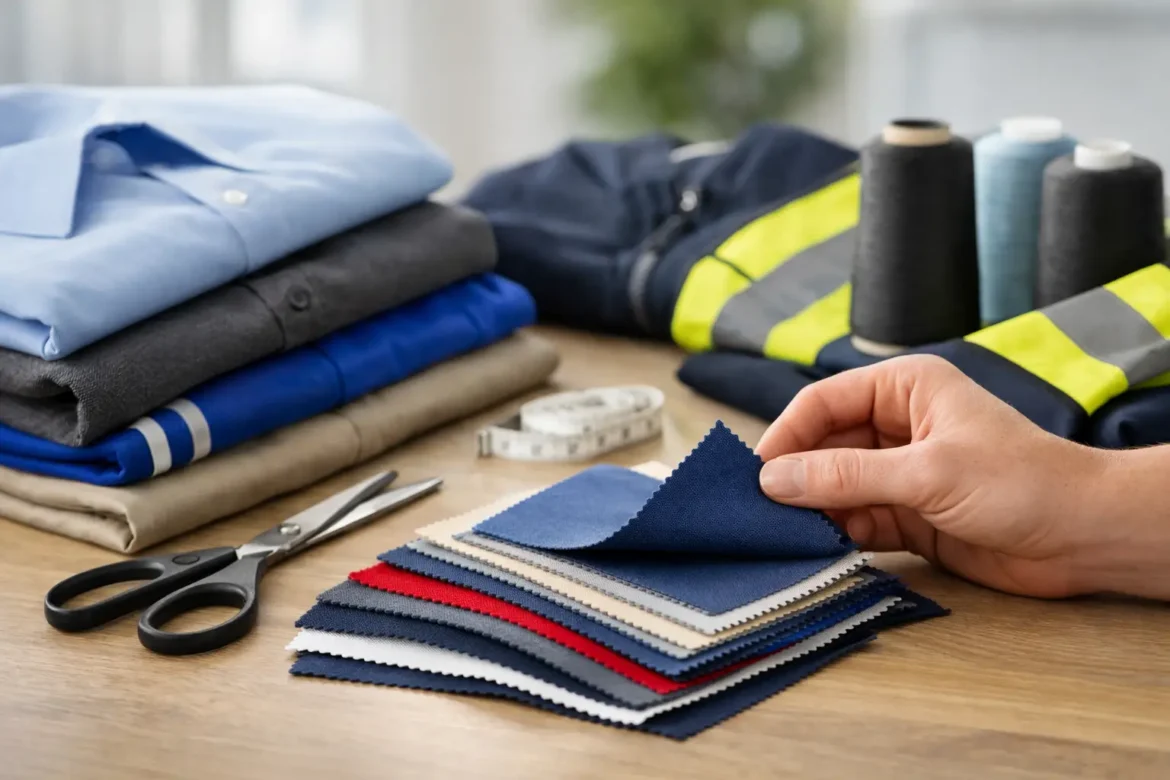
New Uniform Design and Uniform Fabrics Exhibits: Discover the Future of Functional Corporate Wear
THE FABRIC INNOVATION | ADVANCED TEXTILES, MODERN UNIFORM DESIGN & PERFORMANCE MATERIALS
A beautiful uniform makes the first impression. An intelligent fabric determines how well that impression lasts. Explore a new direction in corporate fashion with Velcoor, where contemporary uniform designs meet functional textiles engineered for comfort, durability, repeated washing and the demanding realities of modern workplaces.
Imagine a hotel uniform that maintains its professional appearance after repeated commercial laundering.
A corporate shirt that remains presentable with minimal ironing.
A technician’s uniform that stretches naturally when the wearer bends, reaches or moves.
Or a lightweight staff shirt designed with Malaysia’s hot and humid climate in mind.
These are not simply questions of fashion.
They are questions of fabric engineering.
For many years, companies have selected uniforms primarily according to colour, design and price. Fabric is often treated as a secondary decision, something to be chosen after the garment style has already been approved.
But a beautiful uniform made from the wrong material can become an expensive mistake.
A fabric that wrinkles easily may require excessive ironing. A textile that cannot tolerate the required washing process may shrink, fade or lose its structure. A heavy uniform may become uncomfortable during long working hours, while a poorly designed stretch garment may gradually lose its shape.
Modern uniform design requires a different approach.
At Velcoor, we believe the future of corporate apparel lies in combining creative design with intelligent uniform fabric selection.
Our New Uniform Design and Uniform Fabrics Exhibits concept brings together the world of contemporary corporate fashion and functional textile development.
From wrinkle-resistant corporate shirts to durable industrial workwear, cooling fabrics and advanced stretch materials, the objective is to help businesses understand what their uniforms can achieve before choosing a garment.
Because a uniform should not only look professional when it is new.
It should continue to support employees and represent the company throughout its working life.
01 | The New Generation of Uniform Fabrics
From Ordinary Clothing to Performance-Driven Workwear
A company uniform is often worn more frequently than ordinary clothing.
Employees may wear the same design five or six days a week, sometimes through long shifts and demanding working conditions.
The garment must accommodate repeated movement, laundering, temperature changes and everyday contact with equipment or surfaces.
This is why functional uniform fabrics deserve serious attention.
Modern textile development offers materials designed to address particular performance requirements.
Some fabrics provide improved wrinkle recovery.
Others are engineered for commercial laundering, greater abrasion resistance, moisture management or mechanical stretch.
However, no single fabric automatically performs best in every category.
A comfortable summer shirt may not tolerate aggressive industrial washing.
A heavy-duty workwear fabric may provide excellent durability but feel too substantial for an outdoor sales team.
A highly elastic textile may offer freedom of movement but require more careful laundering.
The most important step is matching the material to the job.
What Should a Modern Uniform Fabric Deliver?
We evaluate uniform fabric options across six practical characteristics:
Comfort: Suitable breathability, softness and wearing ease.
Durability: Resistance to relevant wear, abrasion and repeated use.
Wrinkle Resistance: Ability to retain a presentable appearance with manageable maintenance.
Washability: Compatibility with the organisation’s required laundering conditions.
Flexibility: Appropriate stretch or freedom of movement.
Brand Consistency: Suitable colour stability, fabric appearance and compatibility with custom branding.
The best fabric is not necessarily the one with the longest list of advertised features.
It is the one that performs reliably in the working conditions for which it was selected.
THE FABRIC PRINCIPLE
“A great uniform begins with design. An outstanding uniform begins with understanding what the fabric needs to do.”
02 | Explore the Fabric Library: Understanding Different Uniform Materials
The Right Fibre Is the Foundation of Better Workwear
Different textile fibres offer different characteristics.
Understanding their strengths and limitations helps businesses make more informed purchasing decisions.
100% Cotton — Natural Comfort
Cotton remains a popular choice for corporate shirts, T-shirts and selected hospitality uniforms.
Suitable cotton fabrics can offer a comfortable feel, good moisture absorption and a familiar natural texture.
However, cotton can crease noticeably and may dry more slowly than some synthetic alternatives.
Shrinkage and wash performance depend on the fabric construction and finishing.
Best suited for: Office shirts, casual uniforms, corporate T-shirts and selected hospitality garments.
Polyester — Practical Everyday Performance
Polyester is widely used in uniform textiles because it can offer durability, dimensional stability, quick-drying characteristics and wrinkle resistance.
Its performance depends on fibre type, yarn construction, weave and finishing.
A dense polyester fabric may feel less breathable than a lighter, better-ventilated construction.
Best suited for: Corporate uniforms, event clothing, selected workwear and easy-care apparel.
Polyester-Cotton Blends — Versatile Workwear
Polyester-cotton fabrics combine characteristics of both fibres.
Common formulations include 65% polyester with 35% cotton and other ratios selected according to the intended product.
Polyester can contribute shape retention and durability, while cotton influences moisture absorption and hand feel.
Suitable constructions may be developed for more demanding laundering requirements.
Best suited for: Hotel uniforms, housekeeping apparel, service shirts, industrial uniforms and operational workwear.
Polyester-Viscose Blends — Refined Corporate Appearance
Polyester-viscose fabrics are often used for corporate shirts, trousers and selected formal attire.
Viscose can contribute softness and drape, while polyester may improve resilience and maintenance characteristics.
The fabric’s washability and dimensional stability must be considered carefully.
Best suited for: Office uniforms, corporate shirts, trousers and selected customer-facing apparel.
Linen and Linen Blends — Relaxed Tropical Fashion
Linen provides a distinctive natural texture and can be attractive for warm-weather clothing.
It is especially appealing for casual shirts, overshirts and hospitality uniforms with a relaxed fashion direction.
However, linen creases easily and should not be assumed suitable for intensive commercial laundering.
Best suited for: Boutique hospitality, premium casual uniforms and contemporary lifestyle brands.
Nylon and Polyester-Nylon Blends — Technical Durability
Nylon, also known as polyamide, is used in selected technical textiles where strength and abrasion performance are important.
Depending on construction, nylon-containing fabrics can offer flexibility, light weight and practical resistance to everyday wear.
Best suited for: Selected work jackets, technical uniforms and functional outerwear.
Stretch Blends — Comfort Through Movement
Selected cotton, polyester or other woven fabrics can incorporate elastane or alternative stretch technologies.
These materials can support a more comfortable fit, particularly in trousers, fitted shirts and garments worn during physically active work.
Stretch performance and resistance to repeated heat exposure depend on the fibre and fabric construction.
Best suited for: Corporate trousers, hospitality uniforms, technical apparel and movement-oriented staff clothing.
03 | Hot-Wash Uniform Fabrics: Designed for Demanding Laundry Conditions
When Ordinary Fabric Is Not Enough
One of the most important considerations in hospitality, healthcare and industrial workwear is how uniforms are washed.
A normal office shirt may be washed gently at home.
A hotel or institutional uniform may undergo frequent commercial laundering involving controlled temperatures, detergents, mechanical agitation and specialised drying processes.
These conditions can place considerable stress on the garment.
A fabric that performs well during gentle washing may not retain the same appearance after repeated high-temperature treatment.
Why Do Some Businesses Require Hot Washing?
Hotels and hospitality businesses may require more intensive cleaning because of frequent garment use and operational hygiene procedures.
Some healthcare environments also require specified laundering processes according to their infection-prevention policies.
Industrial employers may need textiles that can tolerate repeated commercial cleaning of heavily used garments.
The correct procedure depends on the garment, contamination risks, applicable regulations and the laundry provider.
What Happens to Unsuitable Fabrics?
Repeated high-temperature laundering can contribute to:
Garment shrinkage or distortion.
Colour changes and fading.
Loss of wrinkle-resistant finishes.
Reduced elasticity in heat-sensitive stretch components.
Seam puckering and changes in garment appearance.
Damage to incompatible printed or decorative applications.
The Solution: Industrial-Laundry-Compatible Fabrics
For businesses requiring hot-wash uniforms, Velcoor can help explore suitable fabric categories and specifications.
Polyester-cotton workwear fabrics engineered for industrial laundering are an important category to investigate.
However, an ordinary polyester-cotton blend is not automatically suitable for washing at 60°C, 75°C, 85°C or 90°C.
The exact temperature and process must be supported by the fabric supplier’s technical documentation and garment-level testing.
Understanding Industrial Laundry Testing
ISO 15797 provides standardised procedures for evaluating workwear under simulated industrial washing and finishing conditions.
It can be used to assess characteristics such as dimensional stability, colour changes, creasing and overall garment appearance.
For companies with established commercial laundry providers, testing the actual garment under the intended washing and drying process is particularly valuable.
THE HOT-WASH PRINCIPLE
“A hot-wash uniform is not defined by its fabric name. It is defined by whether the finished garment can withstand the required laundering process.”
04 | Wrinkle-Free Uniform Fabrics: The Professional Appearance That Lasts
Less Ironing. More Consistent Presentation.
A beautifully designed corporate uniform can quickly lose its professional appearance when the fabric wrinkles excessively.
This is particularly noticeable in customer-facing industries such as hotels, offices, retail and hospitality.
Employees may sit, stand, walk, bend and move repeatedly throughout the day.
Their clothing should remain reasonably presentable under normal working conditions.
How Do Wrinkle-Resistant Fabrics Work?
There are several approaches.
Polyester-Rich Materials
Polyester can provide useful crease recovery and shape retention.
Blended Textiles
Suitable polyester-cotton or polyester-viscose blends may combine a refined appearance with more manageable care.
Wrinkle-Resistant Finishes
Some fabrics undergo finishing processes designed to improve crease recovery and reduce the need for ironing.
Fabric Construction
Yarn type, weave and fabric density also influence how easily a garment wrinkles.
Wrinkle-Free vs Wrinkle-Resistant
These terms should not always be treated as identical.
A fabric promoted as wrinkle-resistant may require less ironing but can still develop creases during wear.
The actual result depends on garment construction, laundering and fabric performance.
Best Uniform Applications
Wrinkle-resistant fabrics can be attractive for corporate shirts, receptionist uniforms, hotel front-desk garments, office trousers, blouses and certain ready-made uniform collections.
For companies managing large teams, reduced ironing requirements may make uniform care more practical.
THE EASY-CARE NOTE
“A professional uniform should not demand unnecessary maintenance just to maintain a professional appearance.”
05 | Durable Uniform Fabrics: Built for Repeated Wear
Durability Is More Than Fabric Thickness
Many customers assume that a heavier fabric must be more durable.
But textile durability depends on several characteristics.
Fibre strength, yarn quality, weave density, abrasion resistance, seam construction and finishing all contribute.
A lightweight, well-engineered fabric may perform better in a particular application than a heavier material that is unsuitable for the job.
What Makes Uniform Fabric Durable?
Abrasion Resistance
The ability to withstand rubbing against surfaces, equipment and other clothing.
Tear Resistance
Resistance to damage when the material experiences pulling or concentrated force.
Tensile Strength
The fabric’s resistance to being pulled apart under tension.
Pilling Resistance
The ability to resist forming unwanted fibre balls on the surface.
Colourfastness
The ability to retain colour through relevant washing, rubbing and exposure conditions.
Dimensional Stability
The ability to maintain appropriate size and shape after laundering.
Durable Fabric Categories
Selected polyester-cotton twills are commonly considered for work shirts, industrial uniforms and utility clothing.
Technical polyester and nylon-containing fabrics may provide useful abrasion performance.
Appropriate cotton twills or canvas constructions can also be considered for workwear, depending on the required feel and maintenance conditions.
Who Benefits Most?
Maintenance technicians, warehouse employees, logistics personnel, housekeeping teams and employees working in more demanding environments may benefit from carefully selected durable textiles.
The fabric should be chosen according to the actual work activity rather than assuming that every industrial uniform needs the same heavy material.
THE DURABILITY PRINCIPLE
“The strongest uniform is not always the heaviest. It is the one designed to withstand the work employees actually perform.”
06 | Cooling Uniform Fabrics: Made for Malaysia’s Tropical Climate
Comfort Is Part of Professional Performance
Malaysia’s hot and humid climate creates a distinctive challenge for uniform design.
Employees may move between outdoor heat, air-conditioned offices, crowded retail spaces and demanding operational environments.
A uniform that traps unnecessary heat can become uncomfortable during long working hours.
This is why cooling-related fabric technologies are increasingly relevant to Malaysian corporate apparel.
But the word cooling covers several different properties.
Breathability
Breathability describes how readily air or moisture vapour can move through a fabric.
A suitable open weave or knit structure may support greater airflow.
Moisture Wicking
Moisture-wicking fabrics are designed to move liquid moisture across or away from the skin through capillary action.
Their effectiveness depends on yarn construction, surface treatment and garment design.
Quick-Drying Materials
Quick-drying fabrics can reduce the time required for moisture to evaporate from the textile.
This can be useful for employees who perspire during daily activity.
Cool-Touch Fabrics
Some textile constructions or finishes produce a cool sensation when they first contact the skin.
However, this immediate sensation does not necessarily mean the garment will provide superior comfort throughout a full working day.
Lightweight Fabric Structures
Appropriate lightweight materials can reduce garment mass.
But lightweight fabrics are not automatically more breathable; weave density and finishing matter.
Suitable Cooling Uniform Fabrics
For modern corporate uniforms, businesses can consider lightweight cotton, selected cotton blends, moisture-management polyester, lightweight viscose-based fabrics and suitable technical textiles.
The ideal material depends on the work environment.
A hotel receptionist in air conditioning has different requirements from an outdoor event promoter.
A kitchen employee needs a different fabric specification from an office administrator.
THE TROPICAL FABRIC RULE
“The best cooling uniform does not simply feel cool when touched. It should remain comfortable during the activities employees perform.”
07 | Stretchable Uniform Fabrics: Freedom to Move, Professional Enough to Impress
The Modern Uniform Should Move with the Employee
A uniform that looks beautiful but restricts movement is not a successful design.
Consider a hotel employee bending to assist a guest.
A technician reaching overhead.
A warehouse worker lifting materials.
Or a receptionist sitting and standing repeatedly.
Each activity changes the body’s dimensions and posture.
Stretchable uniform fabrics can help garments accommodate these movements.
Mechanical Stretch
Some fabrics achieve flexibility through yarn structure and weave, without requiring a large amount of elastic fibre.
These materials may offer useful movement characteristics depending on construction.
Two-Way Stretch
A fabric may be designed to stretch primarily in one direction, commonly across the width.
This can improve comfort through the hips, chest or other selected garment areas.
Four-Way Stretch
Some knitted or specially constructed woven fabrics stretch in both principal directions.
These materials can provide greater flexibility for movement-oriented uniforms.
Elastane Blends
A modest amount of elastane can add stretch and recovery to selected woven or knitted materials.
However, heat sensitivity should be considered for garments undergoing intensive laundering.
Heat-Resistant Stretch Technologies
Specially developed elastic yarn systems may provide better industrial-laundry durability than conventional stretch materials.
These require verification using supplier technical data and relevant testing.
Best Applications
Stretchable fabrics can be particularly attractive for fitted corporate shirts, trousers, selected blazers, hospitality uniforms, operational clothing and workwear.
But stretch should never replace proper sizing or pattern construction.
THE STRETCH FABRIC NOTE
“A modern uniform should follow the employee’s movement without losing its professional shape.”
08 | The Fabric Comparison: What Should Your Company Choose?
Matching Material Technology to Working Requirements
| Uniform fabric type | Key advantage | Important consideration | Suitable applications |
|---|---|---|---|
| 100% Cotton | Natural feel and moisture absorption | Creasing and shrinkage vary | Office shirts, T-shirts |
| Polyester-Cotton | Balanced durability and maintenance | Performance depends on ratio and finish | Hotel, housekeeping, operational uniforms |
| Polyester-Viscose | Smooth drape and corporate appearance | Heat and wash compatibility vary | Corporate shirts, trousers |
| Lightweight Polyester | Quick-drying and easy-care possibilities | Airflow depends on construction | Events, sales, active uniforms |
| Cotton Twill | Structured and durable options | Can feel heavy in dense constructions | Utility shirts, workwear |
| Nylon Blends | Technical abrasion performance | Heat and finishing requirements vary | Functional jackets |
| Linen Blends | Relaxed appearance and texture | Wrinkles and laundering limitations | Boutique hospitality |
| High-Twist Wool Blends | Refined drape and crease recovery | Special care may be required | Executive suits and blazers |
| Elastane Blends | Stretch and movement comfort | May be sensitive to high heat | Fitted uniforms and trousers |
| Engineered Industrial-Laundry Fabrics | Repeated commercial wash compatibility | Must match verified laundry conditions | Hotels, institutional and industrial workwear |
The best choice depends on how often the uniform is worn, how it is cleaned and what the employee needs to do in it.
09 | New Uniform Design Exhibits: One Brand, Different Departments
A Complete Corporate Collection Instead of One Ordinary Uniform
At Velcoor, we encourage businesses to consider uniform design as a complete brand system.
Different departments can wear garments suited to their responsibilities while maintaining a coordinated identity.
Exhibit 01 — Executive Corporate Collection
Design concept: Tailored blazers, formal shirts, trousers and professional dresses.
Fabric direction: Lightweight wool blends, refined polyester-viscose and selected stretch suiting materials.
Performance priority: Professional drape, comfort, crease recovery and suitable garment construction.
Exhibit 02 — Hotel and Hospitality Collection
Design concept: Reception uniforms, concierge jackets, service shirts, waistcoats and tailored trousers.
Fabric direction: Easy-care woven blends and selected industrial-laundry-compatible fabrics.
Performance priority: Repeated washing, appropriate colour retention, comfort and a consistent appearance.
Exhibit 03 — Restaurant and Food-Service Collection
Design concept: Contemporary waiter shirts, chef jackets, aprons and service uniforms.
Fabric direction: Suitable polyester-cotton blends, practical cotton constructions and selected easy-care textiles.
Performance priority: Durability, laundering compatibility, appropriate comfort and operational suitability.
Exhibit 04 — Industrial and Maintenance Collection
Design concept: Functional work shirts, trousers, utility jackets and maintenance uniforms.
Fabric direction: Durable twills, selected technical blends and appropriate stretch fabrics.
Performance priority: Abrasion resistance, movement and compatibility with required workplace conditions.
Where protective clothing is necessary, applicable safety requirements must take priority over ordinary fashion specifications.
Exhibit 05 — Outdoor and Promotional Collection
Design concept: Lightweight polo shirts, T-shirts, F1-style shirts and outdoor event apparel.
Fabric direction: Moisture-management polyester, lightweight cotton blends and appropriate breathable textiles.
Performance priority: Comfort, quick drying, garment visibility and ease of movement.
An ordinary brightly coloured uniform must not be treated as certified high-visibility clothing unless it meets the relevant requirements.
Exhibit 06 — Modern Retail and Lifestyle Collection
Design concept: Fashion-inspired overshirts, casual jackets, stylish blouses and coordinated polo shirts.
Fabric direction: Cotton blends, lightweight twills, selected stretch materials and easy-care fabrics.
Performance priority: Attractive appearance, comfortable fit and everyday versatility.
THE DESIGN EXHIBIT PHILOSOPHY
“One company does not need one identical uniform. It needs one recognisable identity expressed through the right clothing for every department.”
10 | A New Way to Exhibit Uniform Fabrics: Let the Material Demonstrate Its Value
Don’t Just Show Customers a Fabric Swatch
A fabric’s colour and texture can be admired immediately.
Its durability, wrinkle resistance and wash performance require more careful evaluation.
That is why a more informative uniform fabric exhibit should demonstrate both appearance and function.
The Hot-Wash Comparison
Display approved samples before and after a specified number of commercial laundry cycles.
Compare shrinkage, colour changes, shape retention and fabric appearance.
The Wrinkle-Recovery Comparison
Show different fabric constructions after an appropriate crease-recovery or laundering test.
This helps buyers compare easy-care properties more meaningfully.
The Cooling Fabric Comparison
Present different lightweight constructions and explain moisture management, airflow and drying behaviour.
Where available, include laboratory performance information.
The Stretch and Recovery Comparison
Allow customers to examine the stretch direction and recovery characteristics of different materials.
Illustrate how fabric flexibility relates to garment movement.
The Durability Comparison
Show abrasion and pilling results from appropriate testing, where available.
Explain why workwear fabrics require different specifications from ordinary fashion materials.
The Garment Design Comparison
Display the same corporate colour palette across shirts, blazers, dresses, trousers and technical uniforms.
This demonstrates how different fabrics can work together within one consistent brand identity.
THE EXHIBITION PRINCIPLE
“Don’t simply tell customers that a fabric performs better. Show them the evidence that makes it suitable for their work.”
11 | Fabric Testing: The Questions Smart Corporate Buyers Should Ask
Verify Performance Before Ordering in Bulk
A fabric can look impressive in a sample book but behave differently after repeated use.
For corporate procurement teams, material approval should involve both visual assessment and relevant technical information.
Useful Performance Checks
Dimensional Stability: Does the fabric shrink or distort after laundering?
Colourfastness: Does the colour remain acceptable after washing, rubbing and other expected exposures?
Wrinkle Recovery: Can the fabric maintain a suitable appearance after creasing and laundering?
Abrasion Resistance: Can the surface tolerate the intended level of wear?
Pilling Resistance: Does the material resist unwanted surface fibre balls?
Stretch Recovery: Does the fabric return toward its original shape after extension?
Air Permeability: Does the fabric allow an appropriate amount of airflow?
Industrial Laundry Compatibility: Can the finished garment tolerate the required washing and finishing process?
Don’t Forget the Finished Garment
A certified or tested fabric does not automatically guarantee that every component of the finished uniform is compatible with the same treatment.
Buttons, zips, sewing threads, interlinings, elastic materials, embroidery and printing must also be considered.
For example, a fabric may tolerate high-temperature laundering while a heat-transfer logo does not.
A complete uniform should therefore be evaluated as a finished product whenever the application requires it.
12 | Why Fabric Durability Is a Financial Decision
The True Cost of a Company Uniform
Purchasing departments often compare uniforms based on price per garment.
But the initial unit price is only one part of the total cost.
A cheaper uniform that requires frequent replacement may become more expensive over time.
A fabric that needs extensive ironing can increase daily maintenance.
A material that shrinks after repeated washing may create employee fitting problems and additional replacement orders.
A thoughtful fabric selection can help reduce these risks.
The Cost-Per-Wear Perspective
Imagine two hypothetical uniform fabrics.
Fabric A has a lower purchase price but may require replacement sooner under the company’s laundering conditions.
Fabric B costs more initially but has been appropriately tested for the intended use and may remain suitable for a longer period.
The purchasing decision should compare expected service life, maintenance requirements and verified performance.
This does not mean expensive fabric is automatically better.
It means the best-value uniform is the one that provides the required performance at an appropriate total cost.
13 | Velcoor: Bringing Uniform Design and Fabric Innovation Together
Your Brand Identity Deserves More Than Ordinary Workwear
At Velcoor, we approach corporate uniforms through a combination of design, fabric selection, practical function and personalised service.
Our corporate uniform collections and fabric library help businesses explore different garment styles and materials for a range of workplace requirements.
From executive suits and refined office apparel to hospitality uniforms, restaurant clothing, polo shirts and selected workwear, the right uniform should match the organisation’s identity and employees’ needs.
Modern Corporate Uniform Design
We help businesses explore coordinated colours, garment silhouettes and branding details that reflect their corporate identity.
Extensive Fabric Selection
Different materials can be considered according to appearance, comfort, durability, maintenance and required functional properties.
Cooling and Wrinkle-Resistant Options
For Malaysia’s tropical climate and busy working environments, suitable easy-care and cooling-oriented textiles can be considered according to the garment and service requirements.
Stretch and Comfort
Selected stretchable materials can be evaluated for employees who require additional movement and flexibility.
Practical Industry Solutions
Hospitality, healthcare, corporate offices, retail, food service and industrial environments have different uniform requirements.
Our objective is to help businesses select designs and materials appropriate to those differences.
Custom Branding and Fitting
Coordinated embroidery, printing, garment sizing and selected tailored options can help complete a more personalised corporate uniform programme.
Material Performance Matters
For projects requiring hot-wash durability, industrial laundering, specialised protection or other demanding technical properties, the material specification and applicable test documentation should be confirmed before production.
VELCOOR — WHERE NEW UNIFORM DESIGN MEETS FABRIC INNOVATION.
Explore the uniform design collections and fabric possibilities at www.velcoor.com.
14 | The Corporate Fabric Selection Checklist
Before You Approve Your Next Uniform Collection
A professional uniform purchasing decision should consider the following:
Working Environment: Will the employees work indoors, outdoors, in air-conditioned offices or in demanding operational environments?
Washing Requirements: Will the garments be washed at home or through a commercial laundry?
Required Temperature: Has the actual washing temperature and drying process been confirmed?
Fabric Composition: What are the fibre types and percentages?
Comfort: Is the material suitable for the intended climate and activity?
Durability: Are relevant abrasion, tear, pilling or strength requirements specified?
Wrinkle Resistance: Does the material offer suitable easy-care performance?
Stretch: Is additional movement allowance or stretch recovery required?
Colour Stability: Can the approved corporate colours be maintained through the intended care cycle?
Branding Compatibility: Will embroidery, printing, buttons and trims tolerate the required conditions?
Sizing and Fit: Are appropriate garment proportions available for employees?
Sampling and Testing: Can the selected material and finished garment be evaluated before bulk production?
The right uniform is developed by matching fabric performance with actual workplace conditions.