English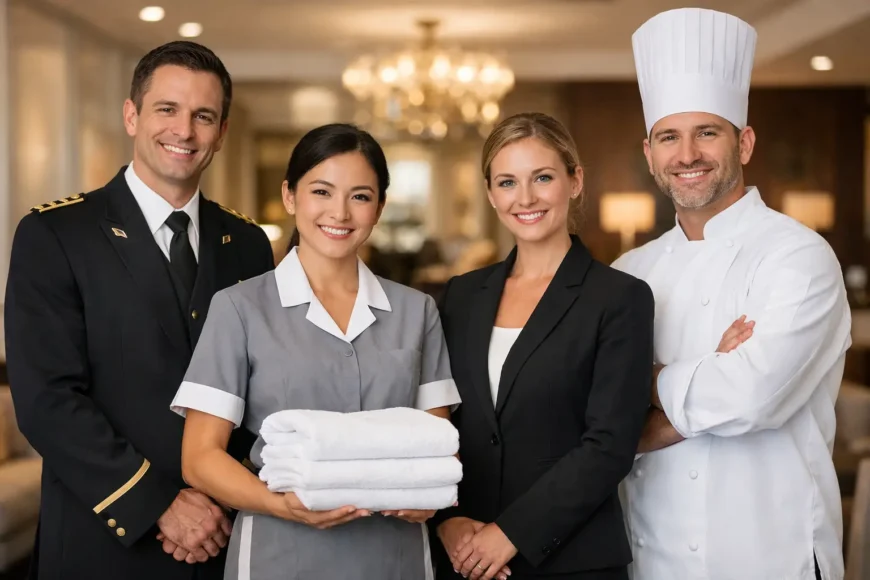
A guest often forms an opinion of a hotel before reaching the front desk. The doorman’s jacket, the concierge’s pressed shirt, and the housekeeping team’s practical attire all signal how seriously the property takes service. The best uniforms for hotel staff do more than create a coordinated appearance. They support each role, reinforce brand standards, and remain comfortable through demanding shifts.
For hotel owners, operations teams, and procurement managers, uniform selection is therefore a business decision rather than a simple apparel purchase. A polished lobby uniform that restricts movement, overheats staff, or loses its shape after repeated washing will quickly become an operational problem. The right program balances presentation, performance, durability, and a fit that employees feel confident wearing.
What the Best Uniforms for Hotel Staff Have in Common
A successful hotel uniform program begins with the guest experience the property wants to deliver. A luxury urban hotel may require sharp tailoring, refined neutral colors, and subtle branded details. A resort may favor breathable fabrics, relaxed silhouettes, and colors that reflect its setting. Boutique properties can use distinctive accents to express personality, while business hotels often benefit from clean, consistent formalwear that communicates efficiency and trust.
Regardless of style direction, the strongest uniforms share three qualities: they are immediately recognizable, appropriate for the work being done, and consistently well fitted. Consistency matters because hotels bring together many departments with very different responsibilities. Guests should be able to identify who can assist them while still seeing one connected brand.
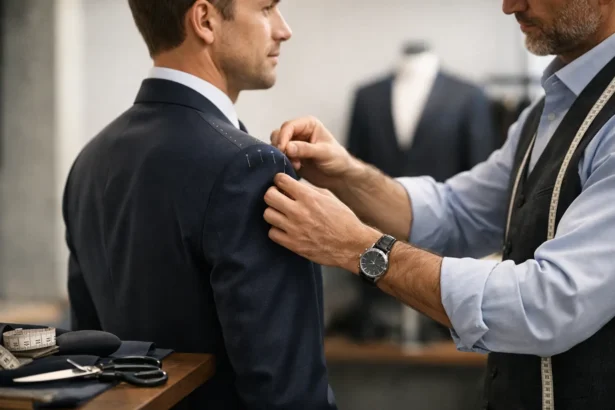
Fit deserves more attention than it typically receives. Ready-made sizing can leave some employees in garments that pull at the shoulders, bunch at the waist, or sit awkwardly at the hem. These details affect posture and confidence. Precise sizing and, where appropriate, made-to-measure adjustments give a team a more composed appearance while allowing staff to move naturally throughout the day.
Design by Department, Not by One Template
One uniform style for every hotel employee may appear efficient on paper, but it rarely serves the operation well. Front-of-house employees, food and beverage teams, housekeeping personnel, and engineering staff face different physical demands. Their uniforms should look related without being identical.
Front desk, concierge, and guest relations
These employees represent the hotel at its most visible moments. Tailored blazers, structured vests, crisp shirts, trousers, skirts, or dresses can establish a professional first impression. The design should be polished without looking overly corporate if the property’s personality is warm, local, or design-led.
A navy, charcoal, black, or deep earth-tone blazer is a reliable foundation because it photographs well, accommodates discreet embroidery, and remains relevant across seasons. However, dark colors are not the only answer. A well-chosen accent color in a scarf, tie, pocket square, piping, or name badge can make the uniform distinctly yours without overwhelming the overall look.
Restaurant, bar, and banquet teams
Food and beverage uniforms must work under pressure. Servers need unrestricted reach and movement, while bartenders and banquet staff benefit from fabrics that remain presentable through long service periods. Aprons are useful not only for protection but also for visual hierarchy. A tailored waist apron may suit a refined dining room, while a cross-back bib apron offers stronger coverage for casual concepts and active service.
White shirts communicate classic hospitality but demand a realistic laundry plan. Darker shirts can be practical in bars or high-volume venues, though they may show lint, water marks, or fading if fabric quality is poor. The better choice depends on lighting, concept, menu, and the level of formality expected by guests.
Housekeeping and laundry teams
Housekeeping uniforms should never be treated as an afterthought. These roles require bending, lifting, walking, and frequent movement between rooms and service areas. Stretch panels, breathable fabric, secure closures, useful pockets, and easy-care construction are practical priorities.
A coordinated tunic-and-pants set, polo-and-trouser combination, or tailored overshirt can look professional while supporting movement. Avoid overly loose garments that can catch on carts or equipment, as well as stiff fabrics that make an already physical role less comfortable. Durable color choices also help teams maintain a clean, uniform appearance after regular industrial laundering.
Bell, valet, security, and facilities teams
These positions are active and highly visible at entrances, corridors, and public areas. Their uniforms should project authority and readiness without becoming restrictive. Bell teams may wear formal jackets or vests in premium properties, while valet and security personnel often need performance fabrics, weather-appropriate layers, and comfortable footwear considerations.
For maintenance and facilities teams, a polished work shirt or branded polo paired with durable trousers may be more effective than formal attire. The goal is to preserve professionalism while acknowledging the practical nature of the job.
Fabric Decisions That Affect Daily Performance
Fabric selection determines whether a uniform remains an asset after months of use. Hotels should evaluate more than color and initial texture. Consider breathability, wrinkle resistance, stretch, stain management, color retention, and suitability for the chosen laundering process.
Blended fabrics are often a practical choice for hotel operations. A polyester-cotton blend can offer durability and easier care, while a small percentage of stretch fiber can improve comfort for teams that stand or move continuously. For executive-facing roles, higher-quality suiting fabrics can create a more refined drape and structure. These garments may require more careful maintenance, so they are best reserved for positions where their visual impact justifies the care requirements.
Climate is another deciding factor. In warm or humid locations, heavy synthetic fabrics can leave employees uncomfortable before their shift is halfway through. Lightweight performance blends, breathable weaves, and unlined or partially lined jackets can maintain a formal appearance without excessive heat retention. In cooler environments, layering becomes more useful, with vests, cardigans, overshirts, or jackets allowing staff to adapt throughout the day.
Requesting fabric samples before production is a disciplined step, not a delay. Test them for hand feel, opacity, recovery after stretching, and how they look under lobby lighting. A fabric that appears excellent in a meeting room may look very different under bright reception lights or in outdoor arrival areas.
Branding Should Be Visible, Not Overstated
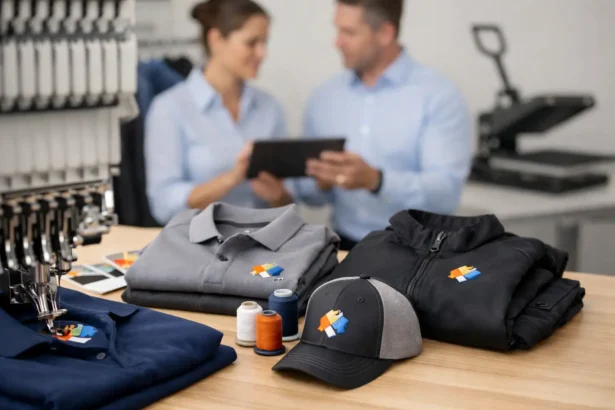
Hotel uniforms carry the brand into every guest interaction, yet the branding should feel intentional rather than promotional. Embroidery on a chest, sleeve, collar, or apron can create a refined identifier. Tone-on-tone embroidery is especially effective for upscale properties because it adds detail without disrupting the garment’s design.
Color is equally powerful. Rather than placing a large logo on every item, use your brand palette through ties, scarves, apron straps, piping, buttons, or lining details. This approach gives the program a more considered, tailored character. It also makes replacement pieces easier to coordinate as the team grows.
Name badges and role identifiers should be planned alongside the uniform, not added at the end. Their placement, finish, and readability influence the overall impression. A badge that damages delicate fabric or sits unevenly on a jacket can undermine an otherwise polished presentation.
Build Durability Into the Ordering Process
Uniforms experience far more wear than standard professional clothing. Frequent washing, exposure to cleaning products, food service, luggage handling, and long shifts all place pressure on seams, closures, and fabric surfaces. The lowest unit price can become costly when garments need early replacement or staff begin mixing personal clothing into the uniform.
Before approving a design, review construction details such as reinforced seams, quality zippers, secure buttons, and colorfast fabric. Ask how the garments will perform under your actual laundering method. If a hotel uses an external laundry service, its temperature and chemical processes should inform the fabric recommendation from the beginning.
It is also wise to order with continuity in mind. Maintain a defined specification for fabric, color, trims, embroidery placement, and sizing. This makes future replenishment more reliable and helps new employees join the team without introducing visible variation. A custom uniform partner such as Velcoor can guide this process through design consultation, fabric selection, fitting, branding, and production planning.
Make Employee Input Part of Quality Control
Operations leaders should set the brand standard, but the people wearing the garments will reveal whether the design works in practice. A small wear trial with representatives from each department can prevent expensive mistakes. Ask direct questions: Does the shirt stay tucked in? Can staff reach, bend, and carry equipment comfortably? Are pockets useful? Does the fabric feel too warm after several hours?
Employee feedback does not mean every preference should determine the final design. It means practical concerns are identified before full production. The best result is a uniform employees respect because it looks professional and enables them to do their work well.
When selecting hotel uniforms, start with the service standard you want guests to feel, then build each garment around the reality of the role. A carefully fitted, well-constructed program turns staff presentation into a quiet but lasting expression of hospitality.