English
A guest arrives at your hotel, clinic, restaurant, or office and meets three employees within the first minute. Before anyone speaks, their clothing has already communicated something about your business. A coordinated uniform signals discipline and care. A poorly fitted shirt with a fading logo can suggest the opposite. Knowing how to brand employee uniforms is therefore not just about adding a logo. It is about turning everyday workwear into a consistent, credible expression of your company.
For decision-makers, the goal is to balance brand visibility with comfort, durability, and role-specific practicality. The strongest uniform programs do not treat branding as a final decoration. They build it into the garment from the first design conversation.
Start With the Brand Experience You Want to Create
Before selecting shirt colors or logo placement, define the impression employees should create. A financial advisory firm may need a restrained, formal appearance built around tailored blazers, crisp shirts, and subtle embroidered marks. A restaurant may require a warmer, more approachable look, while still choosing fabrics that withstand frequent laundering. Healthcare teams need garments that look reassuringly professional while allowing movement during long shifts.
Your uniform should support the environment in which employees work and the expectations customers bring into that environment. This is why one standard design rarely works across every department. Front-of-house personnel often need a more polished presentation than warehouse or technical teams, yet both groups should still look unmistakably part of the same organization.
Begin by clarifying three decisions: your primary brand colors, the level of formality required, and the practical demands of each role. These choices provide a design direction before production details begin to complicate the project.
How to Brand Employee Uniforms Beyond a Logo
A logo is essential, but it is only one brand signal. Color, silhouette, fabric texture, trims, and fit all influence how recognizable and professional a uniform appears. When these elements work together, the team looks considered rather than simply dressed in matching garments.
Use brand colors with restraint
Not every brand color belongs across an entire shirt or blazer. A bright corporate color may be memorable on a pocket trim, collar detail, scarf, tie, piping, or name badge, but overwhelming when used as the main fabric. Conversely, a neutral base such as navy, charcoal, black, white, or soft gray gives a branded accent more authority and tends to remain appropriate across seasons and settings.
The right balance depends on your industry and customer experience. A café or casual restaurant can often carry a stronger color story than a legal office. For premium hospitality, a deep neutral uniform with carefully selected accents may feel more refined than a large, high-contrast color block.
Choose logo placement for the garment and the job
The left chest remains a trusted placement for embroidered logos because it is visible in face-to-face interactions and suits shirts, polos, blouses, jackets, and blazers. It also creates a polished result without competing with the garment’s cut.
However, this placement is not always the best choice. A sleeve logo can be effective when the chest area needs to stay clean, especially on performance uniforms or outerwear. A back print gives better visibility from a distance and may suit event staff, service crews, or delivery teams. Aprons and chef coats require their own approach, where chest embroidery, pocket placement, or a subtle woven label can preserve a premium look.
Avoid applying the same oversized logo everywhere. Scale should match the garment, the viewing distance, and the desired level of formality. A corporate suit benefits from a discreet embroidered mark. A team uniform used outdoors may need a larger, more visible identifier.
Match the branding method to the material
Embroidery is a durable and elevated choice for polos, shirts, blazers, jackets, caps, and aprons. It gives logos texture and dimension, making it especially suitable for businesses where a polished image matters. Fine details and very small text, though, may not reproduce clearly in thread. In these cases, simplifying the logo or selecting another method may produce a cleaner result.
Printing can be appropriate for larger graphics, detailed artwork, and uniforms where visibility is the priority. The trade-off is that print quality, flexibility, and wash performance depend heavily on the fabric and production method. A design that looks excellent on a cotton T-shirt may not perform as well on a stretch performance fabric.
Woven labels, engraved buttons, contrast stitching, custom linings, and branded name tags can add distinction without making the uniform feel promotional. These details are particularly valuable for executive attire, hotel teams, and customer-facing staff where subtle craftsmanship carries more weight than bold branding.
Select Fabrics That Protect the Brand in Daily Use
Branding loses impact when garments wrinkle quickly, fade after repeated washing, trap heat, or restrict movement. The fabric must perform as well as it presents. This is where fabric selection becomes a business decision rather than a purely aesthetic one.
For high-contact service roles, consider breathable blends that retain their shape and are easy to care for. For restaurant, hotel, and retail teams, stain resistance and color retention can reduce replacement costs and help staff maintain a neat appearance throughout the shift. For corporate offices, structured suiting fabrics, quality cotton shirts, and tailored blends can project a more formal standard.
Malaysia’s warm, humid climate also deserves careful consideration. Employees who feel overheated or uncomfortable are less likely to wear uniforms confidently and correctly. Lightweight, breathable materials may be the better investment for teams working outdoors, traveling between locations, or spending long hours on the floor.
Ask to assess fabric samples under real conditions. Look at the color in natural and indoor light, feel the weight, and consider how the material will respond to regular laundering. A garment that feels impressive in a showroom but is impractical after a full workday is not the right uniform.
Prioritize Fit Across a Diverse Team
A uniform cannot represent precision if it fits only part of the team well. Employees come in different body shapes, and a one-size approach can create uneven hemlines, pulling buttons, oversized shoulders, and a generally careless appearance. It can also affect comfort, morale, and confidence in customer interactions.
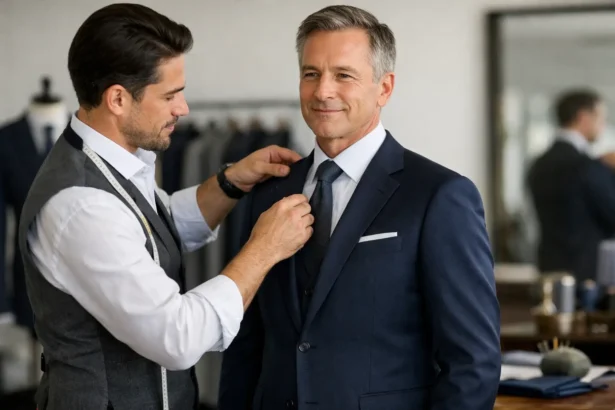
Offer suitable cuts for different preferences and job demands. This may include tailored and regular-fit shirt options, men’s and women’s sizing, adjustable waist features, or separate choices for skirts and trousers. For formal uniforms and corporate suits, individual measurement and fitting make a visible difference. Proper sleeve length, trouser break, shoulder fit, and waist shaping elevate the entire organization’s presentation.
Fit is not only about appearance. A receptionist may need a structured blazer that remains comfortable while seated. A hospitality supervisor may need freedom of movement for long periods on the floor. A clinical team may require practical pockets and easy-care construction. The design should respect the actual work employees do.
Build Consistency Without Making Every Role Identical
Organizations with multiple departments should create a uniform system, not a single garment. The system may share a core palette, logo treatment, and fabric family while adapting garments to different responsibilities. For example, management may wear blazers and formal shirts, front-line service staff may wear branded polos or button-downs, and operational teams may wear durable overshirts or performance apparel in the same brand colors.
This approach keeps the company visually united while making each uniform appropriate for its wearer. It also helps customers identify who can assist them without creating an unnecessary hierarchy in the overall appearance.
Document the approved color codes, logo files, placement measurements, thread colors, and garment specifications. This matters when adding new hires or reordering six months later. Without clear standards, small variations can gradually weaken the uniform program.
Plan for Reorders, Growth, and Garment Care
A well-branded uniform should remain consistent as your team changes. Before production, consider how easily the supplier can reproduce the same fabric, color, logo size, and finishing details in future orders. A low initial price can become expensive if a supplier cannot maintain the specification when you need replacements.
It is also wise to set a practical care policy. Give employees clear laundering guidance, particularly for embroidered garments, dark colors, structured blazers, and printed designs. When a uniform has specific care requirements, staff should understand them before the first issue date, not after the first damaged garment.
For organizations with frequent hiring, keep a measured range of common sizes and core items available where possible. For bespoke blazers, tailored suits, and specialized uniforms, establish a fitting process for new employees so the standard remains consistent from the first team member to the fiftieth.
Work With a Uniform Partner That Understands Presentation
The most effective uniform projects begin with consultation, sample review, and fitting rather than a quick catalog selection. A professional provider should ask about your industry, work environment, branding requirements, employee numbers, and ordering schedule before recommending materials or decoration methods.
Velcoor approaches corporate uniforms as part of a company’s visual identity, combining tailored fit, fabric selection, custom embroidery or printing, and sector-specific design guidance. That level of coordination helps businesses avoid common issues such as mismatched shades, poorly positioned logos, or garments that look sharp initially but fail under daily use.
A branded uniform earns its value in the moments customers notice without consciously thinking about it: the confident welcome at a reception desk, the composed restaurant service, the recognizable clinic team, and the professional staff photograph. Choose every detail with that moment in mind, and your employees will wear more than a logo. They will wear a standard your business can stand behind.