English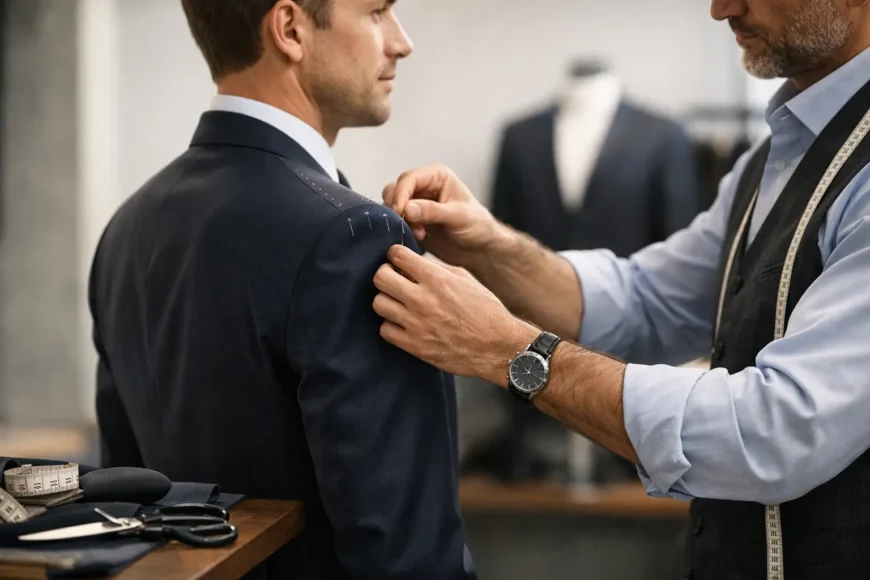
A suit that fits one employee perfectly can look strained, boxy, or careless on the next. That is the real problem corporate suit tailoring solves. For businesses that rely on a polished team image, fit is not a finishing touch. It is part of how your brand is seen, remembered, and trusted.
When staff members meet clients, welcome guests, lead consultations, or represent leadership on the floor, their clothing speaks before they do. Ready-made suiting may seem convenient at first, but it often creates inconsistency across body types, departments, and roles. Tailored corporate wear brings structure to that problem. It aligns appearance, supports comfort during long workdays, and helps companies present a more deliberate identity.
What corporate suit tailoring actually delivers
Corporate suit tailoring is not simply about making a jacket smaller or hemming a pair of pants. In a business setting, it is a measured approach to creating professional attire that reflects the company’s standards while fitting the people who wear it.
That process usually includes style planning, fabric selection, measurement, fitting, production, and finishing details such as lining, buttons, embroidery, or other brand elements. For decision-makers, the value is broader than appearance alone. Tailoring creates consistency across teams while allowing enough flexibility to accommodate different builds, job functions, and daily movement.
A front desk executive, a sales manager, and a hospitality supervisor may all need to look aligned, but they do not need identical suits cut the same way. Good tailoring respects that difference. It builds a unified look without forcing everyone into one rigid template.
Why ready-made suiting often falls short
Off-the-rack suits can work for occasional use or very limited team needs. But for organizations outfitting staff at scale, they usually introduce avoidable compromises. Standard sizing rarely accounts for the range of proportions within a real workforce. One employee may need a broader shoulder, another a shorter rise, another a cleaner taper through the sleeve or trouser leg.
Once you start altering large quantities of ready-made garments, the convenience begins to disappear. The final result can still feel inconsistent because the base patterns were never designed for your team in the first place. Fabric availability may also be limited, and branding details often feel like afterthoughts rather than integrated design choices.
There is also the issue of wear. Corporate apparel is not worn once for a formal event and returned to a closet. It is worn repeatedly, sometimes in air-conditioned offices, hotel lobbies, receptions, meetings, and long shifts. If the fabric lacks durability or the fit restricts movement, employees notice quickly. So do guests and clients.
Corporate suit tailoring and brand identity
The strongest corporate wardrobes do more than look formal. They communicate something specific about the business behind them. A finance firm may want restraint and authority. A luxury hospitality group may need warmth, polish, and a premium feel. A healthcare administrator may prioritize structure, comfort, and credibility in equal measure.
Corporate suit tailoring gives businesses control over those signals. Fabric weight, texture, lapel shape, color consistency, pocket styling, and finishing details all affect the impression a uniformed team creates. Even subtle choices matter. A charcoal suit with a clean silhouette projects something different from a softer navy with contrast detailing or branded lining.
This is where a consultative tailoring partner becomes valuable. Rather than selecting garments in isolation, companies can develop attire that supports the brand as a whole. The suit becomes part of a larger presentation system that includes shirts, blazers, skirts, trousers, and role-specific variations.
For organizations that care about consistency across multiple departments, locations, or customer touchpoints, that level of control matters. It helps staff look connected to the same business, not dressed according to individual guesswork.
Fit affects confidence, comfort, and performance
There is a practical reason tailored suits leave a stronger impression. People tend to carry themselves better when their clothing fits correctly. Shoulders sit cleanly, sleeves break at the right point, trousers move properly, and the entire silhouette feels intentional rather than borrowed.
That confidence is not cosmetic. In client-facing roles, posture and ease influence how employees communicate. Staff who are adjusting tight collars, pulling at sleeves, or managing poorly fitted waistlines are distracted by their clothing. Over a full workday, small fit issues become productivity issues.
Comfort, however, should never be confused with loose or shapeless. Good tailoring balances structure with movement. It allows employees to sit, walk, greet customers, and transition between tasks without looking rumpled by midday. That balance is especially important in sectors such as hospitality, corporate offices, executive teams, and premium service environments.
The fabric decision is as important as the cut
A well-cut suit made from the wrong fabric will still underperform. In corporate settings, fabric choice should reflect daily wear, climate, maintenance expectations, and the image the company wants to project.
Lighter fabrics may be more comfortable for warm environments, while structured blends can offer better wrinkle resistance for long hours and repeated use. Some businesses need a crisp, formal finish for executive settings. Others need a fabric that holds its shape while allowing more mobility on the job. The right answer depends on how and where the garments will be worn.
This is one of the biggest advantages of a tailored program. Instead of settling for whatever is attached to a ready-made suit, businesses can choose fabrics with purpose. Durability, breathability, texture, and drape can all be evaluated against actual operational needs.
That decision also affects cost over time. A lower upfront price may look attractive, but if the fabric loses shape quickly, fades, or becomes uncomfortable after repeated wear, replacement costs rise. Better fabric selection often leads to better long-term value.
Tailoring for teams, not just individuals
One misconception is that tailoring only works for executives or very small groups. In reality, a structured tailoring program is often most useful when companies need to dress teams with consistency.
That includes onboarding new employees, rolling out updated uniforms, outfitting leadership and front-facing staff, or standardizing attire across branches. The process needs to be organized, repeatable, and precise. Measurements must be handled carefully. Design decisions should be documented. Production quality has to remain consistent from one batch to the next.
This is where experience in business apparel matters. Tailoring for organizations is different from making a single formal suit for a wedding or private event. The goal is not only individual fit. It is operational reliability. Companies need garments that can be reproduced, adjusted for roles, and maintained across a workforce without losing visual consistency.
At Velcoor, that is approached as a service, not just a product. The tailoring process is built around consultation, fit accuracy, fabric guidance, and business-focused customization so companies can outfit teams with confidence rather than piecing together inconsistent solutions.
When tailored corporate suiting makes the most sense
Not every business needs full tailored suiting across every role. For some organizations, tailored jackets for leadership and client-facing staff are the right investment, while other teams may require coordinated uniforms in different formats. For others, a fully tailored suiting program supports the brand standard across multiple departments.
The right approach depends on your customer experience, your industry expectations, and how visible your team is. If appearance influences trust, pricing power, guest perception, or brand prestige, tailored suiting often delivers more than it costs. If roles are highly active or mixed in function, a hybrid wardrobe strategy may be more effective.
That is why the planning stage matters. Businesses get better results when they assess wear frequency, job movement, climate, maintenance, and brand presentation together rather than focusing only on style.
Choosing a corporate suit tailoring partner
A tailoring partner should do more than take measurements. They should understand how clothing functions inside a business. That means asking the right questions about department needs, image goals, turnaround expectations, branding, and repeat orders.
Craftsmanship is essential, but so is systemization. You need precision in fitting, clarity in design recommendations, dependable production standards, and the ability to maintain consistency over time. A strong partner will also help you weigh trade-offs honestly. A more structured fabric may look sharper but feel warmer. A softer cut may improve comfort but slightly change the level of formality. The best decisions come from balancing image with wearability.
For businesses that take presentation seriously, corporate suit tailoring is not an extra. It is part of the infrastructure behind a credible, professional brand. The right suit does not call attention to itself. It makes the person wearing it look ready, capable, and fully aligned with the business they represent.
If your team is meant to project confidence, the clothing should be built with the same level of intention.