English
A name badge can identify an employee. Embroidered company uniforms do more than that. They turn everyday workwear into a clear statement of brand standards, giving staff a polished appearance that feels intentional from the first customer interaction.
For businesses that depend on trust, consistency, and presentation, embroidery is not a decorative extra. It is a practical branding choice. A stitched logo on a blazer, shirt, tunic, or apron communicates permanence, attention to detail, and professionalism in a way that printed graphics often do not. That difference matters in hospitality, healthcare, corporate offices, restaurants, retail, and any environment where employees represent the business face to face.
What embroidered company uniforms communicate
Uniforms are part of business identity. When that identity is stitched directly into the garment, the message is stronger. Embroidery creates texture, definition, and a sense of quality that aligns well with companies that want to be seen as established and reliable.
Customers notice these small visual cues quickly. A front-desk team in neatly fitted shirts with embroidered branding looks prepared. A restaurant service team in coordinated aprons and button-downs looks organized. A clinic team in branded tunics looks professional and credible. The logo may be a small element, but it shapes the overall impression of the uniform and the company behind it.
This is especially valuable for businesses managing multiple employees across departments. When uniforms are customized with consistent placement, thread colors, and garment styles, the result is a more unified brand presentation. It reduces the mismatch that often happens when teams wear generic attire or off-the-shelf options with inconsistent branding.
Why embroidery often outperforms printing
There is a place for both embroidery and printing, and the right choice depends on the garment, work environment, and design itself. Still, embroidery is often the stronger option for professional uniforms because it offers a more refined finish and longer-lasting appearance.
Printed logos can work well for promotional shirts or casual event wear, especially when the design is large, highly detailed, or multi-colored. But on daily uniforms, especially formal or semi-formal garments, embroidery typically looks more premium. It holds its shape well, resists fading, and continues to look sharp through repeated washing when done properly.
That durability matters for operational reasons, not just aesthetics. Businesses replacing faded or cracked branding too often end up spending more over time. Embroidery usually provides better long-term value for garments expected to stay in regular rotation.
There are trade-offs, of course. Embroidery is not ideal for every logo size or every fabric type. Very fine design details can become difficult to reproduce cleanly with thread, and lightweight fabrics may need careful handling to avoid puckering. This is where good uniform design matters. The best result comes from adapting the logo for embroidery and choosing garments that support the stitching rather than fighting it.
The role of fit, fabric, and placement
An embroidered logo can elevate a uniform, but it cannot fix a poor garment. If the shirt is stiff, the blazer fits badly, or the fabric cannot handle daily wear, the branding will not carry the overall presentation. Strong uniform programs are built on three elements working together: fit, fabric, and logo placement.
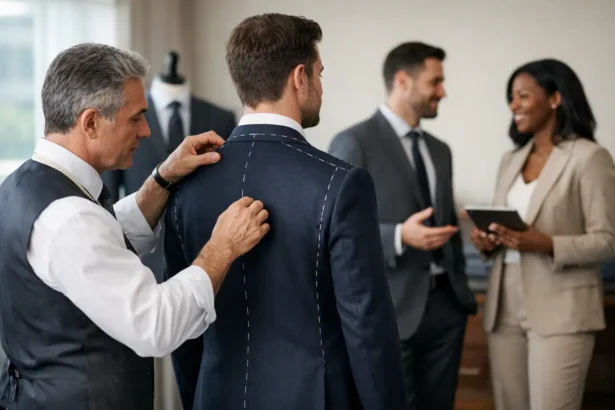
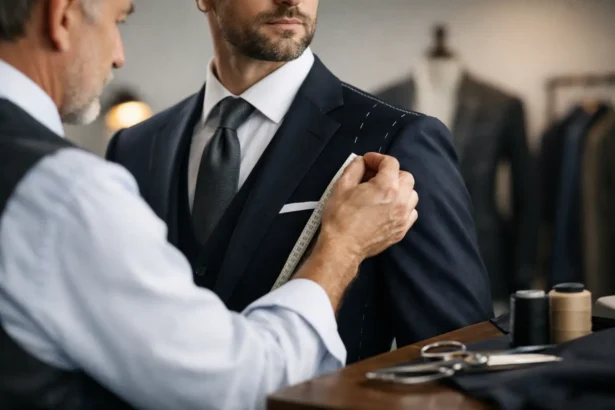
Fit is often overlooked in uniform planning, especially for larger teams. Ready-made sizing may seem convenient, but it can create an uneven look across staff. Employees who are uncomfortable in their uniforms also tend to wear them less confidently. A better approach is to select cuts and sizing options that suit different body types and job functions. In higher-visibility roles, made-to-measure or tailored adjustments can make a noticeable difference in how the uniform is perceived.
Fabric should match the work environment. A hotel front office may need smooth suiting fabrics or crisp shirting with structure. A clinic may need breathable, easy-care materials that stand up to frequent laundering. A restaurant team may need stain-resistant fabrics with enough movement for long shifts. Embroidery must be considered within that fabric decision, because some materials support clean stitching better than others.
Placement is where branding becomes disciplined. Left chest embroidery remains a classic choice for a reason. It is visible, balanced, and professional across shirts, polos, jackets, and blazers. Sleeve embroidery can work for hospitality or promotional settings, while back embroidery may suit more casual uniforms. The key is consistency. Once the logo position and size are established, every garment should follow the same standard unless there is a specific operational reason to vary it.
Industry-specific value of embroidered uniforms
Different industries use embroidered branding for different reasons, and that is where customization becomes more than a design preference.
In hospitality, embroidered company uniforms help reinforce service quality. Guests often judge the professionalism of a hotel, restaurant, or concierge team within seconds. Clean lines, tailored silhouettes, and discreet embroidered branding support a premium guest experience without appearing overstated.
In healthcare and wellness settings, embroidery supports trust and clear identification. Staff need to look approachable, competent, and organized. A stitched logo on tunics, scrub tops, or lab coats creates a branded appearance that remains durable through frequent washing and demanding daily use.
In corporate offices, embroidery brings polish to business attire. Branded shirts, blazers, and formal uniforms can unify reception teams, administrative staff, and client-facing personnel while maintaining a refined appearance. This is particularly useful for companies that want employees to look coordinated without appearing overly promotional.
In food service and retail, durability and visibility matter most. Aprons, polos, and work shirts with embroidered logos can handle repeated wear while helping customers quickly identify staff. When paired with practical fabrics and thoughtful garment design, the uniform supports both brand image and day-to-day operations.
Designing embroidered company uniforms the right way
The most effective uniforms are not chosen from a catalog in isolation. They are planned around brand identity, role requirements, and actual working conditions. That process starts with asking the right questions.
What does the brand need to communicate – luxury, efficiency, warmth, authority, or precision? Which employees interact directly with customers, and which need greater mobility or easier care? Will the uniforms be worn in air-conditioned offices, outdoor service areas, kitchens, clinics, or mixed environments? These answers shape everything from fabric weight to stitch placement.
Logo preparation is another critical step. A logo designed for digital use may not translate neatly into embroidery without adjustment. Fine lines, gradients, and very small text often need simplification. This is not a compromise in brand quality. It is a technical refinement that protects the clarity of the logo on fabric.
Sampling also matters. Before rolling out uniforms to an entire team, it helps to review actual stitched samples on the selected garments. This allows decision-makers to assess thread color accuracy, logo size, visibility, and how the embroidery sits on the fabric. Small corrections at this stage prevent costly inconsistency later.
A consultative uniform partner adds value here because they understand both garment construction and branding. Velcoor, for example, approaches uniforms as part of a company’s professional image system, balancing tailoring, fabric suitability, branding precision, and wearability across different roles.
When embroidery is worth the investment
Some businesses hesitate at embroidery because the upfront cost can be higher than simple print applications. That concern is understandable, especially for larger teams or multi-location operations. But the better question is not whether embroidery is the cheapest option. It is whether it is the right option for the image and performance standards the business expects.
If your staff are customer-facing, if your brand positioning depends on credibility, or if your uniforms are intended for repeated long-term use, embroidery often justifies the investment. It tends to look sharper over time, supports a more premium brand presentation, and reduces the worn-out appearance that can make uniforms look neglected before the garment itself has reached the end of its life.
That said, not every item needs embroidery. Many businesses get the best result from a balanced uniform program. Formal shirts, jackets, aprons, and blazers may use embroidery, while event tees or campaign items may use print. The strongest solution is often a selective one, based on purpose rather than habit.
A well-made uniform should work hard without looking hard-wearing. That is the advantage of embroidery when it is paired with the right garment, the right fit, and the right design standards. It adds identity without noise, professionalism without effort, and consistency that customers can see before a word is spoken.
If your team’s appearance is part of how your business earns confidence, embroidered uniforms are not a small detail. They are one of the clearest ways to show that your brand takes presentation seriously.