English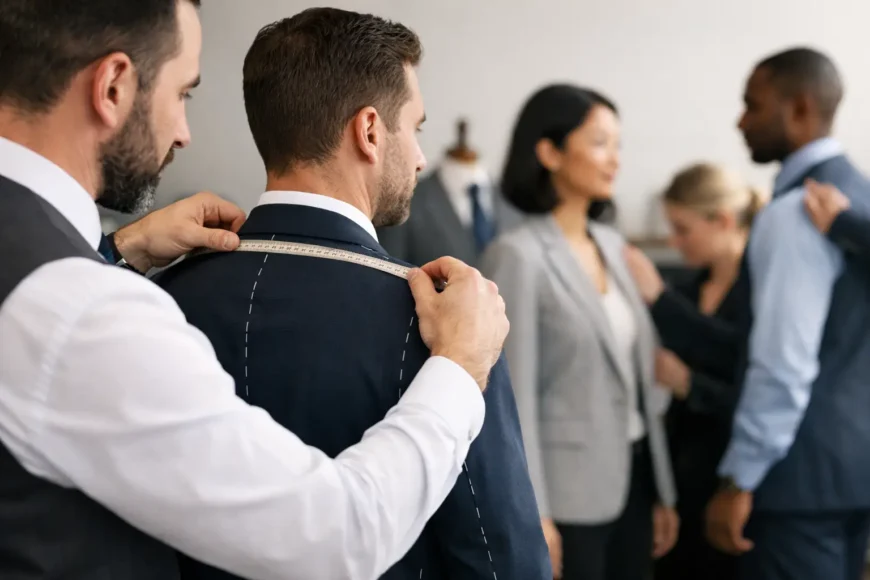
A staff uniform can look polished on a hanger and still fail the moment a team begins wearing it. Tight shoulders restrict movement, uneven trouser lengths undermine a clean appearance, and generic sizing leaves employees feeling overlooked. So, what is made to measure tailoring? It is a professional approach to apparel that adjusts a garment’s fit, fabric, finish, and design details to the wearer and the organization behind it.
For businesses, made-to-measure tailoring is not simply about producing a sharper suit. It is about creating reliable professional attire that supports comfort, role requirements, and a consistent brand image across the team.
What Is Made to Measure Tailoring?
Made-to-measure tailoring begins with an established garment pattern, which is then adjusted using an individual’s measurements. A tailor records key dimensions such as chest, shoulder width, waist, hip, sleeve length, inseam, and posture-related considerations. Those measurements inform changes to the pattern before the garment is cut and produced.
The result is more refined than off-the-rack clothing, which is created in standard sizes and intended to fit a broad range of body types. A made-to-measure blazer, shirt, dress, skirt, or pair of pants is shaped around the wearer’s proportions rather than asking the wearer to adapt to a predetermined size.
For corporate teams, this process can be applied at scale. Employees may wear a shared uniform concept, but the fit can be personalized for each person. That distinction matters in environments where staff are visible to clients, guests, patients, or customers throughout the day.
How Made-to-Measure Corporate Tailoring Works
A well-managed made-to-measure program starts with consultation, not a clothing catalog. The provider needs to understand how the team works, what the garments need to communicate, and what daily conditions they must withstand. A front-desk team, restaurant floor staff, financial advisers, and clinic personnel all require a different balance of formality, mobility, fabric performance, and care requirements.
The design stage establishes the visual direction. This may include the garment silhouette, color palette, fabric type, button style, collar construction, pocket placement, and branded elements such as embroidery or printed logos. The goal is not to add decoration for its own sake. Each choice should reinforce the organization’s identity while remaining practical for the role.
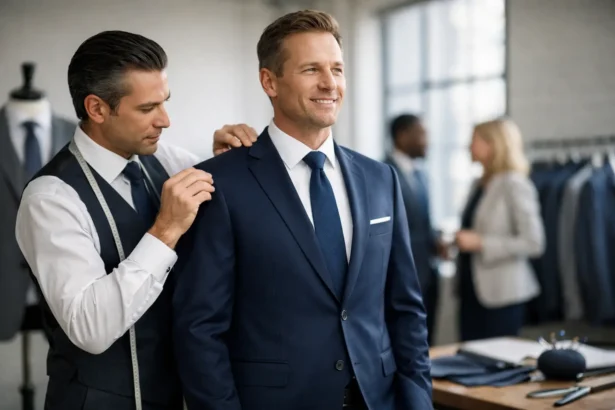
Measurements are then taken for each employee. This is where made-to-measure tailoring delivers its most visible value. A tailored fit accounts for common variations that standard sizing cannot address well, including longer arms, narrower shoulders, fuller hips, a shorter torso, or different preferred lengths.
Production follows the approved specifications, often with sample review or fit confirmation for larger uniform projects. Once garments are delivered, a dependable provider should also be prepared to address reasonable fit adjustments and support future reorders as teams grow or roles change.
Made to Measure vs. Ready-Made and Bespoke
The terms ready-made, made-to-measure, and bespoke are often used interchangeably, but they describe different levels of tailoring.
Ready-made apparel is produced in fixed sizes, such as small through extra-large or standard suit sizing. It can be fast and cost-effective, especially for basic needs, but fit consistency is limited. Even when alterations are available, the garment begins with a generic block that may not suit every body shape.
Made-to-measure apparel adjusts an existing pattern to the wearer’s measurements. It offers a tailored appearance and improved comfort without requiring every pattern to be drafted from scratch. For many organizations, it is the most practical balance of personalization, quality, production efficiency, and budget control.
Bespoke tailoring is the most individualized option. A unique pattern is created from the ground up for one person, often involving multiple fittings and significant handwork. It can deliver exceptional personalization, but it generally requires more time and investment. Bespoke is often best suited to executive garments or highly specialized individual requirements rather than a broad staff uniform rollout.
For a business outfitting a team, made-to-measure tailoring typically provides the strongest operational value. It allows employees to look individually well-fitted while preserving a unified design standard across the organization.
Why Fit Changes the Professional Image
Fit affects more than appearance. A jacket that pulls across the back can limit movement. Pants that sit incorrectly can become uncomfortable during long shifts. A shirt with poorly proportioned sleeves can make an otherwise polished uniform look careless. These small issues influence how employees feel in their workwear and how confidently they represent the business.
When garments fit properly, the whole team presents with greater consistency. Lapels sit flat, hems fall at the intended length, waistlines look balanced, and branded details appear where they were designed to be seen. In hospitality, that can strengthen the guest experience. In healthcare, it can reinforce order and credibility. In a corporate office, it supports a composed, trustworthy impression during client interactions.
A tailored uniform also signals that the organization has invested thought in its people. That does not mean every garment must be luxurious or overly formal. It means the attire should respect the employee’s comfort, role, and professional presence.
Fabric and Design Matter as Much as Measurements
A precise fit cannot compensate for the wrong fabric. The best made-to-measure programs pair measurement expertise with material selection suited to the working environment.
A client-facing office may prioritize structured suiting fabrics that retain a crisp shape. Restaurant and hotel teams may need breathable materials with easier movement and resistance to frequent wear. Clinical and service environments may benefit from fabrics selected for durability, comfort, and practical laundering. Color also deserves careful planning, especially where uniforms must continue looking presentable after repeated cleaning.
Design should support function as well. A housekeeping team may need useful pocket placement. Restaurant staff may require garments that allow easy reach and movement. Executives may prefer a more refined jacket construction, while reception personnel may benefit from coordinated blazers, dresses, or shirts that establish an immediate visual standard.
Branding should be integrated with restraint and precision. Embroidered logos, custom color accents, monograms, and printed elements can make uniforms distinctly recognizable, but they should complement the garment rather than overwhelm it. A considered uniform looks intentional from every distance.
The Trade-Offs Businesses Should Plan For
Made-to-measure tailoring requires more planning than ordering standard sizes from a shelf. Measurements must be organized, employees need time for fitting, and production lead times should be factored into launch schedules. For teams with frequent turnover, it is also wise to establish a repeatable measurement and reorder process from the start.
Cost can be higher than basic ready-made apparel, particularly when custom fabrics, detailed branding, or multiple garment categories are involved. However, the comparison should include more than the purchase price. Better-fitting, better-constructed garments can improve wearability, reduce the need for repeated replacements, and protect the consistency of the company’s public image.
The right level of customization depends on the organization. A small executive team may require individual suit specifications, while a large hotel may need a standardized collection with tailored measurements and role-specific variations. The strongest solution is one that serves both the brand standard and the realities of daily operations.
Choosing a Made-to-Measure Tailoring Partner
A corporate tailoring partner should be able to translate business requirements into garments that work in practice. Look for experience with team fittings, broad fabric options, clear sizing records, quality control, custom branding capabilities, and support for future orders. Ask how the provider manages fit approvals, replacement garments, and consistency across different job functions.
Velcoor approaches this process as both a tailoring service and a professional image solution. The focus is on bringing precise fit, durable materials, and brand-aligned design together so teams can look prepared, coordinated, and credible every day.
The best uniform program gives employees clothing they can work in confidently while giving customers a clear, lasting impression of the business. Start with the roles your team performs, the image you want to project, and the fit standard your people deserve.