English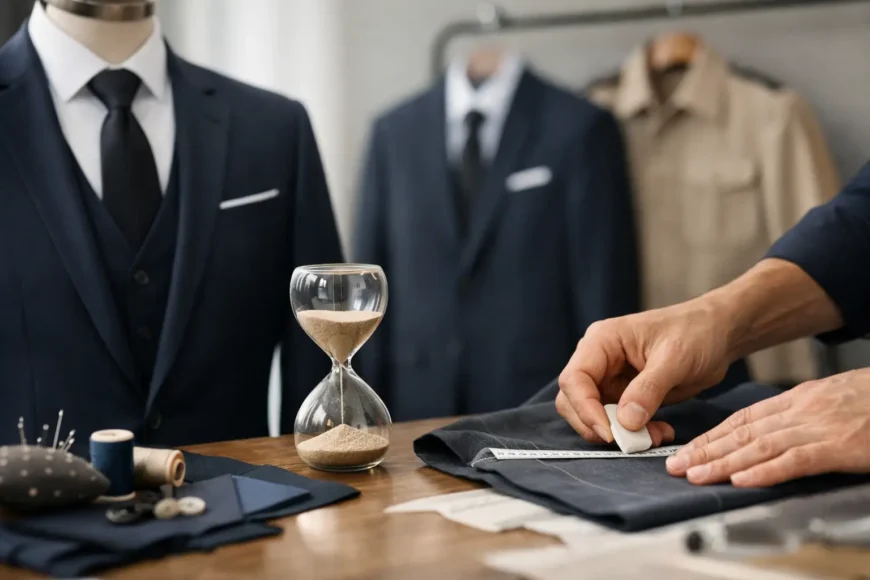
A uniform deadline usually becomes urgent right after a hiring push, pre-opening countdown, or rebrand approval. That is when one question moves to the front of the conversation: how long do tailored uniforms take? The honest answer is that custom uniforms are not instant, but with the right process, they are highly predictable.
For most business orders, tailored uniforms typically take anywhere from 3 to 8 weeks from consultation to final delivery. Smaller and simpler orders can move faster. Larger programs with custom branding, multiple garment types, fabric approvals, and team fittings usually need more time. What matters most is not only the production speed, but how well the timeline is managed from the beginning.
How long do tailored uniforms take for most businesses?
A realistic timeline depends on what you are ordering and how much customization is involved. If a company needs tailored shirts and pants in standard corporate colors with straightforward embroidery, the schedule is often shorter than a hospitality group ordering blazers, skirts, vests, housekeeping uniforms, and front desk attire across several departments.
In general, the process often breaks down into a few stages. Initial consultation and design alignment may take a few days to a week, depending on how quickly decisions are made. Fabric selection, size confirmation, and fit approvals can take another several days. Production itself may take 2 to 5 weeks, and final finishing, quality control, and delivery add more time.
That range may sound broad, but custom uniform production is shaped by real variables. A tailored result requires measurement accuracy, pattern consistency, fabric readiness, and finishing standards that ready-made garments do not.
What affects how long tailored uniforms take?
Order size
A team of 10 employees is naturally faster to handle than a rollout for 150 staff across multiple roles. More garments mean more measurements, more cutting, more sewing time, and more quality checks. If a business has different front-of-house and back-of-house requirements, the complexity increases further.
Large orders are still efficient when managed properly, but they need a structured schedule. This is especially true for hotels, restaurants, clinics, and corporate offices where each role may need a distinct fit and function.
Garment complexity
Not all uniforms take the same amount of time to produce. A custom polo or basic work shirt can be completed faster than a fully tailored blazer or suit jacket. Structured pieces require more pattern work, more fitting precision, and more construction steps.
For example, a custom blazer with lining, shoulder structure, branded buttons, and embroidery will take significantly longer than a simple uniform shirt. If your program includes suits, vests, skirts, trousers, and dresses, the production plan needs to reflect that complexity.
Fabric availability
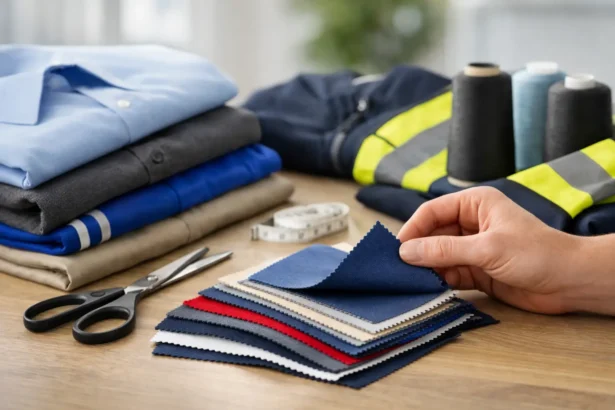
Fabric choice affects both appearance and lead time. If the selected fabric is in stock locally, the timeline may stay relatively short. If the fabric must be specially sourced, reordered, or matched to a prior program, lead times can extend.
This is one reason fabric selection should happen early. Waiting too long to confirm materials often delays everything that follows. Businesses that need a specific weight, stretch level, stain resistance, or brand color match should expect extra coordination time.
Branding details
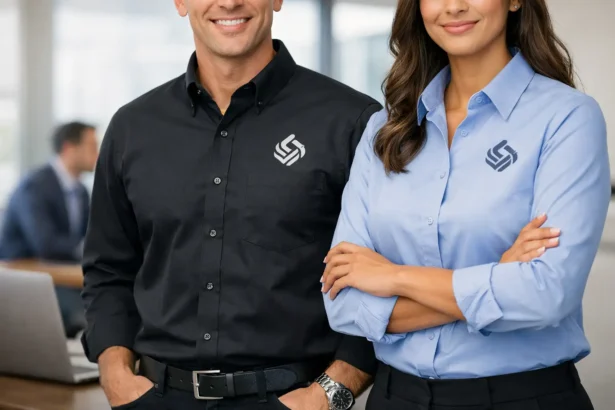
Embroidery, printing, woven labels, custom linings, monograms, and special trims all add value, but they also add time. Brand-aligned uniforms are worth the effort because they reinforce professionalism and consistency, yet every added detail introduces another approval and production step.
If logo placement, thread color, or print method is still under discussion, the schedule will slow down. Clear brand decisions help keep a custom order moving.
Fittings and size approvals
This is one of the biggest timing factors in tailored uniform projects. Accurate fitting protects the final result, but coordinating staff measurements can take time, especially if employees work in shifts or across different locations.
One delayed fitting day can affect the production queue. One incomplete size list can hold up cutting. When businesses want a polished, consistent appearance, there is no shortcut around proper measurement and approval.
A typical tailored uniform timeline
Every supplier works a little differently, but a well-managed custom uniform order often follows a predictable sequence.
Consultation and design brief
This stage usually starts with understanding the company image, work environment, garment needs, and quantity. For some businesses, the brief is straightforward. For others, it involves deciding how different departments should look while still feeling connected to the same brand.
This stage can be quick if stakeholders are aligned. It can also stretch if multiple decision-makers need to sign off on style, fabric, and budget.
Material and style confirmation
Once styles are chosen, fabrics, colors, trims, and branding details need to be confirmed. In some cases, samples or mockups are reviewed before production begins. This protects quality, but it also means there is a necessary approval stage before anything is cut.
Measurement and fitting
For made-to-measure or tailored uniforms, this is where precision matters most. Individual measurements may be taken for each employee, or a structured sizing approach may be used for larger teams, depending on the garment type and fit requirements.
If alterations or sample fittings are needed, that should be built into the timeline rather than treated as a last-minute step.
Production
After approvals are complete, the garments move into cutting, sewing, branding application, pressing, and finishing. This is the core manufacturing window. Businesses sometimes assume production starts right after the first conversation, but in reality, production starts after details are finalized.
That distinction matters. The faster approvals happen, the sooner production can begin.
Quality control and delivery
Before handover, tailored uniforms should go through inspection for sizing consistency, stitching quality, branding accuracy, and overall presentation. This final stage is where a serious uniform partner protects the client from avoidable problems.
Why rushed timelines can cost more later
Many businesses ask for the fastest possible turnaround, especially when opening dates or events are close. Speed is valuable, but rushing a tailored order too aggressively can create issues that are more expensive than waiting a few extra days.
Poor measurements lead to rework. Unconfirmed fabrics create substitutions. Incomplete branding approvals can result in inconsistent presentation across the team. When uniforms are part of the customer-facing brand, getting them wrong weakens the impression the business is trying to build.
A well-tailored uniform does more than cover staff. It communicates standards. That is why timeline planning should support quality, not compete with it.
How to get tailored uniforms faster without sacrificing quality
The simplest way to shorten lead time is to make decisions early. Businesses that know their quantities, garment categories, brand requirements, and budget range tend to move faster because fewer production questions remain unresolved.
It also helps to appoint one clear internal decision-maker. Too many approval layers can slow down a project more than manufacturing itself. If your business needs uniforms for a launch, opening, or seasonal peak, build in a buffer rather than planning around the latest possible date.
If employee measurements are required, schedule fittings promptly and make attendance a priority. If logo files or brand standards are needed, prepare them before the consultation. These practical steps save real time.
For businesses ordering custom uniforms regularly, working with an experienced partner also reduces friction. A provider with a clear consultation, fitting, and production process can anticipate common delays before they become costly.
When should a business place an order?
If the uniforms are simple and the team is small, a few weeks may be enough. If the project involves tailored suiting, multiple departments, custom fabrics, or large staff counts, placing the order 6 to 8 weeks ahead is much safer.
For openings, rebrands, annual refreshes, and multi-branch rollouts, earlier is better. It gives room for proper fittings, thoughtful design choices, and quality control that supports a polished final presentation.
At Velcoor, this is exactly how tailored uniform programs are approached – with precision, planning, and the understanding that strong uniforms support a stronger business image.
If you are planning custom uniforms for your team, the best timeline is not the shortest one on paper. It is the one that gives your staff the right fit, your brand the right appearance, and your business the confidence to present itself well from day one.