English
A wrinkled shirt, an off-brand color, and three different fits across one front-desk team can quietly weaken the impression your business works hard to build. That is why an employee uniform branding guide matters. It gives structure to how your staff looks, how your brand is recognized, and how daily uniforms support both presentation and performance.
For employers, uniforms are not just a purchasing decision. They are part of brand management. In hospitality, healthcare, finance, restaurants, and corporate offices, staff attire often becomes the most visible expression of your standards. Customers may never read your brand guidelines, but they will notice whether your team appears coordinated, polished, and credible.
What an employee uniform branding guide should actually do
A useful guide should help decision-makers connect appearance with operational reality. It is not only about placing a logo on a shirt or choosing a company color. It should define how garments represent the business, fit different roles, perform in real working conditions, and remain consistent over time.
That means the guide needs to cover visual identity, garment types, fabric choices, customization methods, fit standards, and replacement planning. If one of those areas is overlooked, the result is often inconsistent. A uniform may look right in a sample presentation but fail after repeated washing, long shifts, or day-to-day movement.
Strong branding through uniforms works best when it balances three things: brand recognition, employee comfort, and practical durability. If branding dominates every decision, uniforms can become stiff, uncomfortable, or unsuitable for the role. If practicality dominates without design control, the team may look generic rather than brand-led. The right standard sits in the middle.
Start with brand identity, not garment catalogs
Many uniform projects begin too late in the process, with companies browsing shirts, jackets, or aprons before they have decided what the clothing should communicate. A better approach is to begin with the brand itself.
Ask what customers should feel when they see your team. A luxury hotel may need refined tailoring, restrained branding, and elevated fabric texture. A clinic may need reassurance, cleanliness, and calm professionalism. A restaurant may want energy and distinctiveness, but still need garments that handle heat, motion, and frequent laundering.
The same company may also need different levels of formality across departments. Front-of-house staff, supervisors, management, and support teams rarely perform the same job in the same conditions. Your branding guide should account for that. Consistency does not mean identical clothing for everyone. It means every uniform feels like part of the same visual system.
Build the employee uniform branding guide around job function
This is where many businesses make expensive mistakes. They choose one style direction and apply it across all roles, then discover that the attire does not suit actual work. A receptionist, a server, a clinician, and a sales manager need different levels of structure, flexibility, storage, and fabric performance.
A polished blazer may reinforce professionalism for corporate reception and client-facing staff. That same garment may be impractical for employees moving constantly, working in hot environments, or handling equipment. Likewise, lightweight shirts may be ideal for comfort, but if the fabric is too thin or unstable, they can lose shape quickly and reduce the polished appearance you want to maintain.
A strong guide defines which garments belong to each role and why. It should specify core pieces, optional layers, and role-based variations without losing brand consistency. This is especially important for organizations with multiple branches or mixed-service teams.
Color, logo placement, and detail matter more than most companies expect
Branding through uniforms is often won or lost in small decisions. Color matching should reflect your actual brand palette, not a close substitute chosen only because it is available. A navy that leans too bright or a red that appears dull can weaken visual consistency, especially when uniforms are seen alongside signage, packaging, or interior design.
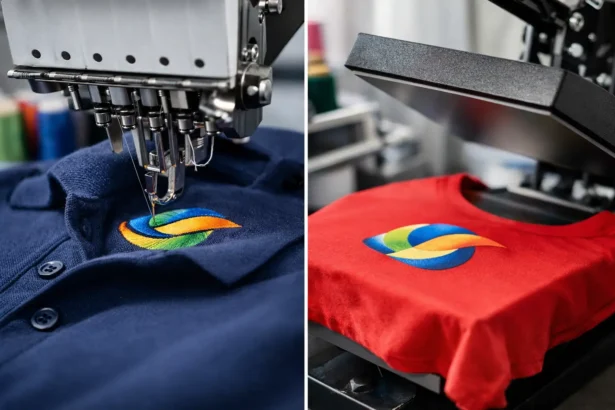
Logo placement also needs restraint. A uniform with too many branded elements can look promotional rather than professional. In many industries, a single embroidered logo on the chest, sleeve, or outerwear is enough. The goal is recognition, not visual clutter.
Other details often carry just as much weight as the logo itself. Buttons, piping, collars, stitching, pocket styles, and contrast panels can communicate discipline, elegance, or practicality. These finishing choices are where tailored uniform design often separates itself from generic off-the-shelf apparel.
Fabric selection is a branding decision too
An employee uniform branding guide should treat fabric as part of brand presentation, not just a technical specification. Texture, drape, breathability, wrinkle resistance, and color retention all affect how the uniform looks throughout the day.
For example, a structured suiting fabric can create authority and polish for financial or executive environments. A breathable blend with easier maintenance may be better for hospitality teams working long hours in warm conditions. In healthcare or food service, easy-care properties and repeated wash durability often carry more weight than formal texture.
There is always a trade-off. Premium-looking fabrics can require more careful maintenance. Easy-care materials may sacrifice some richness in appearance. The right answer depends on your work environment, laundering conditions, and how frequently each garment will be worn. A branding guide should define acceptable performance standards so appearance does not decline after a few months of use.
Fit is where brand image becomes real
Even the best-designed uniform loses impact if the fit is inconsistent. Poor sizing makes teams look mismatched. It also affects employee confidence, mobility, and comfort during long shifts.
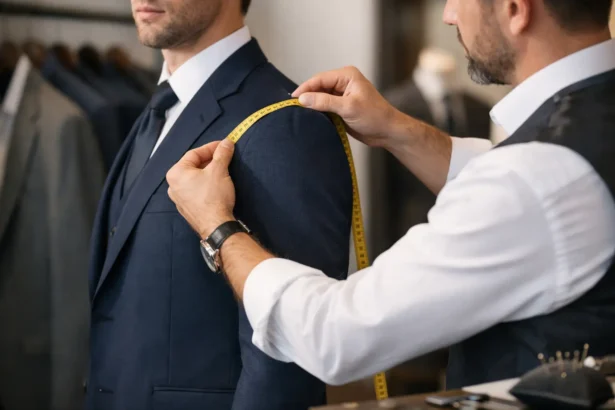
This is one of the clearest differences between basic uniform supply and a more consultative approach. Standard size runs may work for some back-of-house use, but businesses that prioritize brand image usually benefit from fit planning, size grading, and in many cases made-to-measure support for key roles.
Fit standards should be written into the guide. That includes silhouette, garment length, sleeve proportion, skirt or pant styling, and how formal or relaxed the overall look should be. If not, different batches or departments can begin to drift away from the original design intent.
For businesses with client-facing teams, tailoring is not a luxury detail. It is part of presentation control. Velcoor approaches this as both a branding and craftsmanship issue, because consistency in fit is what allows a uniform program to look intentional rather than improvised.
Consistency across locations requires planning
A uniform program often looks strongest at launch and then loses discipline over time. Staff turnover, restocking from different sources, changing fabrics, and ad hoc logo applications can all create visual inconsistency.
Your guide should prevent that by documenting approved garments, fabric references, color standards, branding placement, and seasonal options. It should also define who approves changes. Without that control, even a well-designed uniform system can become fragmented branch by branch.
This is especially relevant for growing businesses in competitive markets. When a customer visits one location and then another, the experience should feel connected. Uniform consistency supports that sense of trust and professionalism.
Employee adoption is part of the branding outcome
A uniform can meet every branding objective on paper and still fail if employees dislike wearing it. That does not mean staff preference should overrule brand standards, but it does mean comfort, climate, movement, and wearability deserve serious attention.
When employees feel comfortable and properly fitted, they tend to wear uniforms with more confidence. That confidence becomes visible in posture, service quality, and overall presentation. If garments are too hot, restrictive, or difficult to maintain, standards often slip. Sleeves get rolled unevenly, outerwear gets removed, and unauthorized substitutions start appearing.
The best uniform branding programs consider real use from the start. That may mean breathable shirting in warmer regions, stretch elements where movement matters, or layering options for different environments. Brand image is strongest when the uniform works naturally in the employee’s day.
A practical employee uniform branding guide for decision-makers
If you are reviewing or building a uniform program, focus on a few core questions. Does the uniform reflect your brand position clearly? Is it appropriate for each role? Will the fabrics hold their appearance over time? Can the fit be managed consistently across staff sizes and new hires? And just as important, will employees be able to perform comfortably in what they are wearing?
If the answer to any of those is uncertain, the issue is usually not the garment alone. It is the lack of a clear branding framework behind it. That is why the most effective uniform programs are developed through consultation, sample review, fitting, and refinement rather than a quick catalog order.
Well-designed uniforms do more than standardize clothing. They signal discipline, support trust, and reinforce the impression that your business pays attention to details that others ignore. When that standard is carried through fabric, fit, and branding, the result is not only a better-dressed team. It is a stronger business presence that customers notice before a word is spoken.
The most useful place to start is simple: define what your team should communicate the moment they walk into view, then build the uniform around that standard with precision.