English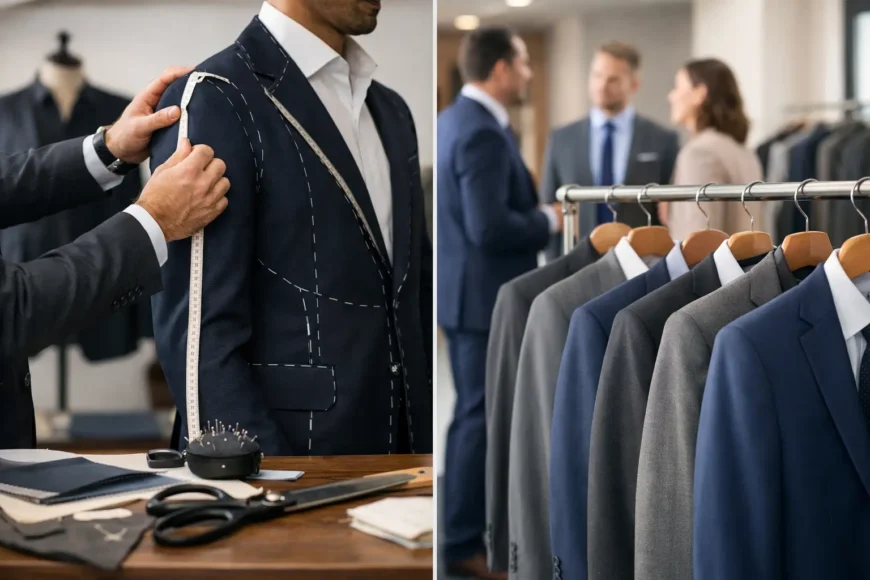
A poorly fitting suit is rarely just a personal wardrobe issue. For a client-facing team, it can signal inconsistency, discomfort, and a lack of attention to detail. The decision between bespoke suits vs ready made garments therefore affects more than individual appearance. It shapes how employees carry themselves, how comfortably they work, and how confidently customers perceive the business.
For organizations investing in professional attire, the right choice depends on the role, work environment, number of employees, brand standards, and expected wear. Ready-made suits can serve a purpose when speed and basic uniformity are the priority. Bespoke tailoring offers greater control when fit, fabric performance, and a distinctive business image matter most.
Bespoke Suits vs Ready Made: The Core Difference
Ready-made suits are produced in standard sizes and preset proportions. A business selects an available style, color, and size range, then relies on employees to find the closest possible fit. Minor alterations may improve the result, but the garment was not designed around the wearer or the organization.
A bespoke suit begins with a different process. Measurements are taken for the individual, while the design is developed around the company’s requirements. This can include the cut of the jacket, lapel style, trouser shape, fabric weight, lining, buttons, and branded details. For team programs, the objective is not simply to make every person look identical. It is to create a unified visual standard that respects different body types and job demands.
Made-to-measure sits between these two options. It adapts an existing pattern to a person’s measurements, while true bespoke work starts with deeper measurement and pattern considerations. In practical business terms, both custom approaches offer a substantially more considered result than an off-the-rack suit.
Why Fit Changes the Professional Impression
Fit is often the most visible difference between custom and ready-made apparel. Standard sizing is built around averages, yet employee teams are not average in shape, height, posture, or proportion. A jacket that pulls across the shoulders, sleeves that sit too long, or trousers that bunch at the ankle can make even an expensive garment appear untidy.
With bespoke tailoring, key areas are assessed deliberately: shoulder balance, chest comfort, jacket length, sleeve position, waist suppression, seat, rise, and trouser break. The result should allow employees to stand, sit, walk, greet guests, and work through long shifts without constantly adjusting their clothing.
This matters especially in hospitality, finance, luxury retail, executive offices, and restaurants, where staff are regularly seen by clients. It is equally valuable in healthcare administration and customer-service environments, where professionalism must work alongside ease of movement. A refined fit helps employees look composed because they feel less restricted by what they are wearing.
Fabric Is a Performance Decision, Not Just a Style Choice
Ready-made suits often come with limited fabric choices. That can be acceptable for occasional wear, but corporate apparel has a more demanding job. Employees may commute in heat, move between indoor and outdoor spaces, spend hours seated, or work extended shifts. The fabric needs to support the working day, not merely look good at the point of purchase.
Custom programs make it possible to select fabric according to function. Breathable wool blends can provide a polished finish for corporate teams. Durable polyester-wool blends may be better suited to high-use uniforms. Stretch components can improve mobility for front-of-house staff, while lighter-weight materials can make a meaningful difference in warm climates.
Color consistency also deserves attention. A navy blazer purchased from a ready-made collection today may not match the same product months later. For businesses managing new hires or replacements, an established fabric specification helps preserve a consistent appearance across the team. This is particularly valuable when uniforms are part of a long-term brand presentation strategy.
Consider the care requirements
The best fabric is not always the most luxurious one. A senior leadership team may benefit from premium suiting with a refined drape, while a restaurant service team may need wrinkle resistance, color retention, and easy-care practicality. The right choice reflects the role, laundering process, budget, and replacement cycle.
Brand Consistency Requires More Than Matching Colors
A ready-made suit can create a coordinated look, but it offers limited room to express a company’s identity. When every detail matters, custom tailoring gives organizations the ability to build attire around their visual standards rather than adapt their standards to what happens to be available.
Branded lining, embroidered names, logo placement, contrast piping, custom buttons, pocket treatments, and coordinated shirts or skirts can all be considered when appropriate. These details should be used with restraint. The strongest corporate uniforms do not feel promotional or overdesigned. They look intentional, polished, and clearly connected to the organization they represent.
A hotel may require elegant, durable blazers that distinguish concierge staff from reception personnel. A clinic may need professional, approachable uniforms that support hygiene and mobility. A financial services firm may prefer understated custom suits with consistent tones and refined finishing. Each setting calls for a different balance of authority, accessibility, and daily practicality.
Cost: Compare Value Over the Life of the Garment
The upfront price of ready-made suits is usually lower. For a small, urgent requirement with simple appearance standards, that can make it a sensible choice. If a business needs garments immediately for an event or short-term team expansion, off-the-rack options can provide a fast solution.
However, purchase price alone does not define value. A garment that fits poorly may require alterations, receive less wear, or need replacement sooner. It can also create an uneven team appearance when employees choose different fits, shades, or styles from retail stock. Those hidden costs become more noticeable as team size and public visibility increase.
Bespoke or made-to-measure suits require a larger initial investment, but they can deliver stronger long-term value through better fit, more suitable fabrics, defined specifications, and a more credible brand image. For organizations with regular hiring, a documented uniform design also makes future orders easier to manage.
The appropriate budget level depends on how often the suit is worn and what it represents. A boardroom uniform, daily hotel attire, and a once-a-year event suit should not necessarily receive the same investment.
When Ready-Made Suits Make Sense
Ready-made suits are not inherently the wrong choice. They are useful when the requirement is immediate, the team is small, customization is not essential, and the garments will be worn infrequently. They can also work as temporary attire while a more considered uniform program is being developed.
The limitation is control. Businesses may have to compromise on fit, fabric, availability, and consistency. Alterations can improve selected areas, but they cannot fully change the underlying structure of a standard pattern. For teams whose presentation directly influences customer trust, that compromise may become visible quickly.
When Bespoke Tailoring Is the Better Business Choice
Bespoke tailoring is particularly suited to companies that view staff attire as part of their service standard. It is a stronger option for client-facing teams, leadership groups, hotels, restaurants, clinics, and organizations that want a distinctive, cohesive look across varied body types.
The process also provides a practical advantage: consultation before production. Rather than ordering garments and hoping they perform well, decision-makers can assess role requirements, choose appropriate fabrics, confirm brand details, and plan sizing and fitting. This reduces guesswork and helps create apparel employees are more likely to wear with confidence.
Velcoor approaches corporate tailoring as an extension of professional image building. Through fabric guidance, precise fitting, customization, and sector-specific design considerations, a tailored program can serve both the employee and the brand behind the garment.
Make the Choice Around the Job, Not the Label
The question is not whether every employee needs the most elaborate suit available. The better question is what each role requires from professional apparel. Consider how often it will be worn, how much movement is involved, who will see it, how it must be maintained, and whether the company needs repeatable consistency as the team grows.
When those answers point toward precision, comfort, and recognizable brand standards, custom tailoring becomes a practical business decision rather than a luxury. The best professional attire gives employees one less thing to worry about and gives every client one more reason to trust the people in front of them.