English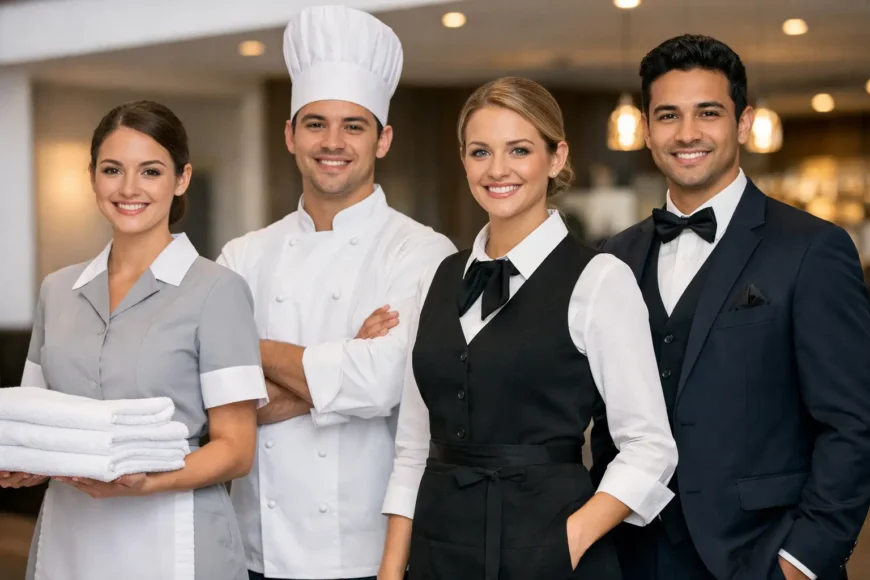
A guest often forms an opinion before the first greeting is complete. The host at the entrance, the concierge behind the desk, and the server approaching a table all communicate standards through their appearance. The best hospitality uniform design ideas turn that first visual impression into a practical advantage: a team that looks aligned, feels comfortable, and represents the business with confidence.
For hotels, restaurants, resorts, and event venues, a uniform should never be treated as a generic staff requirement. It is a working part of the guest experience. The right design supports movement, withstands repeated laundering, helps guests identify the right person quickly, and gives every role a polished place within the brand.
Best Hospitality Uniform Design Ideas Start With the Guest Experience
A strong hospitality uniform program begins by considering what guests need to see and feel. A luxury hotel may require quiet refinement, with tailored blazers, restrained colors, and fine-textured fabrics. A busy all-day dining restaurant may need a warmer, more approachable look that still holds up through long shifts. A boutique property may have greater freedom to use distinctive colors, contemporary silhouettes, or subtle local influences.
The key is consistency without making every department look identical. Guests should recognize one team, while still being able to distinguish the front desk from housekeeping, restaurant service, or management at a glance. This can be achieved through a shared color palette, matching embroidery placement, or common fabric accents rather than putting every employee in the same garment.
1. Tailored Front-of-House Suits and Blazers
For reception, concierge, guest relations, and management teams, tailored blazers immediately establish authority and care. Navy, charcoal, deep green, and rich burgundy are dependable choices because they appear professional, photograph well, and are more forgiving than pale colors during a long day.
A blazer does not need to feel overly formal. Pair it with an open-collar shirt or blouse for a modern business-casual property, or add a neck scarf, tie, or pocket square where a more elevated presentation suits the venue. The important detail is fit. A poorly proportioned jacket undermines even the strongest brand concept, while a properly fitted garment gives staff a composed, capable appearance.
2. Color Blocking That Guides Guests Naturally
Color can make operations easier. Consider using a darker base color for staff who work near food, luggage, or cleaning materials, then introduce a contrasting trim, collar, piping, or apron in the brand color. This creates a recognizable uniform without making the garment difficult to maintain.
Color blocking also helps define roles. Hosts may wear a blazer with a signature accent, servers may wear matching shirts with aprons, and supervisors may add a distinct vest or jacket. The visual system should be clear but not overly complicated. Too many colors or department-specific variations can make the team look fragmented instead of coordinated.
3. Elevated Aprons for Restaurant and Bar Teams
Aprons are among the most versatile hospitality uniform pieces because they combine function with visible personality. A cross-back apron in durable canvas or a refined waist apron in a performance blend can set the tone for the entire dining space. Leather-look tabs, contrast straps, reinforced pockets, and embroidered logos add character without sacrificing utility.
The trade-off is fabric weight. Heavy canvas can look excellent in a craft restaurant or café, but it may become uncomfortable in a warm kitchen-adjacent environment. For high-volume service, lighter stain-resistant materials often provide a better balance of polish and performance. Aprons should also be sized correctly, with ties and straps that accommodate different body types securely.
4. Performance Shirts That Stay Sharp Through Service
Hospitality teams need shirts that retain their shape from opening to closing. Stretch woven fabrics, moisture-managing blends, and easy-care finishes are especially valuable for employees who spend hours standing, reaching, carrying, and moving between indoor and outdoor spaces.
Classic white shirts remain effective for fine dining and formal hotels, but they are not the only option. Soft blue, black, slate, warm stone, or a subtle micro-pattern can offer a more distinctive identity while reducing the visibility of minor marks. When choosing a pattern, keep it restrained. Small-scale designs tend to look refined from a guest’s perspective and are easier to coordinate across a larger uniform program.
5. Role-Specific Layers for Hotels and Resorts
Layering gives a hospitality team flexibility across changing temperatures and job functions. A vest can create structure for restaurant staff without the formality of a full jacket. A lightweight overshirt can suit resort activities or bell service. A cardigan or tailored knit layer may work well for concierge teams in air-conditioned lobbies.
Each layer should have a defined purpose. Adding garments simply to make a uniform appear more elaborate can create heat, restriction, and inconsistent wear. Choose pieces staff will genuinely use, then ensure they coordinate with the core shirt, trouser, skirt, or dress options.
6. Modern Dresses and Skirts With Professional Mobility
For properties that prefer dresses or skirts for select front-facing roles, the silhouette should support movement as confidently as it supports presentation. Knee-length or midi styles with stretch, thoughtful shaping, and practical pocket placement can look elegant without limiting walking, bending, or standing.
Skirts should be offered with appropriate length and fit options, while trousers should always be available as an equally polished alternative. A uniform program works best when it respects employee comfort and individual needs. Choice within a controlled design framework protects the brand image while improving staff confidence.
7. Practical Housekeeping Uniforms With a Refined Finish
Housekeeping uniforms deserve the same design attention as guest-facing attire. These teams require breathable fabrics, room for movement, durable seams, and pockets placed for real working tools. At the same time, a clean color palette and well-fitted tunic, polo, or overshirt reinforce the property’s standards whenever team members are visible to guests.
Avoid treating housekeeping apparel as an afterthought or relying on oversized, generic garments. A simple, well-designed uniform in a performance fabric can look organized and professional while making demanding work more comfortable. Darker pants paired with a lighter branded top are often a practical, balanced solution.
8. Subtle Branding Rather Than Oversized Logos
Hospitality uniforms should reinforce a brand, not resemble promotional merchandise. A small embroidered logo on the chest, sleeve, apron bib, or collar can be more sophisticated than a large graphic. Tone-on-tone embroidery is particularly effective for premium hotels, private clubs, and upscale restaurants because it adds identity without visual noise.
Placement matters as much as size. A logo should remain visible when an employee wears an apron, jacket, or name badge. During the design process, test the branding across complete outfits instead of reviewing each garment in isolation.
9. Seasonal Variations That Preserve a Cohesive Look
A single uniform is rarely ideal for every season, especially for properties with outdoor service, warm climates, or heavily air-conditioned interiors. Build seasonal flexibility into the program from the start. Short-sleeve options, breathable fabrics, lightweight blazers, and weather-appropriate outer layers help teams remain comfortable without losing visual consistency.
The colors, branding, and core silhouettes should remain connected across seasons. Guests should see the same brand whether they visit during a summer lunch, an evening event, or a holiday stay. Seasonal pieces are an extension of the uniform system, not a separate wardrobe.
10. Inclusive Sizing and Precise Fitting for Every Team Member
The most impressive concept can fail if employees feel uncomfortable wearing it. Hospitality teams include different heights, body shapes, and movement requirements, so a one-size approach often produces uneven hems, tight shoulders, loose waists, and a visibly inconsistent result.
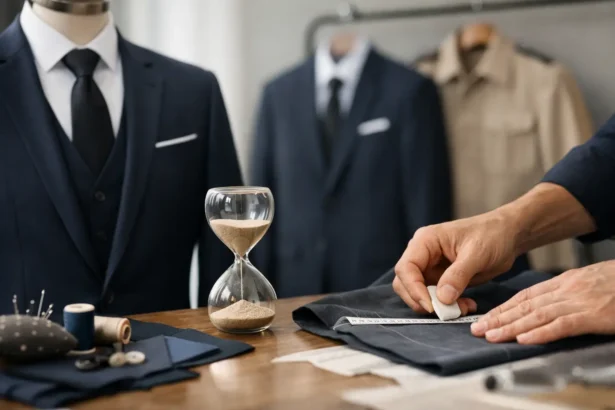
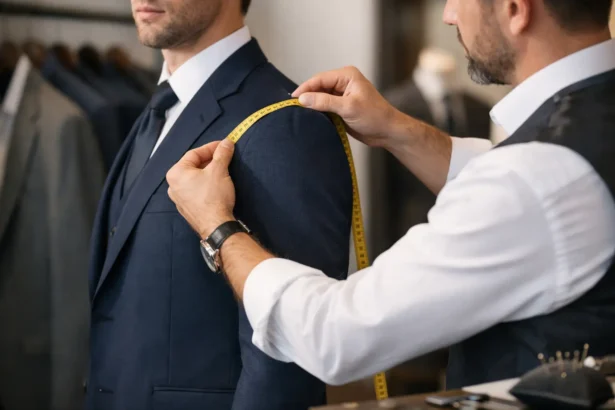
Professional measuring and fitting bring the design to life. They help determine appropriate garment proportions, sleeve lengths, trouser breaks, and fit preferences across the team. This precision also improves garment longevity because clothing that fits correctly experiences less strain during daily wear.
Choosing Fabric for Hospitality Uniform Design
Fabric selection is where presentation meets operational reality. Natural fibers may offer comfort and a premium hand feel, while blended fabrics can provide stronger wrinkle resistance, stretch, color retention, and easier care. The right option depends on the role, climate, laundering process, and expected shift length.
For front-office teams, a polished suiting fabric with breathable construction may be worth the investment. For restaurant service, a washable stretch blend with stain resistance can be the more practical choice. For housekeeping and back-of-house roles, durability and airflow usually matter most. Reviewing fabric samples under actual venue lighting and testing them during a working shift can prevent costly decisions based solely on appearance.
Build a Uniform Program, Not Just a Collection of Garments
The strongest hospitality uniforms are designed as a complete system. They account for each department, establish clear visual connections, and give staff garments that support the work they do. From tailored guest-service blazers to functional aprons and performance shirts, every piece should carry the same standard of craftsmanship.
A consultative fitting and design process makes the difference between clothing that is merely branded and a uniform that genuinely represents the business. Velcoor helps hospitality organizations translate their service standards into professionally tailored, brand-aligned apparel that employees can wear with confidence.