English
A corporate uniform is put to the test long before a client notices its color or logo. It must fit employees with different body types, remain presentable through a full shift, support the demands of each role, and represent the business with consistency. Knowing how to design corporate uniforms means balancing those practical demands with the visual standards your brand expects.
For a hotel, that balance may mean refined suiting for front-desk staff and more mobile, easy-care garments for housekeeping. For a clinic, it may mean breathable medical apparel with a calm, trustworthy appearance. The strongest programs are not built around a single attractive garment. They are designed as a working system for the people who wear them.
Start With the Job, Not the Garment
The most common uniform design mistake is choosing a style before defining the work. A blazer may create the right executive impression, but it is not the right starting point for an employee who spends the day lifting, serving, cleaning, or moving between indoor and outdoor spaces.
Begin by mapping each employee group according to its responsibilities, customer contact, movement requirements, and exposure to heat, spills, or repeated laundering. A restaurant host, server, kitchen crew member, manager, and delivery team may all represent the same business, yet their garments should solve different problems.
This is also where companies decide how much visual distinction each role needs. Customer-facing teams often benefit from more formal layers such as blazers, vests, tailored shirts, or neckwear. Operational roles may require simpler silhouettes, stretch fabrics, reinforced construction, and functional pockets. The goal is coordinated identity, not identical clothing.
Define the Brand Message Employees Need to Wear
Uniforms communicate before an employee speaks. Color, silhouette, texture, and finishing details can make a company appear established, approachable, premium, contemporary, clinical, or service-focused. That message should be deliberate.
Start with existing brand assets: your logo, primary and secondary colors, interior design, packaging, and customer experience. A uniform does not need to reproduce every brand color to feel aligned. In many cases, a neutral foundation in navy, charcoal, black, white, or beige creates a more refined result, while a logo, piping, lining, scarf, tie, or embroidered detail carries the signature color.
Consider the setting as carefully as the logo. High-end hospitality may call for subdued tones and elegant fabric texture. A family restaurant can use warmer colors and more relaxed styling. Healthcare organizations usually benefit from clean, calm color palettes that support trust and easy staff identification. When brand expression and workplace function conflict, function should lead. A polished uniform that employees cannot work in will not stay polished for long.
Choose Fabrics for Real Working Conditions
Fabric selection determines whether a uniform feels premium after six months or starts to look tired after a few washes. It affects comfort, drape, breathability, durability, stain resistance, and the amount of care employees must manage at home.
Natural fibers such as cotton offer softness and breathability, while wool blends provide a refined appearance for corporate suits and formal front-of-house attire. Polyester blends are often valuable for operational uniforms because they can resist wrinkling, hold color well, and withstand frequent washing. Stretch fibers can improve mobility in fitted shirts, pants, skirts, and active service garments.
There is no universal best fabric. A luxury reception team may need a structured suiting fabric that holds its shape. A restaurant team working near heat may prioritize lightweight, breathable blends. Medical staff may need fabrics selected for frequent laundering and dependable performance. Ask for fabric samples, assess them under your workplace lighting, and test how they feel against the skin before approving production.
Build a Uniform Collection, Not a Single Look
A well-designed program gives employees enough options to look consistent across changing duties, weather, and schedules. Rather than issuing one shirt and one pair of pants, create a controlled collection with approved combinations.
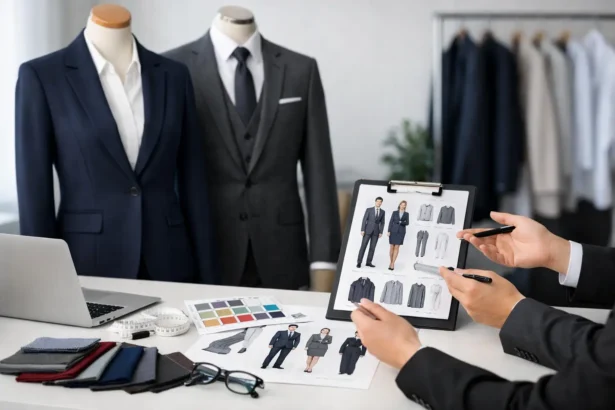
For example, a corporate office collection might include tailored shirts, blouses, pants, skirts, blazers, and optional knitwear in complementary colors. Hospitality teams may add waistcoats, aprons, scarves, ties, and name badges. This approach allows flexibility without creating the inconsistent appearance that comes from asking employees to interpret a loose dress code.
Keep the collection manageable. Too many styles complicate ordering, inventory, and replacements. Too few choices can create discomfort and reduce employee acceptance. The right number depends on team size, job variety, climate, and replacement cycles, but every piece should have a clear purpose.
Make Fit a Design Requirement
Even an excellent fabric and a strong brand concept can fail when garments fit poorly. Tight shoulders restrict movement. Gaping button plackets look unprofessional. Pants that are too long create safety and presentation issues. A one-size approach may seem convenient at the purchasing stage, but it often costs more through alterations, replacements, and dissatisfied staff.
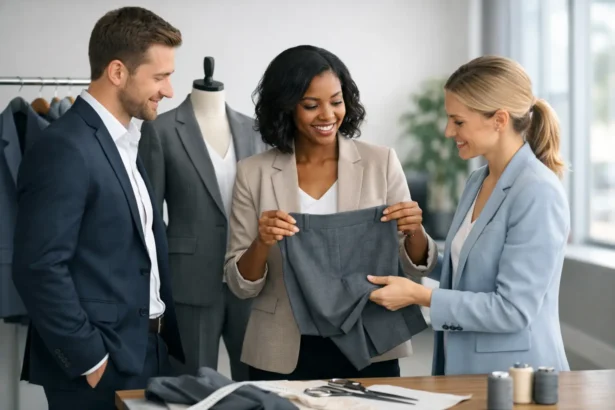
A professional fitting process is especially valuable for tailored suits, blazers, shirts, pants, and skirts. It helps each employee achieve a clean silhouette while preserving comfort for sitting, standing, reaching, and walking. For larger teams, a supplier should offer a structured sizing process and clear measurement support, including solutions for employees outside standard size ranges.
Fit is also an inclusion issue. Offer silhouettes that respect different preferences and workplace needs, while keeping the visual system consistent. Employees are more likely to care for and wear a uniform confidently when it feels designed for them rather than assigned to them.
Use Branding With Precision
A logo placed on every visible surface rarely looks more professional. It can make a refined garment feel promotional and may limit how comfortably employees wear it outside the workplace. The best placement depends on the garment, the brand, and the viewing distance.
Embroidery is often suitable for polos, shirts, blazers, jackets, and aprons because it provides a durable, dimensional finish. Printing may be more appropriate for larger graphics or specific fabric types. For formal corporate attire, a small embroidered chest logo, discreet sleeve mark, branded lining, or custom button detail can communicate identity with greater restraint.
Before approving branding, review the logo size, thread colors, placement, and visibility against the fabric. A dark logo can disappear on dark navy. Fine logo details can be lost in embroidery at a small scale. This is why pre-production samples matter: they reveal issues a digital mockup cannot.
Test the Uniform Before Full Production
A sample is not simply a final approval step. It is a working test. Have representatives from each job function wear sample garments during normal shifts, then gather focused feedback. Ask whether the garment becomes uncomfortable after several hours, whether pockets are useful, whether the fabric shows stains, and whether employees can move naturally.
Look at the garments at the end of the shift, not only when they are freshly pressed. Check for wrinkles, pulling at seams, color transfer, loose buttons, and visible wear. Launder samples according to the intended care method and inspect them again. A small pilot may add time early in the project, but it prevents expensive corrections across a large order.
Plan Ordering, Replacements, and Care
Uniform design continues after delivery. Teams grow, staff members change roles, and garments wear at different rates. Build a replacement plan into the initial purchase rather than treating it as an afterthought.
Keep records of approved styles, fabric codes, logo specifications, and employee sizes. This makes reordering more accurate and helps maintain consistency when new employees join. It is also wise to order a limited number of spare garments in common sizes, particularly for customer-facing roles where immediate presentation matters.
Care instructions should be realistic. If a garment requires specialized cleaning, determine whether the company will provide that service or whether employees will be expected to manage it. For daily uniforms, easy-care performance is often the better commercial choice. Premium appearance should not come with impractical maintenance requirements.
Work With a Uniform Partner That Understands the Details
Designing a cohesive uniform program requires more than selecting apparel from a catalog. It calls for consultation, fabric knowledge, pattern expertise, fitting coordination, branding control, and reliable production planning. These details are where an experienced corporate tailoring partner adds value.
Velcoor approaches uniform design as part of a company’s professional image, combining tailored fit, sector-appropriate fabrics, custom embroidery or printing, and coordinated apparel options for teams with varied responsibilities. The result should be clothing that employees can perform in and management can be proud to put in front of clients.
The right uniform does not ask employees to choose between comfort and credibility. Give your team garments that respect the work they do, make the brand instantly recognizable, and retain their standard through the daily demands of business.