English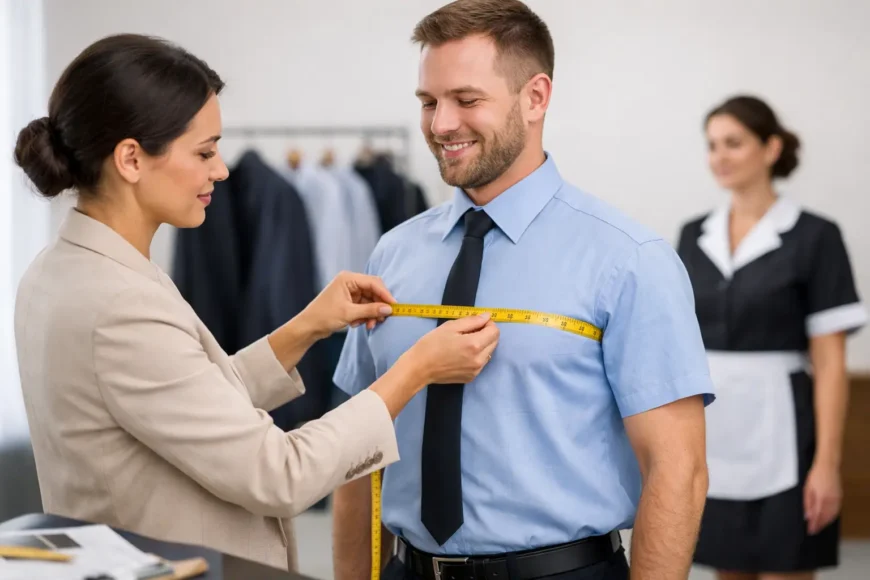
A uniform program can have the right fabric, color, and branding yet still fall short if the fit is inconsistent. Knowing how to measure staff uniforms gives your team a more professional appearance, improves comfort through long shifts, and reduces the expense of alterations, exchanges, and unused garments. For businesses ordering custom apparel, accurate measurements are the foundation of a polished result.
How to Measure Staff Uniforms Before Ordering
Start with a clear measuring process, not a collection of estimated sizes. Ready-to-wear labels vary significantly between brands, and an employee who wears one size in a retail shirt may need a different size in a tailored uniform. Measurements provide a reliable starting point, especially when staff members will wear the garments daily.
Use a flexible tailor’s tape measure, not a metal construction tape. Ask each employee to stand naturally, breathe normally, and wear lightweight clothing similar to what they would wear beneath the uniform. The tape should sit flat against the body without pulling tight or hanging loose.
For larger teams, assign one trained person or a consistent fitting team to take measurements. This helps avoid variations caused by different measuring techniques. Record every measurement immediately beside the employee’s name, job function, garment style, and any fit preference, such as regular, slim, or relaxed.
A custom uniform supplier can guide this process, but internal preparation makes fittings faster and helps ensure every employee is accounted for.
The Core Measurements for Staff Uniforms
The measurements required depend on the garment. A front-desk blazer requires greater detail than a polo shirt, while work pants and skirts require careful attention to waist, hip, and length. The following measurements cover most professional uniform programs.
Chest or Bust
Measure around the fullest part of the chest or bust, keeping the tape parallel to the floor. For men’s shirts, blazers, and jackets, this measurement is central to selecting the correct body size. For women’s blouses, dresses, and tailored jackets, it helps determine both comfort and shape across the upper body.
Do not ask employees to hold their breath or expand their chest. A uniform should allow normal movement, including reaching, sitting, and greeting customers comfortably.
Neck and Shoulder Width
For collared shirts, measure around the base of the neck where the collar naturally rests. The tape should be close but not restrictive. A collar that is too tight creates an uncomfortable appearance, particularly for customer-facing staff who wear ties, scarves, or buttoned collars.
Measure shoulder width from the outer edge of one shoulder to the outer edge of the other, across the upper back. This is especially valuable for blazers, formal jackets, and fitted uniforms. Poor shoulder fit is difficult to disguise: a jacket that is too narrow restricts movement, while one that is too wide loses its tailored structure.
Sleeve Length
Ask the employee to bend one arm slightly. Measure from the shoulder point, down the outside of the arm, to the wrist bone. For suit jackets and blazers, the desired sleeve length may differ from a shirt sleeve, so record the garment type clearly.
For hospitality and corporate settings, sleeve length has a noticeable effect on presentation. A jacket sleeve that exposes too much shirt cuff or covers the hand can make even premium tailoring look unfinished.
Waist and Hip
Measure the natural waist, usually the narrowest point of the torso or the area where the employee naturally bends. This is not always the same location as the waistband of a pair of pants. For trousers, record the preferred wearing position if the design sits lower or higher on the waist.
Measure the fullest part of the hips and seat with the employee standing naturally and feet together. This measurement is essential for women’s skirts, trousers, fitted dresses, and men’s work pants. It also helps prevent strain at the pockets, side seams, and back rise when employees sit or move throughout the day.
Inseam and Outseam
The inseam runs from the crotch seam to the desired hem length along the inside of the leg. It is best measured using a well-fitting pair of trousers as a reference when possible. Measure the garment flat from the crotch seam to the bottom hem, rather than estimating where the pant should end.
The outseam runs from the top of the waistband to the hem along the outside of the leg. This can be useful for high-waisted trousers, women’s pants, and styles with a defined waistband. Record whether employees will wear flat shoes, dress shoes, safety footwear, or heels, as footwear changes the right finished length.
Thigh, Calf, and Skirt Length
For active roles, measure the fullest part of the thigh if the uniform pants have a tapered or tailored cut. Restaurant staff, clinic teams, and hotel personnel often need room to walk quickly, climb stairs, bend, or carry equipment. A trim silhouette can still be practical, but it should never limit the movement required by the role.
For skirts, confirm the finished length from the natural waist to the preferred hem point. Knee-length, below-the-knee, and midi styles create very different impressions and may suit different workplace policies. Consider whether employees spend most of the day standing, seated, or moving between departments.
Measure for the Job, Not Only the Size Chart
The best uniform fit is not simply a numerical match. It must support the work employees perform. A tailored blazer for a finance or reception team needs a clean silhouette and enough ease for sitting through meetings. A hotel housekeeping uniform needs stronger freedom of movement at the shoulders, hips, and knees. Healthcare apparel must remain comfortable through long shifts, frequent bending, and repeated laundering.
This is where fabric choice matters. A structured woven fabric may require more wearing ease than a stretch-blend material. A slim-cut shirt may need a different chest allowance than a classic-fit shirt, even when both use the same body measurement. If the garment includes layers, such as a vest beneath a blazer or a polo beneath a jacket, factor those layers into the fitting decision.
Avoid assuming that a closer fit is always more professional. Excessively fitted uniforms can pull at buttons, restrict movement, and wear out faster at stress points. On the other hand, garments that are too loose can look untidy and undermine the visual consistency a uniform program is meant to create. The right balance depends on the role, fabric, cut, and your organization’s desired image.
Create a Measurement Sheet That Prevents Errors
A simple, standardized measurement sheet protects the accuracy of the entire order. Include the employee’s full name, department, garment type, style or cut, and each required measurement in inches. Note any individual considerations, such as a longer sleeve preference, maternity needs, mobility requirements, or a request for additional ease.
For team orders, also record the approved sample size or fitting garment used during the session. This gives both your internal team and the uniform manufacturer a clear reference if questions arise during production. Measurements should be reviewed before the order is finalized, particularly for employees whose numbers fall between standard sizes.
Privacy matters as well. Measurements are personal information. HR or an authorized manager should collect and store them securely, and employees should be measured in a respectful setting rather than in an open workspace.
Common Staff Uniform Measuring Mistakes
Most fitting problems are preventable. The most frequent mistake is measuring over bulky clothing, which adds unnecessary volume and can lead to oversized garments. Another is pulling the tape too tightly in an effort to achieve a slim fit. Body measurements should reflect the body as it is; the garment pattern provides the appropriate ease.
Teams also run into trouble when they use old measurements. Weight changes, pregnancy, changing roles, and even a shift from office duties to more active work can affect the right fit. If there has been a significant delay between fitting and production, confirm whether measurements still apply.
Finally, do not rely entirely on self-measurement for tailored blazers, suits, or formal uniforms. Employees can accurately provide basic chest or waist information in some cases, but shoulder position, sleeve length, jacket length, and posture are easier to assess during a professional fitting.
When Professional Fitting Adds Value
For small orders of simple polos or T-shirts, a detailed size chart and a fit sample may be sufficient. For formal suiting, branded blazers, custom shirts, or teams with varied body types, an in-person fitting provides greater control. It allows the tailoring team to assess posture, proportions, movement, and individual preferences that cannot be captured by a single number.
Velcoor approaches staff uniform fitting as part of a wider professional image process. The goal is not merely to produce garments in a range of sizes, but to create uniforms that reflect your company’s standards while remaining practical for the people who wear them every day.
A well-measured uniform tells employees that their comfort and presentation have been considered with care. Give the fitting process the time it deserves, and the finished garments will carry that attention into every client meeting, guest interaction, and working day.