English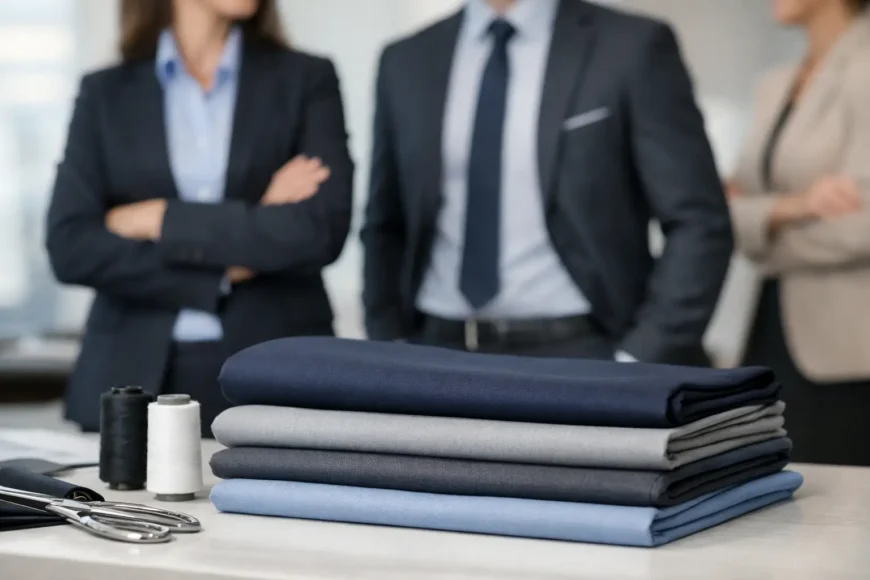
A uniform can look polished at 8:00 a.m. and feel unworkable by noon if the fabric was chosen for appearance alone. The best fabrics for corporate uniforms must do more than match a brand color or create a sharp silhouette. They need to support long shifts, repeated laundering, varied job duties, and the confidence employees carry into every client interaction.
For business leaders, fabric selection is not a minor production detail. It directly affects staff comfort, garment lifespan, replacement costs, and the consistency of your company image. A hospitality front desk team, a finance office, and a clinic reception team may all require professional attire, but they do not need the same fabric performance.
What Makes a Uniform Fabric Business-Ready?
The right uniform fabric balances five practical requirements: appearance, comfort, durability, care, and suitability for the job. The most refined-looking material is not necessarily the best choice for employees who move constantly, work near heat, or need to wash their uniforms frequently. Likewise, an easy-care fabric can fall short if it looks overly casual or does not hold its shape.
A well-planned uniform program begins by considering where and how each garment will be worn. Is the setting client-facing? Is the work environment air-conditioned, warm, humid, or outdoors? Will garments be worn for eight hours or twelve? Do employees need stretch, breathable construction, stain resistance, or a more formal drape?
Fit matters alongside fabric. A high-quality material will only perform as intended when a garment is cut correctly for the wearer and the role. This is why a tailored approach gives organizations more control than selecting standard ready-made apparel.
Best Fabrics for Corporate Uniforms by Performance
Polyester: Reliable, Durable, and Easy to Maintain
Polyester remains one of the most widely used fabrics in corporate uniforms for good reason. It is durable, wrinkle resistant, colorfast, and able to withstand frequent washing. For companies managing larger teams, these qualities make polyester a practical choice for shirts, trousers, blazers, vests, housekeeping attire, and operational uniforms.
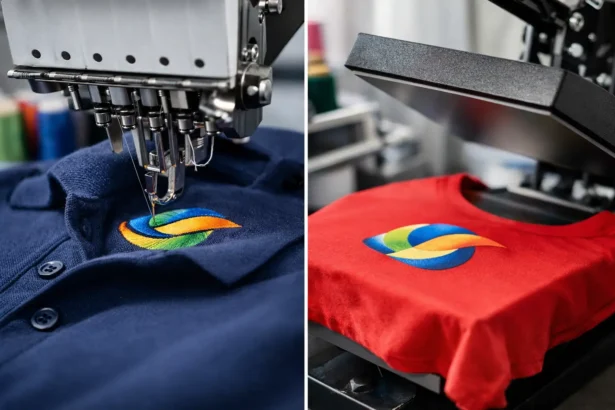
Modern polyester is far more versatile than its older reputation suggests. Depending on the weave and weight, it can be smooth and formal, textured and breathable, or structured enough for tailored garments. It also holds embroidered logos and printed branding well, helping uniforms maintain a clean, consistent identity over time.
The trade-off is breathability. Pure polyester may feel warm in high-temperature environments or during physically active work. For that reason, it is often most effective as part of a blend rather than the only fiber in the garment.
Cotton: Comfortable and Naturally Breathable
Cotton is valued for its soft hand feel, breathability, and familiar comfort. It is an excellent option for corporate shirts, restaurant uniforms, healthcare reception attire, and office apparel where employees spend long hours in customer-facing roles. Cotton also gives uniforms a more natural, premium appearance than many synthetic alternatives.
For formal shirts, cotton creates a crisp, professional finish and is comfortable against the skin. It works especially well for teams who need a polished look without the heavier structure of suiting fabrics.
However, 100% cotton wrinkles more readily and may shrink if care instructions are not followed. It can also take longer to dry than synthetic fabrics. A pure cotton shirt may be ideal for an executive team with professional laundering or careful garment care, but it can be less practical for high-turnover, high-wash operational uniforms.
Cotton-Polyester Blends: The Everyday Corporate Standard
For many organizations, a cotton-polyester blend offers the strongest balance of comfort and operational practicality. The cotton provides breathability and softness, while polyester improves wrinkle resistance, color retention, shape stability, and durability. This combination is particularly effective for employee shirts, polos, blouses, light jackets, and service uniforms.
The blend ratio should match the work environment. A higher cotton content usually feels cooler and softer, while a higher polyester content generally improves durability and makes laundering easier. There is no universal best ratio. A hotel concierge shirt and a restaurant service shirt may look similar, yet their ideal fabric composition can differ because of heat exposure, movement, and cleaning demands.
For companies that need a uniform to look consistently neat without placing a demanding care burden on employees, cotton-polyester blends are often a sound starting point.
Wool and Wool Blends: Refined Tailoring for Formal Roles
When the goal is authority, structure, and a premium corporate presence, wool and wool-blend fabrics remain the benchmark for suits, blazers, trousers, skirts, and formal vests. Wool has a natural ability to regulate temperature, resist wrinkles, and drape elegantly. A well-tailored wool suit communicates precision in a way few other materials can replicate.
This makes it particularly suitable for finance, executive offices, luxury hospitality, real estate, client advisory teams, and businesses where staff presentation is central to trust. Wool is available in different weights, allowing organizations to select lighter options for warmer conditions and more structured weights for formal settings.
Pure wool requires more careful maintenance and typically carries a higher initial cost. A wool blend can offer a more accessible alternative, adding polyester or stretch fibers to improve durability, reduce wrinkling, and simplify care. For teams that wear blazers daily, a quality wool blend often delivers the right combination of polish and resilience.
Stretch Blends: Built for Movement and Better Fit
Uniforms should never restrict the work they are meant to support. Stretch blends, often made with a small percentage of spandex or elastane, improve mobility in fitted shirts, pants, skirts, dresses, and tailored jackets. This is particularly valuable for hospitality staff, restaurant teams, clinic personnel, event crews, and employees who move between customer service and operational tasks.
The key is moderation. A modest amount of stretch can make a garment more comfortable and forgiving throughout a long shift while preserving a professional shape. Too much stretch, especially in a low-quality fabric, can make a uniform look casual or lose its structure over time.
When paired with tailored patterning and accurate measurements, stretch fabrics can create a sharper fit across a diverse workforce without sacrificing ease of movement.
Performance Fabrics: Practical for Active and High-Heat Roles
Performance fabrics are designed to manage moisture, dry quickly, and support active work. They are useful for teams working in warm spaces, outdoor environments, kitchens, logistics settings, or roles that demand frequent movement. Depending on the construction, these fabrics may include moisture-wicking properties, breathable panels, anti-odor treatments, or enhanced resistance to stains.
They are not always appropriate for a boardroom-facing uniform. The finish can appear more athletic than formal, particularly in lightweight knit constructions. But for branded polos, operational shirts, event apparel, and technical service uniforms, performance fabrics can improve employee comfort significantly.
A strong uniform program may use performance materials selectively. A hotel, for example, might choose tailored suiting for reception staff while selecting breathable stretch polos for maintenance or banquet setup teams. The visual identity stays cohesive through coordinated colors, logo placement, and design details rather than forcing one fabric across every department.
Match Fabric to the Role, Not Just the Look
The most successful corporate uniform collections recognize that employees have different responsibilities. A single fabric choice for every person can create avoidable compromises. Front-of-house staff may need structured blazers and crisp shirts. Food service employees may need breathable, washable fabrics with stain-conscious finishes. Healthcare administration teams may prioritize comfort, easy care, and a reassuring professional appearance.
Consider the following questions during planning: How often will the garment be washed? Does the employee work in a warm or physically demanding environment? Is the uniform expected to look formal at close range? Will it carry embroidery, printed graphics, or name personalization? Does the garment need to coordinate with suits, aprons, outerwear, or accessories?
These details influence not only the fabric itself, but also its weight, weave, color, and construction. Dark colors may conceal minor marks more effectively, while lighter colors can reinforce a clean, welcoming image in clinics and hospitality settings. Tightly woven fabrics generally appear more formal and resist wear well, while softer knits offer flexibility and comfort.
Why Fabric Testing Protects Your Investment
Before approving a full production run, request fabric samples and evaluate them under real working conditions. Assess the color under your workplace lighting, feel the material against the skin, check how it drapes, and review its care requirements. If possible, produce a sample garment for wear testing by employees from different roles and body types.
This step can reveal issues that a swatch alone cannot show: a shirt that becomes too warm during a shift, a blazer that creases at the elbow, a pale fabric that shows through, or a stretch material that loses recovery after washing. It also gives decision-makers confidence that the selected fabric supports both staff needs and brand standards.
At Velcoor, fabric selection is treated as part of the uniform design process, not an afterthought. The right recommendation considers the desired image, the demands of the role, customization requirements, and the fit of the finished garment.
A corporate uniform earns its value when employees are comfortable wearing it, managers can rely on its performance, and customers recognize the professionalism it represents. Choose fabric with the same care you apply to your people and your brand.