English
A poorly fitted suit shows up before an employee says a word. In client-facing environments, that matters. Custom made business suits for women give companies more than a polished look – they create consistency, comfort, and a professional standard that supports the brand in every meeting, welcome desk, consultation room, and executive setting.
For businesses managing image across multiple roles, women’s suiting cannot be treated as an afterthought. Ready-made options often miss the mark on fit, proportion, and practicality, especially across a team with different body shapes, job duties, and style requirements. A custom approach gives decision-makers control over presentation while giving employees clothing they can wear with confidence through a full workday.
Why custom made business suits for women matter in business
Professional attire does not operate in isolation. It shapes first impressions, affects how staff feel at work, and reinforces how seriously a company takes its own standards. In sectors such as finance, hospitality, healthcare administration, luxury retail, and corporate services, a refined suit communicates structure and credibility without needing explanation.
For women’s corporate attire, fit is the difference between simply being dressed and looking truly professional. Off-the-rack suits often rely on generic sizing that may fit the shoulders but pull at the hips, or fit the waist but fall poorly at the jacket length. Across a team, those inconsistencies become visible very quickly.
Custom tailoring solves this by aligning the garment to the person, not forcing the person to adapt to the garment. That is especially valuable for organizations seeking a consistent visual identity across departments while still respecting individual comfort and proportion.
What businesses gain from a custom program
The strongest case for custom suiting is not only aesthetics. It is operational. When a company invests in tailored businesswear for women, it reduces many of the issues that come with standard retail purchasing.
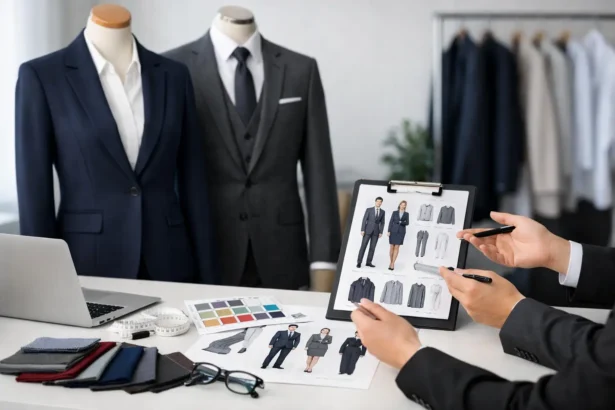
A custom program allows businesses to standardize color, silhouette, fabric quality, and finishing details. That creates a more cohesive appearance across teams, whether the goal is formal executivewear or structured front-of-house attire. It also supports brand alignment in a more subtle and refined way than simply adding a logo to a garment.
There is also the matter of comfort and wearability. Employees who spend long hours standing, moving between appointments, greeting clients, or attending presentations need clothing that performs well throughout the day. A suit that looks sharp at 9 a.m. but feels restrictive by noon is not doing its job.
Tailored construction, better fabric selection, and role-specific design choices improve the daily experience of wearing formal business attire. For employers, that often translates into stronger presentation, better employee satisfaction, and fewer complaints about uniform limitations.
The difference between bespoke appearance and practical uniform design
Not every business needs the same type of suit. A law office may want a more traditional structure with strong lapels, dark tones, and conservative styling. A hospitality group may prefer softer tailoring, lighter fabrics, and more flexibility in movement. A corporate reception team may require coordinated jackets, skirts, and pants that feel formal but approachable.
This is where custom work becomes more valuable than standard catalog ordering. The design process can account for industry expectations, climate conditions, employee responsibilities, and brand image. In a warm, humid market, fabric breathability matters. In a high-contact service environment, stain resistance and durability matter just as much.
A well-planned women’s suiting program balances appearance with function. That balance is rarely achieved through mass-produced retail options because retail is built to serve the average buyer, not the operational needs of a business.
Key design decisions in custom made business suits for women
When companies evaluate custom suiting, the conversation should go beyond jacket and trouser sizing. The right supplier will guide decisions that affect both look and long-term performance.
Fabric is the first major factor. A suit may need a refined wool blend for a more executive feel, or a lighter performance fabric for high-use environments. Some businesses prioritize drape and sophistication. Others need wrinkle resistance, easy care, and stronger durability. There is no single correct choice – it depends on where and how the garment will be worn.
Cut and silhouette come next. A fitted blazer can project authority, but if it is too structured for active roles, it may limit comfort. Straight-leg pants may work better for some teams, while tapered cuts or pencil skirts may suit others. The right shape should support the brand image without making daily movement difficult.
Details matter more than many buyers expect. Button placement, lapel width, pocket style, lining, sleeve length, and skirt vent design all contribute to how polished the final garment feels. Even subtle customization such as contrast lining, monogramming, or discreet embroidery can strengthen brand identity without making the suit feel promotional.
Fit is where quality becomes visible
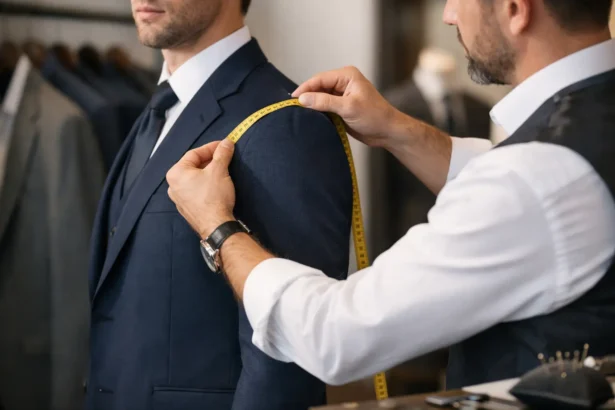
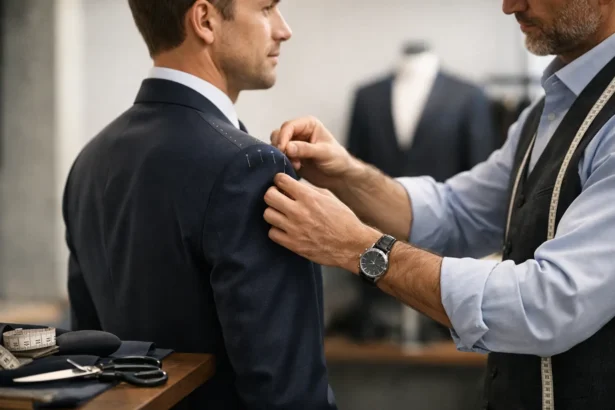
Most corporate buyers notice fabric first. Clients and employees notice fit first. That is why measuring and fitting are not minor steps in the process – they are the core of the result.
Women’s suiting requires precision because body proportions vary widely. Height, shoulder width, bust, waistline, hip shape, and preferred ease all affect how a jacket or pair of pants should be built. A size-based system cannot capture those differences well enough for a professional team standard.
Made-to-measure and custom fitting produce a cleaner line through the shoulders, better balance at the waist, and a more intentional silhouette overall. The employee feels the difference immediately, but the visual benefit is just as important. A suit that sits correctly looks more expensive, more credible, and more aligned with executive standards.
For organizations outfitting multiple employees, this precision also helps avoid a common problem: some team members looking polished while others look like they were given whatever was available. Consistency in fit communicates fairness, professionalism, and attention to detail.
Choosing a provider for women’s custom business suits
A strong tailoring partner should do more than take measurements and submit an order. Businesses need a supplier that understands brand standards, workplace realities, and the level of consistency required across repeat orders.
Look for a provider that can consult on fabric, styling, and role-specific requirements rather than simply offering a menu of options. Production quality matters, but so does guidance. The best results come from a process that includes design consultation, fit assessment, sample review where needed, and clear communication on timelines.
Scalability is another important consideration. Some businesses start with executive teams and later extend the same visual language to managers, front desk staff, or sales teams. A provider should be able to maintain continuity across departments while adjusting garment specifications for different roles.
This is where an experienced corporate tailoring company adds real value. Velcoor approaches custom suiting as part of a broader professional image strategy, helping businesses align fit, fabric, branding, and function rather than treating each garment as a separate order.
When custom suits are worth the investment
Not every company needs fully tailored suiting for every employee. For some, custom women’s suits make the most sense for leadership teams, reception staff, sales professionals, or high-visibility client-facing roles. For others, a complete tailored uniform program creates a stronger return because presentation is central to the customer experience.
The investment is usually worthwhile when poor fit has become a recurring issue, when brand consistency matters across locations, or when ready-made purchasing creates more waste than value. It is also a smart move for businesses that want their staff presentation to reflect a premium level of service.
The cost conversation should include longevity. A well-made suit that fits properly, wears comfortably, and holds its structure over time often performs better than cheaper alternatives that need frequent replacement or cause dissatisfaction from the start.
A sharp business image is built through repeated details, not one-time gestures. When women on your team are dressed in suits designed for their roles, their proportions, and your brand standards, the result feels intentional. That is what clients notice, and it is what employees carry with them into every professional interaction.