English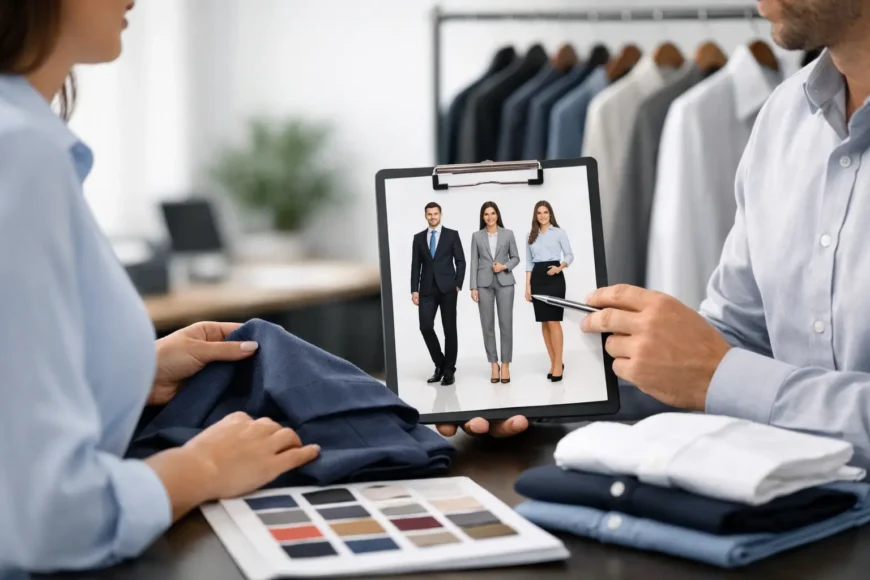
A poor uniform decision usually shows up slowly. Shirts lose shape after repeated washing, sizing becomes inconsistent across departments, and new hires end up wearing something close enough rather than something correct. By the time leadership notices, the brand impression has already started to drift. That is why choosing the right office uniform supplier is less about buying garments and more about protecting consistency, professionalism, and daily confidence across your team.
For offices, front-desk teams, client-facing departments, and administrative staff, uniforms sit at the intersection of image and function. They need to look polished under regular use, feel comfortable through long workdays, and reflect the standards of the business without becoming difficult to manage. A supplier that understands tailoring, fabric performance, and operational realities can make that process far more efficient.
What an office uniform supplier should actually provide
Many companies begin by comparing price per piece. That matters, but it is rarely the factor that determines whether a uniform program succeeds. A strong office uniform supplier should offer a full process that starts with consultation and ends with reliable repeatability.
That means understanding your business environment, the roles different employees perform, and the image you want to project. A reception team may need sharper visual structure and stronger brand presence, while back-office personnel may need lighter fabrics and simpler styling for movement and comfort. If every role is treated the same, the result often looks generic instead of intentional.
The best suppliers also help translate branding into apparel decisions. This can include silhouette, fabric texture, color coordination, embroidery placement, and styling details that support a professional identity without making the garments feel overly promotional. Office uniforms work best when they look refined first and branded second.
Fit is where professionalism becomes visible
In office wear, fit does more than improve appearance. It shapes how staff carry themselves, how comfortable they feel during long hours, and how credible the business looks in person. Off-the-rack sizing may appear convenient, but it often creates uneven results across a team. One department looks sharp, another looks compromised, and the brand experience becomes inconsistent.
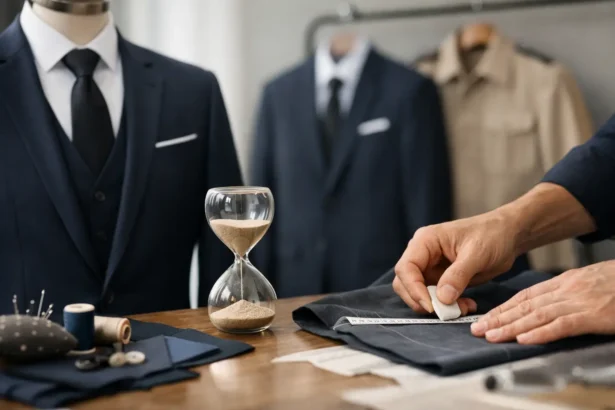
A supplier with measure-and-fit capability brings real value here. Tailored sizing or adjusted fits help accommodate different body types while keeping the overall look cohesive. That matters for blazers, shirts, trousers, skirts, and formal dresses, especially in organizations where employees interact directly with clients, partners, or guests.
There is also a practical side to fit. When clothing is too tight, staff feel restricted and garments wear out faster at stress points. When it is too loose, the uniform can look untidy by midday. A proper fitting process reduces both issues and improves day-to-day wearability.
Why ready-made is not always the cheaper option
Ready-made uniforms often look cost-effective at the quotation stage. The hidden cost appears later in alterations, replacements, unused stock, and staff dissatisfaction. If employees avoid wearing the uniform correctly because it feels uncomfortable or unflattering, the business loses the value it expected from standardization.
Custom or semi-custom production can cost more upfront, but it often delivers better long-term control. The garments are more consistent, the team looks more polished, and reorders are easier to manage when specifications have already been established.
Fabric selection affects more than appearance
Office uniforms are judged quickly by appearance, but they are lived in through heat, movement, repeated washing, and long working hours. Fabric choice determines whether a uniform remains crisp and professional after months of use or starts to look tired after a short cycle.
A capable office uniform supplier should guide fabric selection based on real usage, not just visual preference. In warmer climates or high-movement roles, breathable and durable materials are often more practical than heavier fabrics that hold structure beautifully but feel uncomfortable by afternoon. In executive or high-visibility settings, a more premium finish may be worth the investment because it reinforces brand standards in every meeting and client interaction.
The right answer depends on the role. That is where supplier expertise matters. A polished uniform for finance staff may require different fabric behavior than one designed for a clinic administrator or hospitality office team, even if both need a formal appearance.
Durability, maintenance, and replacement cycles
A uniform program should be easy to maintain at scale. Fabrics that wrinkle excessively, fade too quickly, or require delicate care can create operational friction for both staff and management. If the clothing looks high-end only when freshly pressed and carefully handled, it may not hold up in real business conditions.
This is why decision-makers should ask practical questions early. How does the fabric respond to frequent laundering? Will dark tones retain depth after repeated use? Does the material resist pilling? Can it maintain a structured appearance through a full workday? These details affect replacement frequency and total cost far more than many buyers expect.
Branding should be precise, not loud
Uniform branding works best when it feels integrated into the garment rather than applied as an afterthought. Office attire especially requires restraint. A logo that is too large, poorly placed, or mismatched in thread color can reduce an otherwise professional uniform to something that feels promotional rather than refined.
An experienced supplier will help balance visibility with elegance. Embroidery, monograms, contrast piping, lining details, and coordinated brand colors can all strengthen corporate identity when used with discipline. The goal is not simply to display a logo. The goal is to present a team that looks intentional, consistent, and aligned with the company’s standards.
This becomes even more important for businesses with multiple locations or departments. Brand consistency across branches, floors, and job functions sends a clear message about operational quality. Uniforms are one of the few brand assets worn live, every day, in front of customers and stakeholders.
Service reliability matters after production begins
The first delivery is only one part of the relationship. A dependable office uniform supplier should also support reorders, sizing updates, onboarding for new employees, and adjustments when roles or branding evolve. This is where many businesses run into frustration. The initial proposal is polished, but ongoing support becomes slow, inconsistent, or inflexible.
That creates avoidable problems. New staff wait too long for approved uniforms. Replacement garments no longer match the original run. Departments begin improvising, and the visual consistency of the team starts to break down.
A better supplier builds systems around continuity. Specifications are documented clearly. Fabrics and trims are managed with consistency in mind. Communication remains responsive after the first order is completed. For growing businesses, this operational stability is as important as the garments themselves.
Questions worth asking before you commit
When evaluating suppliers, ask how they handle fittings, minimum quantities, repeat orders, and quality control. Ask whether they can advise on role-specific design, not just take an order. Ask how they manage consistency between production batches. These are not minor details. They reveal whether the supplier is acting as a true uniform partner or simply a garment vendor.
It is also worth reviewing samples in person whenever possible. Fabric hand feel, stitching quality, collar structure, and finishing details are much easier to judge physically than through photos alone. Office uniforms rely on refinement, and refinement is often found in the details.
The right supplier helps shape business image
Uniforms influence how a company is perceived before a word is spoken. In reception areas, meetings, consultations, and internal interactions, they reinforce standards. A sharp, well-fitted team suggests discipline, care, and consistency. A mismatched or poorly maintained uniform sends the opposite message, even when the service itself is strong.
That is why selecting a supplier should be approached as a brand decision as much as a procurement one. The right partner helps align garment design with business goals, employee comfort, and daily practicality. They understand that a uniform must perform in real conditions while still presenting the company at its best.
For organizations that value tailored fit, fabric choice, and a more consultative approach, a specialist such as Velcoor offers a stronger foundation than a one-size-fits-all provider. That kind of partnership is especially valuable when your workforce includes multiple roles, different body types, and a clear expectation of professional presentation.
A good uniform may look like a simple operational purchase on paper. In practice, it becomes part of how your business is recognized, remembered, and trusted. Choose a supplier that treats it with that level of care.