English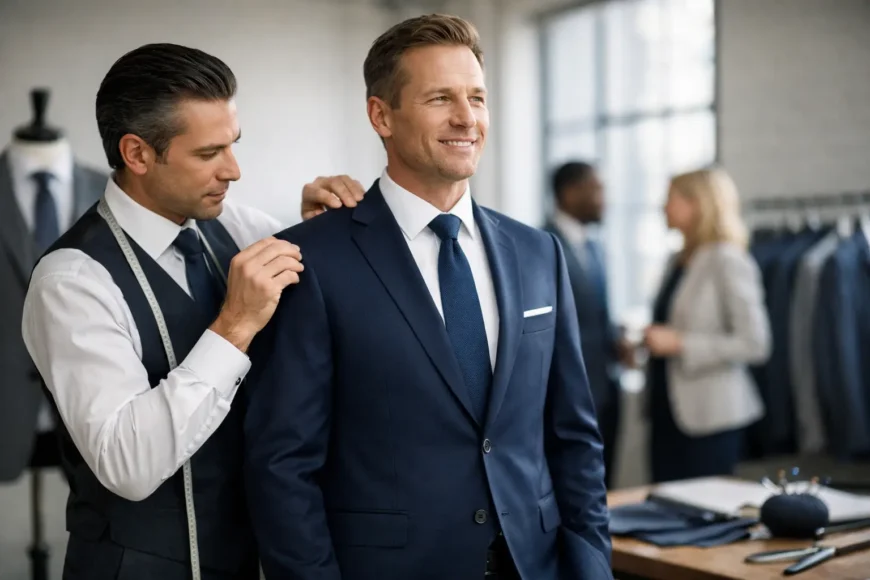
A corporate suit tailor does more than make employees look well dressed. The right tailoring partner turns everyday workwear into a visible standard of professionalism – one that customers recognize at reception, clients notice in meetings, and employees feel the moment they put it on. For organizations where trust, service, and presentation matter, a suit or formal uniform is part of the business experience.
Ready-made clothing can appear convenient at the start. Yet inconsistent fits, limited fabric choices, and garments that lose their shape after repeated wear often create a more expensive problem over time. Custom corporate attire provides a more considered solution: clothing designed around your people, your working environment, and the image your organization intends to project.
Why Corporate Attire Is a Brand Decision
A team’s appearance communicates before anyone speaks. In a financial office, a tailored suit can reinforce confidence and discretion. In a hotel or restaurant, refined blazers and uniforms help guests identify staff while supporting a premium service atmosphere. For clinics and healthcare teams, professional apparel must balance authority with comfort, movement, and cleanliness.
This is why corporate clothing should not be treated as a generic procurement item. It is a practical brand asset. When employees wear coordinated, well-fitted attire, the business appears organized, dependable, and intentional. That perception influences how clients, visitors, and even employees themselves respond to the organization.
Consistency matters, but consistency does not mean putting every employee in the same standard-size garment. A cohesive visual identity can accommodate different body types, departments, and job responsibilities. A front-of-house manager may need a structured blazer for client-facing duties, while an operations team may require a more flexible shirt and trouser combination. The strongest programs maintain a shared design language while respecting how people actually work.
What a Corporate Suit Tailor Should Deliver
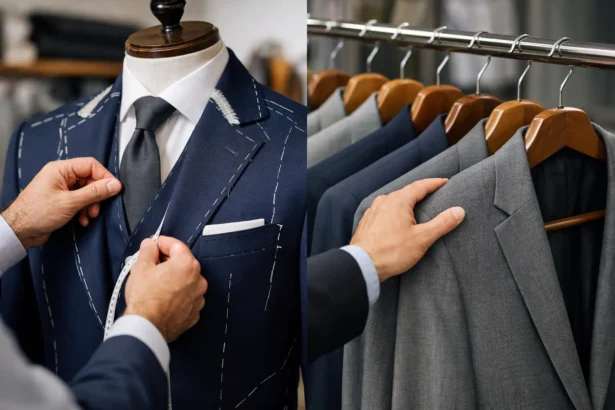
Choosing a corporate suit tailor is not simply about selecting a color and taking measurements. The process should begin with consultation. Your tailoring partner needs to understand your industry, employee roles, brand colors, preferred level of formality, and day-to-day working conditions before recommending fabrics or cuts.
Precise Fit for a Professional Standard
Fit is where custom tailoring creates its clearest advantage. A jacket that pulls across the shoulders, pants that sit incorrectly at the waist, or sleeves that are too long can distract from an otherwise polished uniform. More importantly, poor fit affects comfort and confidence throughout the workday.
Professional fitting accounts for the individual rather than forcing the individual to adapt to the garment. Measurements, posture, proportions, and movement requirements all influence the final result. This is particularly valuable for teams with varied sizes, where standard ready-made options often lead to uneven appearance across the organization.
A properly tailored suit should allow employees to sit, stand, greet clients, and move through their responsibilities comfortably. Structure should look sharp without feeling restrictive. The goal is not fashion for its own sake. It is a reliable, refined garment that performs as well as it presents.
Fabric Chosen for the Job, Not Just the Showroom
Fabric selection affects comfort, durability, maintenance, and perceived quality. A fabric that looks impressive under showroom lighting may not be suitable for long shifts, warm weather, frequent laundering, or active roles. The best choice depends on where and how the clothing will be worn.
For executive and corporate environments, suiting fabrics may prioritize drape, wrinkle resistance, and a refined finish. Hospitality teams may need breathable materials that retain their shape through extended service hours. Healthcare, restaurant, and operational environments often require fabrics selected for washability, comfort, and practical resilience.
There is always a balance to consider. Premium natural fibers can offer an elevated feel and appearance, while performance blends may provide easier care and stronger daily durability. A knowledgeable tailor explains these trade-offs clearly, helping decision-makers select materials that serve the organization beyond the first fitting.
Branding That Looks Integrated, Not Added On
Custom branding should feel like part of the garment’s design. Embroidered logos, printed details, contrast trims, custom buttons, piping, and coordinated color palettes can all connect employee apparel to the wider brand identity. The level of branding should suit the setting.
A luxury hospitality business may prefer subtle embroidery and understated detailing. A restaurant group may need clearer logo placement for immediate staff recognition. A corporate office may use branded shirts or blazers in a more restrained way, relying on consistent colors and clean finishing rather than prominent decoration.
The detail matters. Logo placement, thread color, scale, and garment positioning affect how professional the result looks. When branding is treated as an afterthought, uniforms can feel promotional rather than polished. When it is planned from the beginning, the apparel becomes a natural extension of the business.
Build for Teams, Not Just Individuals
Corporate tailoring has a different operational requirement from personal tailoring: every garment must support the individual while contributing to a complete team presentation. That calls for a structured approach to design, fitting, sizing, production, and reordering.
Before production, establish which garments are appropriate for each role. For example, leadership and client-facing staff may wear tailored suits or blazers, while support teams wear matching shirts, trousers, skirts, or more practical uniform pieces. Shared colors, fabrics, and design details keep the group recognizable even when garment types vary.
It is also wise to plan for staff growth and replacement needs. New hires, role changes, and normal wear are part of business operations. A clear record of approved styles, fabric selections, measurements, and branding specifications makes future orders more consistent and efficient. This protects the investment made in the original design and prevents visual drift over time.
At Velcoor, this full-service approach brings consultation, customization, measuring, production, and ongoing support into one professional process. It helps businesses avoid the common gap between a strong uniform concept and inconsistent real-world execution.
Questions to Ask Before Selecting a Tailoring Partner
The most suitable provider will be able to discuss more than garment prices. Ask how the fitting process is handled for teams, whether fabric recommendations are based on your work environment, and how they maintain consistency across larger or repeat orders. Review samples closely for stitching, lining, button quality, finishing, and the way garments hold their structure.
You should also ask about customization capabilities. Can the provider accommodate embroidery, printing, custom color combinations, and different cuts for different employee groups? Can they offer practical options for men and women without losing the cohesion of the overall collection?
Timelines deserve equal attention. A professional supplier should give clear expectations around design approval, measurement scheduling, sample review, production, and delivery. The lowest quote is not always the best value if it compromises fabric performance, fit accuracy, or the ability to support future orders.
The Long-Term Value of Custom Corporate Clothing
Tailored corporate attire can reduce the visual inconsistency that often comes with employees sourcing their own workwear. It also gives businesses greater control over quality, color matching, and brand presentation. For employees, a well-designed uniform removes uncertainty about what is appropriate to wear while providing clothing they can feel confident in.
The return is not limited to appearance. Durable garments with the right fabric and construction can provide better service life than poorly selected alternatives. Thoughtful fitting can improve employee comfort. A recognizable, professional team can make customer interactions feel more orderly and reassuring.
A corporate wardrobe should reflect the standards your organization wants to be known for. When every detail is considered – from fabric performance and fit to branding and role suitability – employees do not merely wear a uniform. They represent a business that takes its people, its service, and its reputation seriously.