English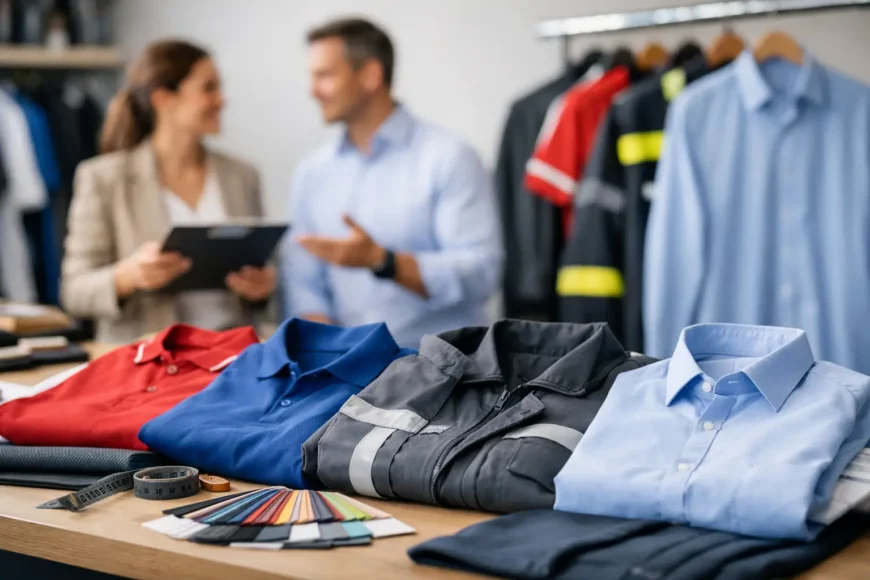
A uniform supplier does more than provide garments. The right partner helps your employees look consistent, feel comfortable through demanding shifts, and represent your business with confidence at every customer touchpoint. For a hotel reception team, clinic staff, restaurant crew, or corporate office, that visible standard becomes part of the service experience.
Choosing on price alone can create expensive problems later: poor fit, fabric that fades quickly, delayed replacements, and uniforms that look disconnected from your brand. A well-planned uniform program should balance visual impact with daily practicality. It should also be easy to manage as your team grows, roles change, and new employees join.
What a Professional Uniform Supplier Should Deliver
A reliable supplier begins by understanding how your people work. A front-of-house team may require tailored blazers, wrinkle-resistant shirts, and refined name embroidery. A healthcare practice may prioritize breathable fabrics, easy-care finishes, practical pockets, and movement. Restaurant staff often need garments that withstand frequent washing while maintaining a polished appearance under busy service conditions.
This consultative approach matters because one uniform rarely suits every role. Managers, receptionists, service staff, technicians, and delivery personnel can all belong to the same brand while wearing apparel designed for their specific responsibilities. The colors, trims, logo placement, and silhouettes should feel connected, but the function must be appropriate for the job.
A capable supplier should be prepared to advise on design, fabric performance, sizing, branding methods, production planning, and replenishment. This reduces the burden on HR, operations, and procurement teams, who should not have to coordinate multiple vendors simply to achieve one consistent staff image.
Start With the Work, Not the Garment
Before requesting designs or quotations, define what employees need to do while wearing the uniform. Consider the environment, the length of a typical shift, indoor and outdoor temperature changes, laundering frequency, and the amount of movement required. These details shape better decisions than choosing a style from a catalog first.
For example, a finance or corporate team may benefit from structured suiting, tailored shirts, and coordinated skirts or trousers that support a formal client-facing image. In hospitality, a more flexible approach may be needed: tailored silhouettes for reception, durable service shirts for floor staff, and distinct attire for supervisors. A clinic may need professional apparel that remains comfortable during long hours and repeated cleaning.
Ask employees for practical feedback early. Their perspective can reveal issues that are easy to miss in a meeting, such as whether sleeves restrict movement, whether light-colored fabrics require extra care, or whether a particular cut works across a diverse range of body types. Involving team representatives does not mean compromising brand standards. It means designing standards people can wear successfully every day.
Fabric Quality Determines Daily Performance
Fabric selection is one of the clearest differences between a short-term uniform purchase and a lasting professional apparel program. The best option depends on the role, climate, care routine, and desired appearance. Natural fibers can offer breathability and a refined hand feel, while blends often provide better wrinkle resistance, durability, and color retention. Neither is automatically superior.
For teams working in warm, humid conditions, breathability and moisture management deserve close attention. For client-facing corporate roles, fabrics that hold their shape and resist wrinkling can help employees maintain a polished appearance through meetings, travel, and long days. In active settings, stretch content may improve mobility, but too much stretch can affect structure and garment longevity.
Request fabric samples before committing to a large order. Assess the weight, texture, opacity, stretch, and recovery. Ask how the material responds to frequent washing, whether colors are likely to fade, and what care instructions employees will need to follow. A good uniform should look as professional after repeated wear as it did on fitting day.
Fit Is a Business Detail, Not a Personal Luxury
Poorly fitted uniforms weaken even the strongest design. Shirts that pull at the shoulders, trousers that are too long, blazers that sit incorrectly, and skirts with limited movement can make employees feel self-conscious. They also make a carefully considered brand look unprepared.
This is why fitting support is especially valuable for organizations with varied teams. Standard size runs can be efficient for some garments and larger workforces, but they may not be enough for tailored blazers, executive suits, or highly visible client-facing positions. Made-to-measure or personalized adjustments can create a sharper result where presentation carries more weight.
The practical choice often lies between fully bespoke garments and standardized apparel with selected alterations. A professional uniform supplier will explain the trade-offs clearly. Custom fitting offers a more precise appearance, while standardized sizing may simplify ordering and replenishment. The right approach depends on your team size, budget, employee roles, and the expected lifespan of the program.
Make Branding Part of the Design
A logo placed on a shirt is not the same as a branded uniform. The strongest programs use color, fabric, cut, and finishing details to express the company’s character. A premium hotel may choose understated embroidery, elegant contrast piping, and tailored layers. A modern restaurant may use a more relaxed silhouette while keeping logo treatment disciplined and consistent.
Embroidery is often preferred for its durability and refined appearance, particularly on polos, shirts, jackets, and blazers. Printing can be suitable for certain promotional or casual applications, depending on fabric and use. Placement matters as much as method. A logo should be clearly visible without overwhelming the garment or distracting from the employee wearing it.
Consider how every piece works together. The uniform should remain recognizable when employees wear outerwear, aprons, vests, or different role-specific items. Establishing approved colors, logo sizes, and placement rules from the beginning prevents inconsistent reorders later.
Evaluate Production Reliability Before Placing an Order
A polished sample is only the first step. The supplier must also be able to deliver consistent quality across the full order, within an agreed timeline, and with clear communication throughout the process. This is particularly important for openings, events, rebrands, and seasonal staffing periods when delays can affect operations.
Discuss lead times, minimum order quantities, sample approval stages, payment terms, and what happens if sizing changes are needed. Ask how the supplier handles quality checks before delivery and whether replacement or repeat orders can match the original design and fabric. These operational details are where dependable suppliers distinguish themselves.
It is also wise to plan for future needs rather than treating uniforms as a one-time purchase. New hires, promotions, staff turnover, and expanding locations all create ongoing demand. Keeping garment specifications, logo files, fabric references, and approved measurements organized makes future orders faster and more accurate.
Choose a Partner That Protects Your Professional Image
The right uniform supplier combines tailoring expertise with an understanding of business operations. They should be able to translate your brand standards into garments that employees can move, work, and serve in with confidence. This requires precision in fit, thoughtful fabric selection, disciplined branding, and service that remains responsive after the initial delivery.
Velcoor approaches corporate uniforms as a visible extension of business identity, supporting organizations with customized design guidance, professional fitting, fabric options, and branding details tailored to the workplace. Whether your team requires formal suits, hospitality uniforms, clinic apparel, or coordinated office wear, the goal is the same: an appearance that reflects care, consistency, and credibility.
The best uniform program is noticed quietly. Customers may not comment on every stitch or fabric choice, but they recognize when a team looks prepared, aligned, and proud to represent the business.