English
A guest forms an impression before the first greeting is complete. A pressed front-desk blazer, a well-fitted server shirt, or a clean housekeeping uniform signals care, order, and confidence. The right hospitality staff uniform solutions turn that first visual moment into a consistent extension of your service standard.
For hotel operators, restaurant owners, and hospitality managers, uniforms are not simply a purchasing requirement. They affect brand recognition, employee comfort, team morale, and the practical pace of a busy shift. A polished uniform program must look appropriate in photographs and in the lobby, but it must also perform through long hours, repeated laundering, heat, movement, and direct guest interaction.
Why Hospitality Uniforms Need a Purposeful Design
Hospitality roles are highly visible, yet they are not interchangeable. A concierge needs a different level of formality from a banquet server. A restaurant host needs a different silhouette from a housekeeping supervisor. When every team member wears the same generic garment, the result can feel disconnected from both the role and the property itself.
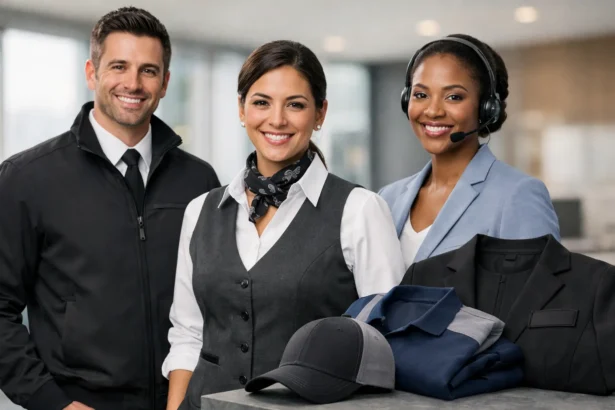
A considered uniform design gives each department a clear identity while maintaining one recognizable visual language. This might mean tailored blazers and neckwear for front-of-house personnel, refined shirts and aprons for restaurant teams, and durable coordinated separates for operational staff. The colors, cuts, trims, and branding should work together so guests recognize one professional organization, not a collection of unrelated departments.
There is also a business case for getting the details right. Staff who feel properly presented are more likely to carry themselves with confidence. Managers spend less time addressing inconsistent appearance. Guests can identify who to approach when they need assistance. In an industry built on attention and reassurance, those small operational advantages matter.
Build Hospitality Staff Uniform Solutions Around Roles
The strongest hospitality staff uniform solutions begin with a role-by-role assessment, not a catalog selection. Start by considering where each employee works, how much they move, what guests expect from that interaction, and which conditions the garment must withstand.
Front Desk and Concierge Teams
Reception and concierge teams represent the property from the moment guests arrive. Their uniforms generally benefit from structured, tailored pieces that communicate authority without looking rigid. A custom blazer, fitted shirt, tailored pants or skirt, and an optional scarf or tie can create a refined look that remains recognizable across shifts.
Fabric selection is especially important here. A blazer may need enough structure to retain its shape, while the shirt beneath it should remain breathable during extended desk or lobby coverage. Darker tones can offer a formal appearance and hide minor marks, but a carefully chosen accent color can reinforce the hotel or restaurant brand without overwhelming the overall design.
Restaurant, Bar, and Banquet Staff
Food and beverage teams need uniforms that balance presentation with speed and flexibility. Servers bend, reach, carry trays, and move between crowded spaces. Bartenders work around spills, heat, and frequent washing. Banquet teams often need a more formal appearance that can be maintained across large events.
This is where practical tailoring earns its value. Shirts should allow movement through the shoulders. Pants should sit comfortably during long shifts. Aprons should be proportioned to the wearer and constructed with useful pocket placement. A stylish garment that restricts movement will quickly become an operational problem, while an overly casual design can weaken the atmosphere a venue has worked hard to create.
Housekeeping, Maintenance, and Back-of-House Teams
Back-of-house uniforms deserve the same design discipline as guest-facing attire. These teams often perform the most physically demanding work, so fabric weight, ease of movement, and durability should guide the decision. Practical details such as secure pockets, easy-care finishes, and appropriate sleeve lengths may be more valuable than decorative features.
The goal is not to make every department look identical. It is to make every employee look like they belong to the same organization while giving them clothing designed for the work they actually do.
Fit Is a Performance Requirement, Not a Luxury
Poor fit is one of the most common reasons uniform programs fail. When sizing is inconsistent, employees may wear garments that pull at the shoulders, bunch at the waist, run too long at the sleeve, or feel uncomfortable when seated or active. Staff may then alter the garments themselves or choose sizes that compromise the intended appearance.
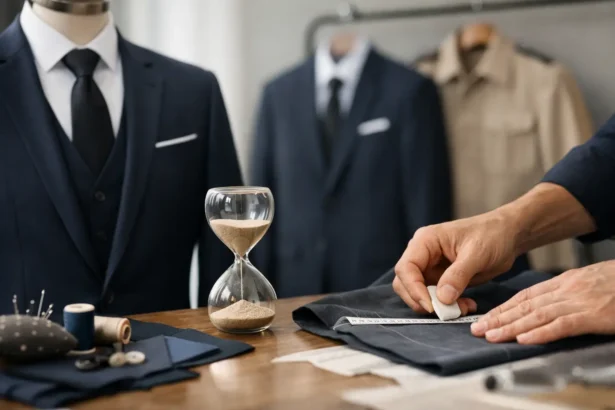
Made-to-measure or carefully managed fitting services provide a more reliable solution, particularly for client-facing teams. A proper fitting process accounts for different body types while preserving a unified look across the organization. This is not about creating a fashion statement for each individual. It is about ensuring each employee can move, work, and represent the brand comfortably.
Fit also affects longevity. A garment under constant stress at the seams or buttons is more likely to wear out prematurely. Better proportions and quality construction can help uniforms retain their professional shape over time, reducing the need for frequent replacement.
Choose Fabrics for the Real Working Environment
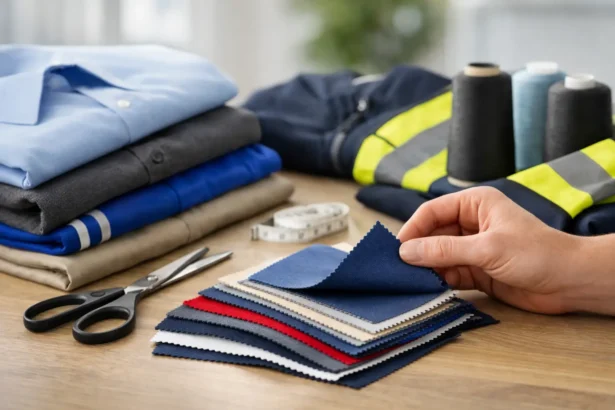
A hospitality uniform should be selected based on its working conditions, not its appearance on a swatch alone. A fabric that looks premium in a meeting room may be too warm for a busy restaurant floor. A lightweight material may be comfortable but lack the structure needed for formal reception attire. The right choice depends on the role, venue climate, laundering process, and expected service level.
For many programs, blended fabrics provide a practical balance of comfort, durability, wrinkle resistance, and easier care. Natural fibers may offer a refined hand feel and breathability, while performance blends can be more suitable for teams facing frequent washing and physical activity. There is no single best fabric for every hospitality business. The best option is the one that supports your brand standard without creating unnecessary maintenance demands for employees or management.
Before full production, request a sample or wear test whenever possible. Ask staff to move, sit, lift, and work in the garment. Review how it looks after laundering, not just when it first arrives. These checks can prevent a costly decision based solely on color or initial appearance.
Use Branding With Restraint and Precision
Hospitality branding works best when it feels integrated into the garment. An embroidered logo on a chest, sleeve, apron, or pocket can reinforce recognition without turning the uniform into an advertisement. The placement, thread color, and scale should complement the garment rather than compete with it.
Custom details can carry a great deal of brand character. A contrast lining, signature piping, distinctive buttons, a branded scarf, or a coordinated apron can make a uniform feel specific to your property. These elements are often more memorable than a large logo because they create a consistent visual signature guests associate with the experience.
Consistency matters, especially across multiple locations or departments. Define approved colors, logo usage, garment combinations, and accessory standards before production begins. That clarity helps maintain the intended appearance as new employees join the team and replacement pieces are ordered later.
Plan for Rollout, Reordering, and Daily Care
Uniform procurement is easier when it is treated as an ongoing program rather than a one-time order. Account for new hires, seasonal staff, replacement stock, and the different quantities required by each role. A front-desk employee may need several shirts and a limited number of blazers, while a food service employee may need more frequent changes due to the nature of the work.
It is equally useful to establish care instructions that staff can realistically follow. If garments require specialized cleaning but employees are expected to manage laundry themselves, the uniform may lose its finish quickly. Consider whether your operation will provide laundering, whether garments must be machine washable, and how quickly replacement pieces can be supplied.
A capable uniform partner should help organize these decisions early, from sizing and fabric selection to branding specifications and future reorder consistency. Velcoor approaches this process through consultation, precise fitting, custom design, and professional production for organizations that require a dependable, brand-aligned standard.
The most effective uniform program is one your team is proud to put on before a shift. Start with the guest experience you want to create, then give every employee clothing that helps them deliver it with comfort, confidence, and unmistakable professionalism.