English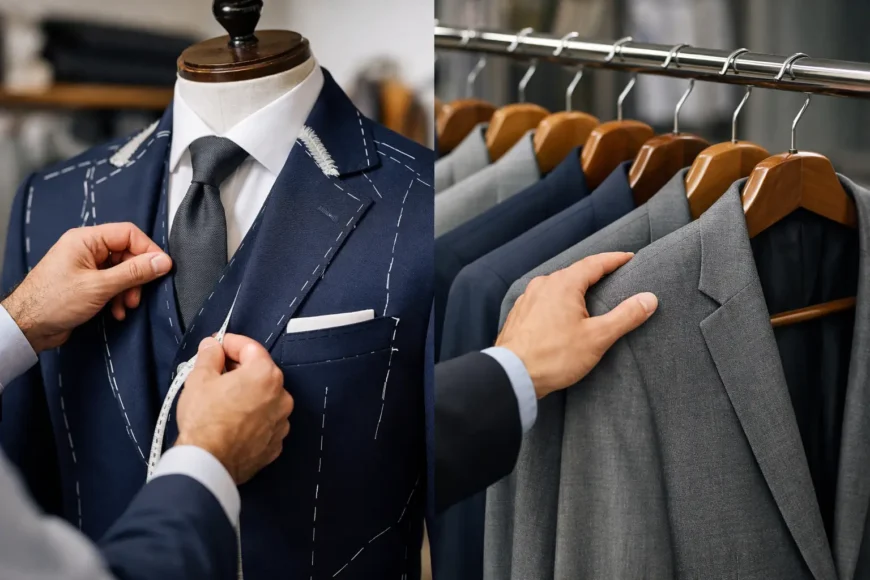
A uniform that pulls at the shoulders, rides up when staff bend, or looks different from one employee to the next sends a message before a word is spoken. When evaluating tailored uniforms vs off the rack, the real question is not simply which option costs less at the point of purchase. It is which option helps your team look credible, work comfortably, and represent your business consistently over time.
For organizations where employees meet clients, patients, guests, diners, or customers every day, apparel is part of the operating standard. The right choice depends on your industry, workforce, branding requirements, and how often the garments will be worn.
Tailored Uniforms vs Off the Rack: The Business Difference
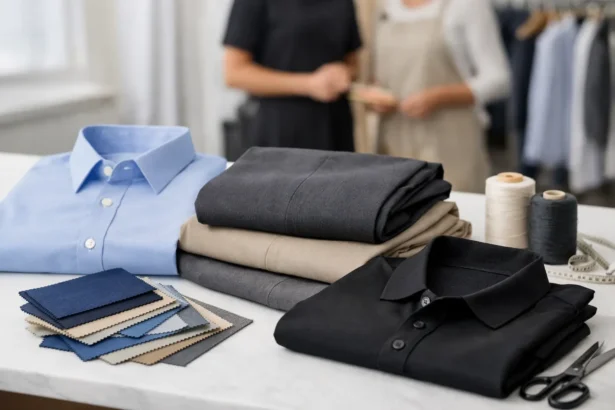
Off-the-rack uniforms are pre-made garments produced in standard sizes and predetermined designs. They are widely available, easy to order, and suitable when speed is the highest priority. A business can select a stock polo, shirt, blazer, or pair of trousers, add a logo where possible, and distribute the garments quickly.
Tailored uniforms are developed around the needs of a specific organization. This can include custom measurements or fit adjustments, fabric selection, garment styling, branded colors, embroidery, printing, and design details that reflect the role of the wearer. Rather than asking a team to adapt to a standard garment, the garment is planned around the team and the brand.
That distinction matters most in customer-facing environments. A hotel concierge, clinic receptionist, financial adviser, restaurant manager, and showroom consultant may all wear professional apparel, but the fabric, silhouette, and functional details required for each role are different. A single standard garment rarely performs equally well across those settings.
Fit Is More Than a Matter of Appearance
A clean, well-proportioned fit creates an immediate impression of order and competence. More practically, it affects how employees feel throughout a shift. Standard sizing is based on generalized body measurements, which means many employees fall between sizes or need to compromise in one area to accommodate another.
A shirt that fits the chest may be too loose at the waist. A blazer that fits the shoulders may have sleeves that are too long. Trousers that fit the waist may restrict movement through the hips or thighs. These are small frustrations individually, but they become highly visible when employees wear the same garments five or six days a week.
Tailoring allows a company to build a more polished fit across a diverse workforce. Adjustments to length, waist, sleeve, shoulder, and overall silhouette help employees look coordinated without forcing everyone into an identical shape. This is especially valuable for formal uniforms, suits, blazers, and hospitality attire, where poor fit is difficult to hide.
Off-the-rack garments can still be appropriate for roles with lower presentation demands, short-term events, large seasonal teams, or simple back-of-house requirements. The key is to be realistic about the result. Stock sizing may deliver acceptable coverage, but it will not consistently deliver the refined appearance of apparel designed and fitted for the people wearing it.
Fabric Selection Determines Daily Performance
Uniform decisions often focus heavily on color and logo placement, while fabric is treated as a secondary detail. In practice, fabric has a major impact on comfort, durability, maintenance, and employee satisfaction.
Ready-made uniforms typically offer a limited range of materials. That can be efficient, but it may leave businesses choosing between fabrics that are too warm for active staff, too delicate for frequent laundering, or too casual for the desired brand image. A fabric that looks good in a catalog may not perform well during a long shift under bright lights, in a busy dining room, or in a temperature-controlled office.
Tailored uniform programs provide greater control. A corporate office may need wrinkle-resistant suiting with a structured finish. A restaurant team may benefit from breathable, easy-care fabrics that retain their shape through repeated washing. Healthcare and clinic teams may prioritize mobility, washability, and a professional finish. Hospitality teams may need elegant fabrics that remain comfortable during long hours of standing and guest interaction.
The best fabric is rarely the most expensive one. It is the one that matches the working environment, care routine, and expected lifespan of the garment. A thoughtful selection process prevents a common problem: replacing inexpensive uniforms prematurely because they fade, lose shape, pill, or become uncomfortable.
Brand Consistency Is Easier to Control With Custom Design
A logo alone does not create a uniform system. Brand presentation comes from the combined effect of color, cut, fabric texture, trim, name placement, and the way garments coordinate across job roles.
With off-the-rack options, companies work within what already exists. There may be limited colors, generic collar styles, and restricted choices for embroidery placement. This can be enough for a basic staff shirt, but it can also result in uniforms that feel disconnected from the rest of the business identity.
Tailored uniforms give decision-makers the ability to create a defined visual standard. A company can select colors that align with its brand palette, choose buttons and piping that complement the design, and develop different garments for front-of-house, management, and operational teams while keeping the overall look unified.
This does not require overly elaborate design. Often, the most effective uniform is restrained: a well-cut shirt in the right color, a durable blazer with discreet embroidery, or a coordinated apron and trouser combination. Precision is what makes simple apparel look intentional.
The Cost Comparison Should Include Replacement and Perception
Off-the-rack uniforms usually have a lower upfront price, which makes them attractive for budget-sensitive purchases or urgent staffing needs. For a temporary campaign, promotional event, or rapidly expanding team, that convenience can be the right decision.
However, purchase price is only one part of the cost. Businesses should also consider alteration expenses, inconsistent sizing, employee discomfort, replacement frequency, and the time spent managing complaints or reorders. If a low-cost garment wears out quickly or is rarely worn because it fits poorly, the apparent savings disappear.
Tailored uniforms require more planning and usually a higher initial investment. Measurements, design approvals, fabric choices, and production lead time all need to be managed properly. Yet for permanent, public-facing teams, this investment can provide better value through stronger durability, improved staff confidence, and a more consistent customer impression.
The practical approach is to assign the right level of investment to each role. A leadership team, client-facing sales staff, hotel reception team, or premium restaurant crew may warrant tailored apparel. For warehouse, event, or short-term support staff, high-quality off-the-rack garments with clear branding may be entirely sufficient.
How to Choose the Right Uniform Program
Begin with the workday, not the garment. Consider how much staff move, whether they work indoors or outdoors, how frequently the apparel will be washed, and how closely customers interact with them. A uniform must work under real conditions, not just look polished during a fitting.
Next, define what your brand needs to communicate. A law firm may need understated authority. A boutique hotel may need warmth and refinement. A medical practice may want clean professionalism and reassurance. A restaurant may need style that supports its service concept without compromising practicality.
Then consider workforce variety. If your team includes different body types, roles, and sizing needs, a made-to-measure or tailored approach offers far greater control. It also gives employees a clearer sense that the company values their comfort and professional presentation.
Finally, plan for continuity. Uniform programs should account for new hires, seasonal replacements, promotions, and future reorders. Working with a specialist such as Velcoor helps businesses establish approved designs, fabrics, and branding specifications that can be maintained as the organization grows.
A uniform should make the workday easier, not give employees another thing to manage. Choose the option that meets your operational needs while giving every member of the team a reason to stand taller when they represent your business.