English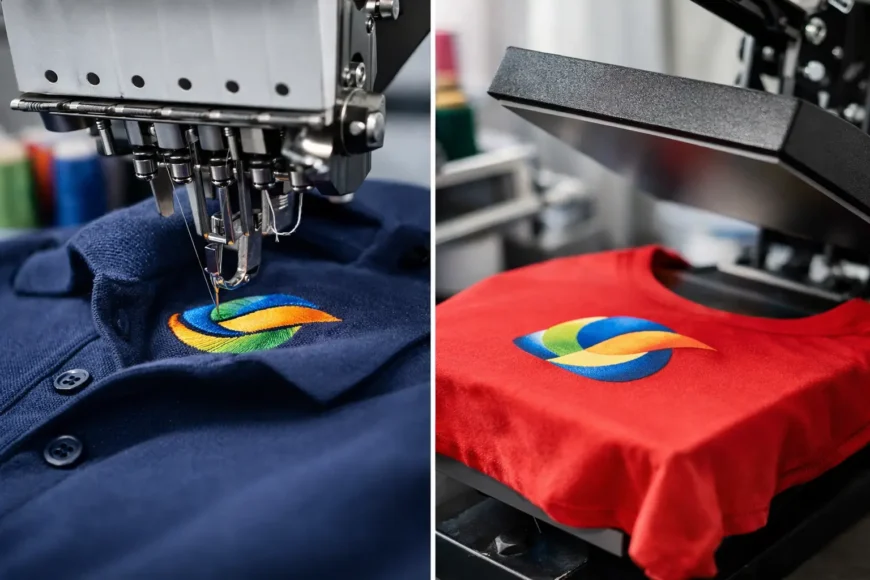
A front-desk jacket, chef coat, clinic polo, or corporate shirt does more than identify an employee. It signals the standards behind the business. When deciding between embroidered uniforms vs printed uniforms, the best option is not simply the one that looks better on a sample. It is the one that supports your brand, fabric choice, working environment, and replacement cycle over time.
For businesses building a polished, consistent staff image, decoration should be considered alongside fit, garment construction, color, and comfort. A logo that is crisp but unsuitable for the garment or role can make an otherwise well-designed uniform feel less considered. The right finish brings the complete uniform program together.
Embroidered Uniforms vs Printed Uniforms: The Core Difference
Embroidery creates a design with thread stitched directly into the garment. It has dimension, texture, and a tailored appearance that is especially effective for company names, monograms, simple logos, and premium brand marks. The finished result is usually associated with permanence and craftsmanship.
Printing applies ink, film, or another printed treatment to the surface of the fabric. Depending on the method, it can reproduce fine lines, gradients, photographs, large graphics, and multiple colors with a level of detail that embroidery cannot always match. It is often the practical choice when the artwork is visually complex or covers a larger area.
Neither method is universally superior. A discreet embroidered logo on a made-to-measure blazer can reinforce a high-end corporate image. A detailed printed graphic on a restaurant event shirt may be clearer, lighter, and more cost-effective. The decision depends on what the uniform must communicate and how it will perform during real work.
When Embroidery Makes the Stronger Impression
Embroidery is frequently the preferred choice for professional uniforms because it looks established, refined, and intentional. It works particularly well on polo shirts, button-down shirts, blazers, vests, jackets, aprons, caps, and durable workwear. For hospitality teams, finance offices, premium retail, property management, and executive-facing roles, the raised thread finish can complement a formal presentation.
Durability for frequent wear
A well-produced embroidered logo generally holds up exceptionally well through repeated laundering. Because the design is stitched into the garment rather than resting on its surface, it does not typically crack or peel. This is valuable for uniforms worn several times a week, such as hotel front-office apparel, restaurant polos, security uniforms, and field-service shirts.
Durability still depends on workmanship. Poor digitizing can create excessive thread density, puckering, or an uneven design. Correct backing, stitch direction, and thread selection matter, particularly on lightweight fabrics and stretch garments. A professional uniform supplier should assess the fabric before recommending embroidery placement and size.
A premium, tactile finish
Thread adds depth that printed decoration cannot duplicate. On a tailored shirt or blazer, a compact embroidered logo can look like part of the garment rather than an add-on. This makes embroidery a strong match for brands that want to project trust, discretion, and long-term quality.
That said, larger is not always better. A logo that is too dense or oversized can stiffen the chest area and distract from the garment’s tailoring. For corporate attire, the most effective embroidery is often restrained, precisely positioned, and scaled to the uniform style.
Best for simpler artwork
Embroidery performs best with clean logo shapes, readable lettering, and a manageable number of colors. Fine details can be simplified during digitizing, but very small text, delicate lines, gradients, and intricate illustrations may lose clarity when converted to stitches.
If your logo relies on color transitions, tiny symbols, or photographic elements, printing may represent it more faithfully. The question is not whether embroidery looks premium. It is whether embroidery can reproduce your specific identity accurately.
Where Printed Uniforms Have the Advantage
Printed uniforms offer flexibility that is difficult to achieve with thread. They are especially useful for promotional shirts, branded event apparel, casual restaurant uniforms, activewear, campaign clothing, and designs where color impact or visual detail is central to the concept.
Better reproduction of complex logos
Printing can preserve fine artwork, multiple shades, gradients, and small details with greater accuracy. This gives businesses more freedom when their visual identity includes layered marks, detailed illustrations, or large colorful graphics.
It also works well for designs placed across the back, sleeves, or a broad chest area. A large embroidered design can become heavy, costly, and uncomfortable. A print can provide prominent branding without adding the same weight or texture.
A lighter feel on suitable garments
On lightweight T-shirts, performance fabrics, and garments worn in warm work environments, a print may feel less bulky than dense embroidery. This can matter for kitchen teams, outdoor staff, event crews, and active service roles where ease of movement and breathability are priorities.
However, the printing method must suit the fabric and expected wash conditions. Some prints are highly durable when correctly produced and cared for, while lower-quality applications may fade, crack, or peel sooner than expected. Businesses should not evaluate printed uniforms by price alone. Ink quality, curing process, fabric compatibility, and care instructions all affect performance.
Efficient for large, high-color designs
Printing is often a more economical route for designs with many colors or broad coverage. Embroidery pricing is commonly influenced by stitch count, so a large, intricate threaded logo can become significantly more expensive than a comparable print.
For a campaign, short-term event, product launch, or staff promotion, printing can deliver strong brand visibility while keeping the budget focused on the right areas. It is also a practical option when team members need several casual uniforms with bold design elements.
Cost Should Be Measured Over the Uniform’s Life
The initial unit price is only one part of the decision. Embroidery can cost more upfront, particularly for large or detailed artwork, but it may offer excellent value for long-serving uniforms because of its durable, professional finish. Printing can be more cost-efficient for complex designs and may be the smarter investment when visual detail is non-negotiable.
Consider the full operating picture: how often garments are washed, whether the uniform is customer-facing, how long employees typically keep each piece, and whether the design will change next season. A hotel blazer intended for years of service deserves a different branding approach than a one-day corporate event shirt.
Reordering also matters. Before production begins, establish approved logo files, thread or print colors, placement measurements, and garment specifications. This helps maintain consistency as departments grow, new locations open, or replacement uniforms are needed.
Match the Decoration to the Fabric and Role
A uniform should feel as good as it looks. Heavy embroidery can pull on thin knit fabrics, while certain printed applications may not be ideal for heavily textured materials. The garment’s weave, stretch, weight, and intended use should guide the decoration method.
For example, a crisp woven shirt may carry left-chest embroidery beautifully. A moisture-wicking team polo may require a carefully selected lightweight print or low-density embroidery. A chef jacket may benefit from a durable embroidered name and logo, while a casual café T-shirt can support a larger printed back design.
Placement deserves the same attention. Left chest branding remains a dependable choice for professional roles because it is visible without overpowering the uniform. Sleeve decoration can add a subtle secondary brand element. Back prints are useful when visibility from a distance is needed, such as for event personnel, delivery teams, and outdoor crews.
A Practical Decision Framework for Your Team
Start with your logo rather than a decoration preference. If it is clean, compact, and recognizable in a few colors, embroidery is likely a strong contender. If it contains fine detail, gradients, or large graphic elements, printing may protect the integrity of the artwork.
Then consider the employee experience. Teams in client-facing formal roles often benefit from the elevated look of embroidery. Teams working in heat, movement-heavy settings, or casual environments may prefer the lighter feel and visual flexibility of printing. Finally, assess garment lifespan and laundering. The branding method should perform reliably for the way the uniform will actually be used, not just for a presentation photo.
For organizations with different departments, a blended approach can be the most effective answer. Embroidered blazers and woven shirts can create a polished image for reception and management, while printed polos or T-shirts support operations, events, and active teams. Consistency comes from coordinated colors, placement, and garment quality, not from forcing every role into the same finish.
At Velcoor, uniform decoration is considered as part of the complete garment design process, from fabric selection and fit to logo scale and role-specific functionality. That level of planning helps businesses avoid uniforms that look impressive at launch but become uncomfortable, inconsistent, or impractical in daily service.
A uniform earns its value when employees are comfortable wearing it and customers immediately recognize the care behind it. Choose the finish that respects both your brand standards and your team’s working day.