English
A uniform quote can vary dramatically even when two teams appear to be ordering the same thing. A polo shirt with a small embroidered logo is a very different investment from a made-to-measure corporate suit program with custom lining, individual fittings, and multiple job roles. So, how much do custom uniforms cost? For most businesses, the answer depends on the standard of presentation required, how often the garments will be worn, and whether the uniform must simply identify staff or actively represent the brand.
For planning purposes, businesses in Malaysia can expect basic branded uniform pieces to begin around RM45 to RM95 per person, while tailored corporate apparel and complete multi-piece packages can range from several hundred ringgit to well over RM1,500 per employee. The most useful way to assess cost is not to focus on the lowest price per garment. It is to consider the quality, fit, lifespan, and level of brand consistency your operation needs.
How Much Do Custom Uniforms Cost by Garment Type?
The garment category establishes the starting point. A lightweight event T-shirt has a simpler construction and lower material requirement than a hotel receptionist blazer or a tailored executive suit. The following ranges are practical budgeting references for professionally produced custom uniforms. Final pricing depends on fabric, quantities, branding, and specifications.
| Uniform item | Typical estimated price per piece | | — | — | | Branded T-shirt or basic polo | RM45-RM95 | | Corporate shirt or blouse | RM80-RM160 | | Scrubs or practical healthcare set | RM110-RM260 | | Tailored pants or skirt | RM90-RM180 | | Restaurant apron or service vest | RM60-RM150 | | Corporate blazer | RM250-RM550 | | Made-to-measure suit | RM650-RM1,500+ |
A front-of-house hospitality package, for example, may include a shirt, pants or skirt, vest or blazer, and name or logo embroidery. A restaurant may need durable aprons and polos for service staff, then more formal attire for managers. The package price should reflect those different responsibilities rather than forcing every employee into one garment standard.
The Main Factors Behind Custom Uniform Pricing
Fabric quality and performance
Fabric is often the largest cost variable after garment construction. Lower-cost polyester blends can work well for promotional shirts or low-intensity roles, particularly where easy care and color retention are priorities. However, teams working long shifts in restaurants, clinics, hotels, or customer-facing offices often benefit from fabrics with better breathability, stretch, drape, and resistance to repeated washing.
A premium cotton blend or performance fabric costs more initially, but it can help employees remain comfortable and presentable throughout the day. For a business, that means fewer complaints about heat, stiffness, fading, or garments that lose shape after several washes. The right choice is not always the most expensive fabric. It is the fabric that fits the work environment and expected replacement cycle.
Level of tailoring and fit
Ready-sized uniforms are generally less expensive because production follows standard measurements. They are appropriate for many operational teams, especially when the cut is well selected and the size range is comprehensive.
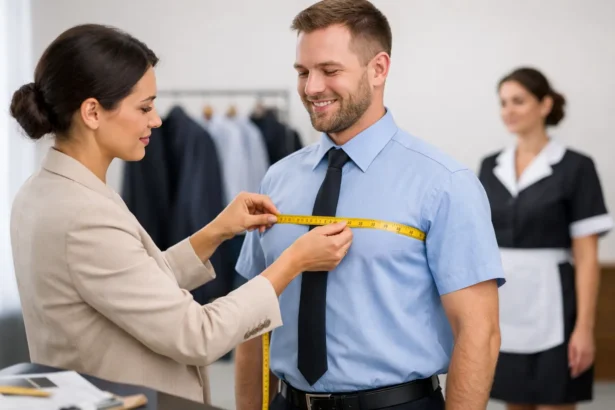
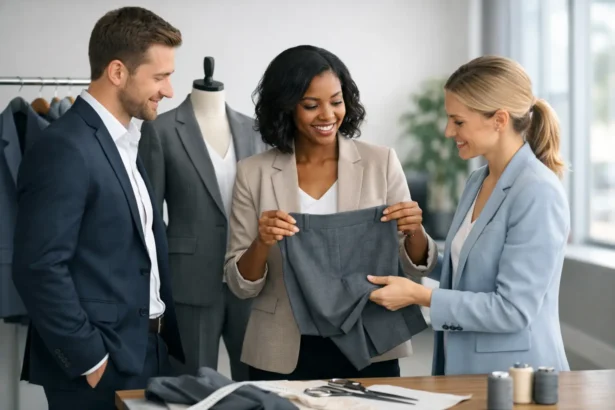
Made-to-measure or individually fitted garments cost more because they involve measurement, pattern adjustments, fitting coordination, and more detailed production. This is particularly valuable for corporate suits, blazers, formal shirts, and executive apparel, where a poor fit can undermine an otherwise polished design. A sharp fit communicates care and professionalism before an employee says a word.
There is also a middle ground. Businesses can use standard-size garments for most staff while reserving tailored pieces for client-facing leadership, concierge, sales, or management teams. This protects the budget without compromising the visual standard where it matters most.
Logo application and custom details
Branding affects both appearance and unit cost. Simple one-position embroidery is usually a practical option for polos, shirts, aprons, and jackets. The stitch count, logo size, number of colors, and placement all influence the price. A detailed logo with fine lettering will require more production time than a simple mark.
Printing may be more economical for large graphics or high-volume casual uniforms, while embroidery often delivers a more refined and durable result for professional apparel. Beyond the logo, details such as custom buttons, contrast piping, woven labels, name tags, printed linings, and embroidered job titles add to the total. These details can be worthwhile when they reinforce a premium brand experience, but they should be chosen with a clear purpose.
Order quantity and size breakdown
Larger orders generally reduce the cost per garment because design setup, sampling, pattern work, and production preparation are spread across more units. A 200-piece polo order will typically achieve a more efficient unit price than a 20-piece order with the same logo and fabric.
Quantity is not the only issue. A team requiring an unusually broad range of sizes, several colors, or many different garment styles may have higher costs because production becomes more complex. Ordering for a small, specialized team is still possible, but the price should account for the level of customization involved.
Industry requirements
The role of the wearer should guide the specification. Healthcare teams may need breathable, easy-wash scrubs with practical pocket placement. Kitchen and service teams may need stain-resistant fabrics, aprons, and garments that allow movement. Hotel and finance teams may prioritize structured silhouettes, refined fabrics, and a more formal presentation.
When an industry requires specific safety, hygiene, or durability features, the uniform budget should account for them early. Cutting those features to lower the initial quote can create a more expensive replacement problem later.
Budget for a Uniform Program, Not Just the First Order
A common procurement mistake is to price one set per employee and treat the project as complete. In reality, most full-time staff need at least two to three sets of workwear so they can maintain a clean, professional appearance across the working week. High-contact or physically demanding roles may require more.
A reliable budget also includes a small allowance for new hires, size changes, replacements, and seasonal adjustments. If your company has frequent staffing changes, it may be sensible to keep essential core garments available for repeat orders. Choosing a stable fabric and color program helps maintain consistency when new employees join months after the original order.
Consider the cost per wear as well. A RM70 shirt that fades or loses its shape after a short period is not necessarily cheaper than a RM120 shirt that remains sharp through regular laundering. Uniforms are working assets. Their value lies in how well they perform over time, not only in the invoice total.
How to Get an Accurate Custom Uniform Quote
The most accurate quote begins with a clear brief. Specify the number of employees, job roles, intended garments, preferred colors, logo placement, expected use, and timeline. If presentation is critical, include whether the team needs standard sizing, fitting support, or made-to-measure tailoring.
It is also helpful to define the outcome you want. Are you creating a cohesive look for a new restaurant opening? Replacing inconsistent office attire? Building a premium concierge image for a hotel? The answer influences fabric, styling, branding, and quantity recommendations.
At Velcoor, the consultation process is designed to turn those requirements into a considered uniform program, with attention to fabric selection, fit, branding, and professional finish. This approach gives businesses a quote based on what their teams genuinely need, rather than a generic garment price that leaves critical details unresolved.
Where to Spend More and Where to Simplify
Spend more on the garments employees wear in high-visibility, high-frequency roles. Reception teams, sales staff, hotel front desks, restaurant hosts, and corporate leaders directly shape a customer’s first impression. Better fabric, refined tailoring, and durable branding are especially valuable here.
For back-of-house teams, practicality may take priority. A well-made, comfortable, easy-care uniform in a simpler style can be the smarter choice. The goal is not to make every garment equally expensive. It is to build a consistent visual system that respects each role’s working conditions.
The right uniform budget gives your team clothing they are comfortable wearing and your business an image it can stand behind. Start with the standard your customers should see, then select the fabric, fit, and finishing details that will sustain that standard every day.