English
A wrinkled, poorly fitted uniform tells your customers something before your staff says a word. In hospitality, healthcare, retail, and corporate settings, presentation shapes trust quickly. That is why custom made uniforms are not simply a dress code upgrade. They are a business decision that affects brand perception, employee confidence, and day-to-day practicality.
For many organizations, ready-made uniforms seem convenient at first. The problem appears later – inconsistent sizing, limited fabric choices, awkward fits across different body types, and a finished look that feels generic rather than brand-specific. When teams are customer-facing, those compromises become visible. A custom approach gives businesses more control over how staff look, feel, and perform throughout the workday.
What custom made uniforms actually change
The clearest difference is fit, but fit is only the starting point. When a uniform is designed around the realities of a role, it supports movement, comfort, and consistency at the same time. A front desk team may need structured blazers that maintain a clean silhouette during long shifts. A restaurant floor team may need breathable shirts and aprons that can handle heat, frequent washing, and fast-paced service. A clinic may require garments that project cleanliness and professionalism while remaining easy to wear for extended hours.
Custom made uniforms allow those details to be addressed from the beginning rather than treated as afterthoughts. Sleeve length, cut, fabric weight, ventilation, pocket placement, skirt or pant options, modesty considerations, and branding details can all be adapted to the role. The result is a uniform program that feels intentional instead of improvised.
This matters because staff notice the difference. When clothing fits properly and feels considered, employees tend to wear it with more confidence. That confidence affects posture, interaction, and overall presentation. Customers may not identify every tailoring detail, but they recognize when a team looks polished and cohesive.
Brand image lives in the details
Many businesses invest heavily in interiors, signage, packaging, and digital branding while overlooking what their employees wear every day. That gap can weaken the overall impression. Uniforms sit at the intersection of operations and branding. They are practical garments, but they are also one of the most visible expressions of your company identity.
A strong uniform design reflects brand standards without becoming decorative for the sake of appearance. The right color palette, silhouette, logo placement, and fabric finish should support the type of experience your business promises. A luxury hospitality brand may need refined tailoring, elegant fabrics, and understated embroidery. A restaurant group may want a modern, approachable look with practical fabrics and durable construction. A financial or corporate office may prefer sharp suiting and polished separates that communicate authority and consistency.
The best custom uniforms do not overwhelm the brand. They reinforce it quietly and clearly. That balance is difficult to achieve with off-the-shelf garments, where choices are limited and customization often feels added on rather than built in.
Why fit affects more than appearance
Poor fit creates operational issues that many companies underestimate. Staff tug at sleeves, adjust collars, avoid certain movements, or request frequent replacements because garments never sat correctly in the first place. Over time, those small irritations reduce comfort and can affect compliance, especially when employees have little confidence in what they are wearing.
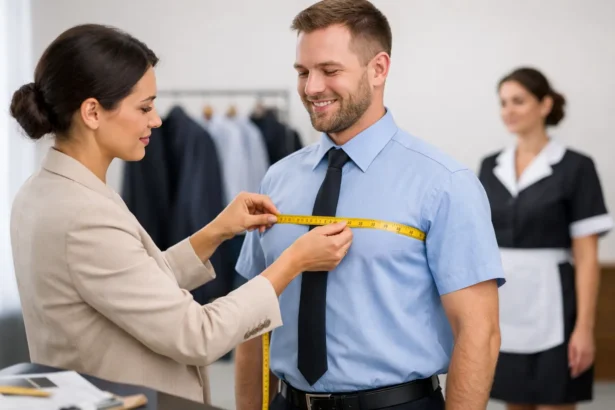
Custom made uniforms solve this more effectively because they account for real body variation across a team. Not every employee fits standard sizing, and even when they do, standard proportions may not suit the job requirement or brand image. A made-to-measure or tailored approach helps create a cleaner line across the team while reducing the uneven look that often happens when staff wear the “closest available” size.
There is also a fairness dimension. When uniform programs only work well for a narrow size range, some employees are left with visibly poorer options. A custom process supports inclusion by making sure the uniform standard applies well across different body types, job roles, and comfort needs.
Fabric selection is where performance starts
Fabric is often discussed last, even though it shapes the daily experience of wearing a uniform. A sharp design can fail quickly if the material traps heat, wrinkles too easily, fades after repeated laundering, or wears down at stress points. Businesses that want long-term value need to evaluate fabric based on use, maintenance, climate, and presentation goals.
In warmer conditions or high-movement environments, breathable fabrics with good structure often perform better than heavy materials chosen for appearance alone. In more formal settings, the challenge is balancing a refined finish with durability. Healthcare and food service environments may prioritize easy-care performance, stain resistance, and washability. Front-facing corporate teams may need fabrics that hold shape well during long office hours and frequent meetings.
There is no single best fabric for every business. That is exactly why a consultative approach matters. The right choice depends on where the garment will be worn, how often it will be cleaned, how polished it needs to look by the end of a shift, and what level of comfort employees need to maintain focus. Custom uniform planning gives businesses the chance to make those decisions with purpose.
Customization should serve a function
Logo embroidery, printing, contrast trims, signature linings, branded buttons, and color matching can all add value. But customization works best when it supports recognition and professionalism rather than turning the uniform into marketing clutter.
A well-placed embroidered logo on a blazer, shirt, or tunic can strengthen brand visibility while maintaining a premium appearance. Coordinated color accents can connect the uniform to interior branding or company identity. Distinct uniform variations can also help customers identify different staff roles quickly, which is especially useful in hotels, clinics, restaurants, and larger office settings.
The key is restraint. Over-branding can make garments look less refined and may shorten their useful life if the design becomes too trend-driven. Strong custom made uniforms tend to feel timeless enough for repeated use while still being clearly associated with the business.
Industry-specific design makes a difference
One of the most common mistakes in uniform buying is assuming that one design approach can work across all sectors. In reality, each environment has its own performance demands. A concierge desk, a medical reception area, a restaurant service floor, and a corporate boardroom require different solutions.
Hospitality uniforms often need a balance of elegance, comfort, and durability because staff remain visible throughout long shifts. Healthcare apparel must communicate hygiene, credibility, and practicality. Corporate attire usually leans toward structure and polish, especially when client interaction is central to the role. Food and beverage teams need ease of movement, heat management, and garments that retain their shape after frequent washing.
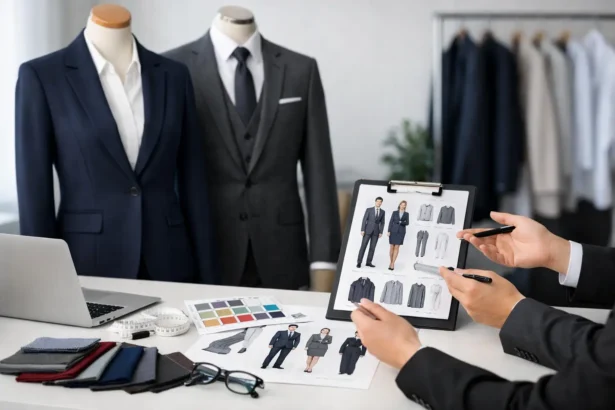
This is where an experienced uniform partner adds value. Good design is not only about how a garment looks on a mannequin. It is about how it performs in actual working conditions, for actual teams, over time.
The cost question deserves a realistic answer
Custom uniforms usually require a higher upfront investment than basic ready-made options. For some businesses, that can seem like the deciding factor. But cost should be assessed against lifespan, replacement frequency, employee satisfaction, and the consistency of your brand image.
If lower-cost uniforms wear out quickly, fit poorly, or create a fragmented appearance across departments, the savings disappear fast. Reorders become more frequent, alterations add expense, and presentation problems remain unresolved. A well-made custom uniform often delivers better value because it is designed to last, easier to standardize, and better aligned with the way your business operates.
That does not mean every company needs the most premium fabric or the most elaborate tailoring. It means the program should be designed around your priorities. Some businesses need full bespoke suiting for senior client-facing teams and simpler coordinated uniforms for back-of-house staff. Others need a scalable solution that keeps branding consistent while adjusting garment types by function.
Velcoor’s approach reflects this reality well – combining consultation, fabric selection, fit personalization, and practical design guidance so businesses can build a uniform program that looks polished and works hard.
Choosing custom made uniforms with confidence
The strongest uniform programs start with better questions. What image should your staff project? Which roles need structure, flexibility, or easy-care performance? How often will garments be worn and washed? What details will strengthen brand consistency without making the design feel overdone?
When those questions are answered early, the final product is far more effective. Businesses are not just buying shirts, suits, blazers, or workwear. They are shaping how their team is seen, how employees feel in their roles, and how consistently the brand appears across every interaction.
Custom made uniforms are worth considering seriously when presentation is part of the service you provide. If your staff represent your standards, their clothing should be built with the same level of care.