English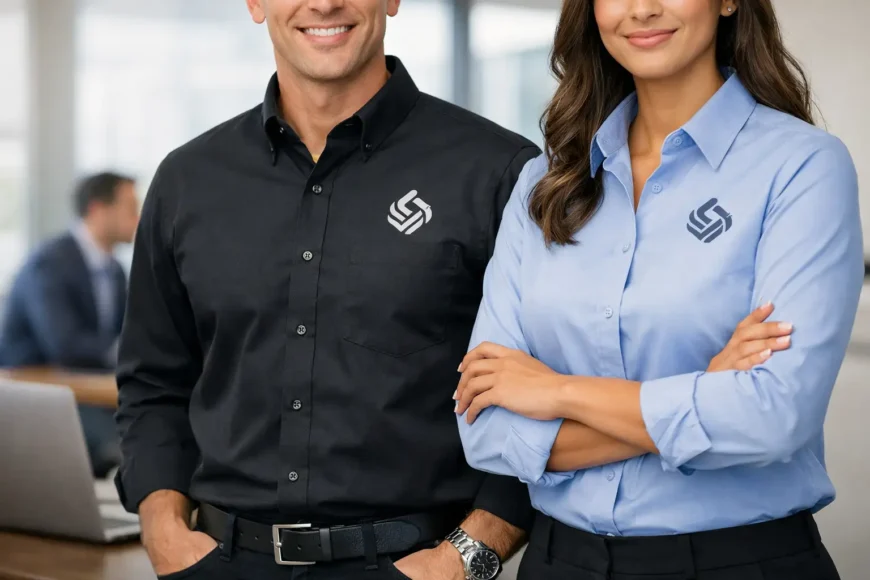
A staff shirt does more than cover a shift. It signals standards before a word is spoken. For businesses that rely on trust, visibility, and a polished first impression, printed logo work shirts can shape how customers read your brand the moment they see your team.
That is why the decision should not be reduced to simply adding a logo to a basic shirt. The right shirt has to carry your brand clearly, hold up under repeated wear, suit the demands of the role, and still look professional across different body types and departments. When those details are handled well, the result is not just branded apparel. It is a more consistent business image.
Why printed logo work shirts matter in real operations
In many organizations, uniforms are treated as a purchasing line item rather than a presentation tool. That usually leads to shirts that look acceptable on day one but quickly lose structure, fade, wrinkle heavily, or fit inconsistently across the team. The logo may be present, but the overall impression still feels uneven.
Printed logo work shirts work best when they are planned as part of a wider uniform strategy. In hospitality, they support a refined guest-facing image while helping guests identify staff quickly. In restaurants, they can reinforce cleanliness, order, and team consistency during fast-paced service. In clinics and healthcare support environments, they can contribute to a more organized and approachable appearance. In corporate offices, retail, and field support teams, they help create visual unity without pushing every employee into the same rigid style.
The practical value matters just as much as branding. A good work shirt needs to move comfortably, wash well, and remain presentable over time. A logo that looks crisp on a sample can become a problem if the print cracks, peels, or distorts after regular laundering. That is where material choice, garment construction, and printing method start to matter.
Choosing printed logo work shirts by use, not just appearance
The most effective starting point is the job itself. A front-desk team in a hotel, a restaurant service crew, and an operations team in a warehouse may all need branded shirts, but they do not need the same shirt.
For customer-facing roles, the shirt usually needs a sharper silhouette, better drape, and a more refined fabric surface so the logo sits cleanly and the garment maintains a structured appearance. For physically active roles, breathability, ease of movement, and stain resistance may carry more weight than a formal finish. For mixed teams, the answer is often a coordinated range rather than one identical shirt for everyone.
This is where many buyers run into avoidable issues. A shirt selected purely for unit cost may save money upfront but create replacement problems, discomfort complaints, or an inconsistent appearance across departments. On the other hand, choosing a premium formal shirt for a role that involves heat, lifting, or frequent laundering can also be the wrong fit. The best result usually comes from balancing image, durability, and job function.
Fabric affects both print quality and daily performance
Fabric is one of the biggest factors in how printed shirts perform over time. Cotton-rich shirts tend to feel more natural and can present a polished, premium look, but some weaves wrinkle more easily and may demand more maintenance. Polyester blends can improve durability, color retention, and ease of care, which is useful for teams that wash uniforms frequently. Performance fabrics may also suit higher-movement environments, although they require careful print selection to avoid issues with adhesion or finish.
A smooth, stable surface typically gives a cleaner printed logo. Textured fabrics or very lightweight materials can affect edge definition or long-term consistency. That does not mean they should be avoided in every case, but it does mean the shirt and branding method need to be matched properly.
Fit is part of brand presentation
A printed logo cannot fix a shirt that fits poorly. If sleeves pull, collars collapse, or the body shape sits awkwardly, the uniform will look less professional no matter how well the logo is printed.
For organizations with varied team sizes and responsibilities, fit planning should be taken seriously. Some businesses need classic office tailoring. Others need more forgiving cuts for active movement. Many need both. A more tailored profile can elevate a front-facing team, while a slightly relaxed cut may improve comfort for all-day wear. The point is consistency of appearance, not forcing every employee into one pattern that only suits a small portion of the staff.
Print method matters more than many buyers expect
Not all logo printing produces the same result. The right option depends on your logo design, shirt fabric, expected wash frequency, and the impression you want the uniform to create.
Screen printing can be a strong choice for bold logos and larger runs, especially where consistency across many shirts is a priority. Heat transfer methods can work well for certain designs, especially when detail or flexibility is needed, though long-term durability depends heavily on production quality and fabric compatibility. Some businesses may be better served by embroidery rather than print, particularly when the goal is a more executive or premium finish.
This is one of the most important trade-offs to understand. Printing often delivers a cleaner, flatter brand mark and can be ideal for modern logos, larger artwork, or cost control at scale. Embroidery can feel more elevated and durable in some settings, but it also adds texture, weight, and a different visual effect. Neither is automatically better. It depends on your brand identity and where the shirt will be worn.
Logo size and placement influence perception
A shirt with a beautifully produced logo can still look unbalanced if the placement is wrong. Left chest branding is the most common for a reason. It is professional, readable, and suitable across most industries. But some businesses also benefit from sleeve branding, upper-back logos, or department identifiers.
The question is not how much branding can fit on the garment. The question is how much branding the role actually needs. A corporate office team may need subtle identity. A delivery, event, or field-facing team may need higher visibility. Strong uniform design respects both brand presence and visual restraint.
How to make printed logo work shirts look more premium
Premium does not always mean expensive. It usually means the shirt has been specified with discipline. The collar stands properly. The placket lies flat. The fabric weight suits the role. The logo is sharp. The fit looks intentional. Across a full team, these details create a stronger impression than a louder design ever will.
Color selection also plays a major part. Navy, white, black, charcoal, and light blue often remain reliable for professional environments because they support logo visibility while staying versatile across departments. Brighter colors can work well for food service, promotions, logistics, or brand-forward environments, but they need to be chosen with care. What looks energetic in concept can look dated or harsh under real lighting if the fabric and print finish are not considered together.
Consistency is another marker of quality. If one department wears a slightly different shade, fabric, or logo treatment without a clear reason, the brand image starts to fragment. Coordinated variation is fine. Random variation is not.
Common mistakes businesses make when ordering branded shirts
The most common mistake is buying based on a sample that has not been tested in real conditions. A shirt can look excellent in a meeting room and perform poorly after ten wash cycles. Another frequent issue is choosing one generic fit for all employees, which often leads to discomfort and uneven presentation.
Some companies also underestimate lead time. Custom shirts involve design approval, sizing, fabric selection, branding setup, and production planning. Rushing those stages can lead to preventable errors in logo placement, color matching, or size distribution.
There is also the issue of ordering too narrowly for the present moment. If your team is growing, opening new branches, or adding roles, your shirt program should allow for continuity. Reordering the same shirt later should be straightforward. That requires strong specification and supplier consistency from the beginning.
A better approach to ordering printed logo work shirts
The strongest uniform programs are built through consultation, not guesswork. Start with the roles, not the shirt catalog. Define who wears the garment, how often, in what environment, and what image the business wants to project. Then align fabric, fit, color, and print method around those needs.
For larger organizations, it often helps to think in uniform families rather than single products. You may need one shirt style for reception, another for management, and another for service staff, all tied together by a consistent logo treatment and brand palette. That creates a more polished result than forcing one shirt across every function.
A tailored approach also reduces waste. When garments are properly specified and fitted, teams are more likely to wear them confidently and keep them in circulation longer. That improves value over time and supports a stronger employee presentation every day.
For businesses that take image seriously, printed logo work shirts should never feel like an afterthought. They are part of how your company is seen, remembered, and trusted. When craftsmanship, fabric, branding, and fit are aligned carefully, the shirt stops being just a uniform piece and starts doing real work for your brand.
If your team wears your name on their chest, the garment behind it should be just as considered as the reputation you are building.