English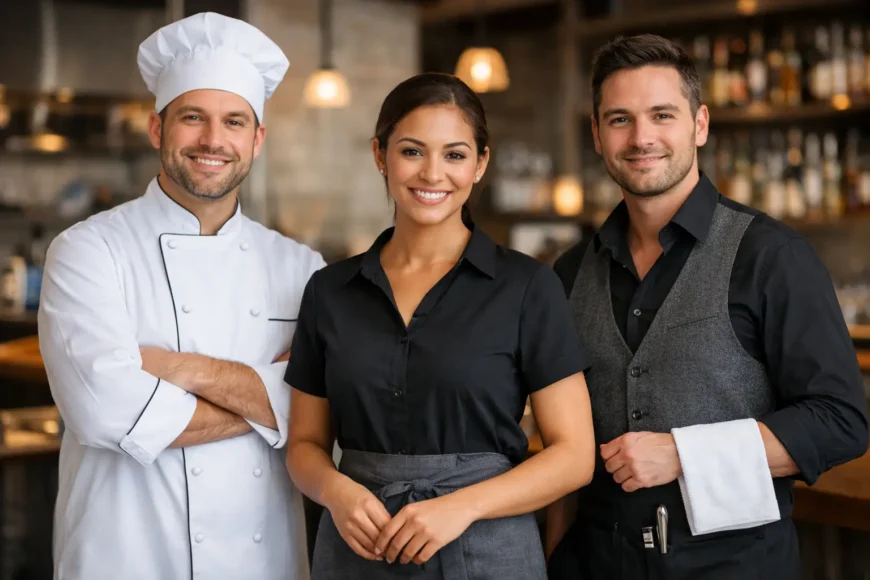
A wrinkled shirt at the host stand, mismatched aprons on the floor, and kitchen staff overheating by the dinner rush – these details shape how guests read your operation before they judge the food. Custom restaurant staff uniforms help solve more than appearance. They bring consistency to your brand, improve comfort during long shifts, and support the pace of service in real working conditions.
For restaurant owners, operations teams, and hospitality managers, uniforms sit at the intersection of image and function. They need to look polished in front of guests, hold up through frequent washing, and fit different roles across the business. Ready-made options can cover the basics, but they often fall short when you need stronger brand alignment, better durability, or a more precise fit across a full team.
Why custom restaurant staff uniforms matter
In restaurants, presentation is part of the customer experience. A well-dressed team signals discipline, cleanliness, and attention to detail. That matters in fine dining, but it also matters in casual concepts, hotel restaurants, cafes, and fast-paced service environments. Guests may not comment on a uniform directly, yet they notice when the front-of-house team looks coordinated and confident.
The operational value is just as important. Staff perform better when garments are designed for the work they actually do. A server needs freedom of movement and storage that makes sense. A host may need a more formal look that reflects the brand at the entrance. Back-of-house staff need breathable, durable pieces that can handle heat, motion, and repeated laundering. When uniforms are selected without thinking about these realities, teams feel the gap immediately.
Custom design allows you to treat uniforms as a business tool rather than an afterthought. It gives you control over fit, fabric, silhouette, branding, and role-specific details. That control becomes especially valuable when you are managing multiple outlets, a mixed-service concept, or a brand that depends heavily on visual consistency.
What separates custom uniforms from off-the-rack options
The most obvious difference is fit. Standard sizing may work for a small portion of a team, but restaurants employ people with different builds, responsibilities, and comfort preferences. Poor fit affects appearance, but it also affects confidence and mobility. A shirt that pulls across the shoulders or pants that sit awkwardly through a full shift quickly become a daily frustration.
The second difference is fabric selection. Off-the-rack uniforms tend to offer limited material choices, which means you adapt your operation to the garment. With a custom approach, the garment is built around the demands of the operation. You can choose lighter, breathable fabrics for warm dining rooms or outdoor concepts, more structured materials for premium service settings, and blends that balance softness with wash durability.
Brand expression is another major distinction. A restaurant uniform should not look generic if the brand itself is carefully positioned. Color palette, trim, embroidery, buttons, apron construction, and overall styling can all reinforce the character of the concept. A steakhouse, contemporary cafe, upscale Asian restaurant, and boutique hotel dining room should not all be dressed from the same catalog.
Designing for each role, not just the whole team
One of the most common mistakes in uniform planning is treating all staff positions the same. A cohesive team appearance matters, but cohesion does not mean identical garments for every employee. The better approach is to build a unified uniform program with variations based on role.
Front-of-house employees often carry the strongest visual burden. Hosts, servers, and managers are constantly visible to guests, so their uniforms should reflect the restaurant’s service standard and atmosphere. In a more formal setting, tailored shirts, blazers, waistcoats, and structured aprons can create a refined impression. In a more relaxed concept, the right polo, shirt, or branded overshirt may feel more natural while still looking disciplined.
Back-of-house needs are different. Comfort, breathability, and ease of movement usually take priority, but appearance should still remain professional and aligned with the brand. Fabrics that perform under heat and repeated washing are essential. Cuts should allow motion without looking oversized or untidy. The result should feel considered, not purely functional.
Management teams often need a step up in formality. Distinctive blazers, premium shirting, or subtle branded details can help supervisors look clearly identifiable without creating a visual disconnect from the rest of the staff.
Fabric choice is where performance begins
Fabric has a direct effect on how a uniform looks after ten hours, not just how it looks when first issued. Restaurants put garments through heavy use. There is constant motion, exposure to spills, repeated laundering, and in many cases, heat and humidity. Choosing fabric based on appearance alone usually leads to disappointment.
Breathable blends are often the best starting point for active service roles. They help staff stay more comfortable during busy periods and reduce the heavy, stiff feeling that some low-grade uniforms create. Durability matters just as much. Materials should resist pilling, hold shape, and maintain color after repeated washing.
There is always a trade-off. A softer fabric may feel more comfortable but require more careful care. A highly structured material may elevate the look but feel too warm for certain concepts. That is why consultation matters. The right uniform program balances image, climate, wear frequency, and maintenance realities rather than chasing a single feature.
Branding should be visible, but never forced
A strong restaurant uniform supports the brand without turning staff into billboards. The most effective branding choices are usually the most disciplined ones. Embroidered logos, branded apron details, signature colors, contrast stitching, or custom buttons can create a recognizable visual identity without overwhelming the garment.
This is especially important for brands that want to appear premium. When branding is overdone, uniforms can start to feel promotional rather than professional. When it is too subtle, the opportunity to reinforce identity is lost. The right balance depends on the concept, customer base, and service style.
Restaurants with multiple branches benefit even more from this consistency. Custom uniforms help standardize how the brand appears across locations while still allowing practical adjustments for different roles or environments.
Fit influences confidence as much as appearance
Uniform fit affects staff morale more than many operators expect. When employees feel uncomfortable or self-conscious in what they wear, it shows in posture, movement, and confidence. That matters in guest-facing roles where personal presentation is part of service delivery.
A tailored or well-calibrated fit creates a sharper impression, but it also signals respect for the team. It tells staff that the business has invested in giving them something made for professional performance, not simply the cheapest available option. For businesses with high visibility or premium positioning, this standard is hard to ignore.
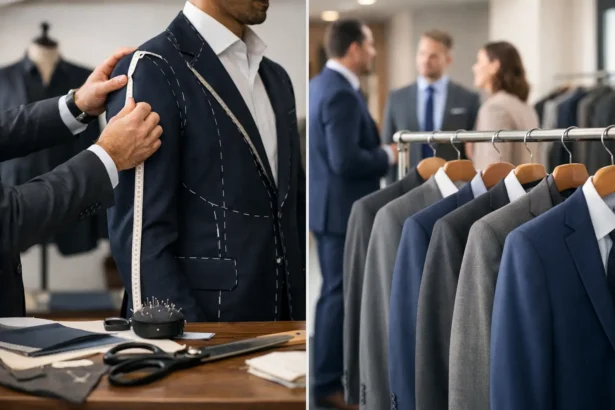
This is where a consultative uniform provider adds real value. Measuring, fitting, and adjusting garments across different body types requires more precision than selecting a few stock sizes. It takes planning, but the result is a team that looks more unified and feels better equipped for the job.
A better uniform program reduces long-term friction
Restaurant operators usually feel the cost of poor uniforms in small but constant ways. Reorders become inconsistent. Staff request replacements too often. Sizes run out. Colors stop matching. New hires look different from existing employees because the original product line changed or was never standardized properly in the first place.
A custom program creates more control. Once the design, specifications, fabric, and branding standards are established, future orders become easier to manage. Expansion is more straightforward. Replacement planning becomes cleaner. Teams look consistent over time, not only at launch.
That matters for growing restaurant groups, hospitality brands, and operators trying to sharpen their presentation without creating extra procurement complexity. A well-built uniform system should reduce friction, not add to it.
Choosing a uniform partner for custom restaurant staff uniforms
Not every supplier is set up to deliver custom restaurant staff uniforms at a professional standard. Some can provide garments, but not design guidance. Others may offer branding, but with limited fit options or weak fabric quality. The right partner should understand hospitality environments, advise on practical trade-offs, and manage the process from design through production with consistency.
Look for expertise in role-based styling, access to broad fabric options, reliable branding methods, and a fitting process that supports real-world wear. Craftsmanship matters, but so does service structure. Deadlines, reorder support, and the ability to maintain quality across batches are all part of the decision.
For restaurant businesses that take presentation seriously, uniforms should be treated as part of the brand architecture. They shape first impressions, support staff performance, and reinforce the standard guests expect to see. Velcoor approaches this work with the same precision businesses expect from any professional image investment – thoughtful design, dependable fit, and quality built for daily use.
The best restaurant uniforms do not call attention to themselves for the wrong reasons. They simply make the team look prepared, capable, and unmistakably on-brand from the moment service begins.