English
A reception team dressed in five shades of black, three shirt styles, and mismatched name badges sends a message before anyone speaks. The same is true of a restaurant floor, clinic front desk, or corporate sales team. Knowing how to standardize employee uniforms is not simply a purchasing exercise. It is a practical way to protect brand presentation, help employees look credible, and make daily operations easier to manage.
The strongest uniform programs balance consistency with real working conditions. They give every employee a recognizable, professional appearance without forcing every role into the exact same garment. That distinction matters when your team includes front-of-house staff, managers, field employees, and back-of-house personnel with different responsibilities.
Start With the Business Image You Want to Create
Before choosing colors or requesting samples, define what the uniform needs to communicate. A luxury hotel may require tailored blazers, pressed shirts, and refined accessories. A medical practice may need clean, reassuring colors and easy-care garments. A restaurant needs apparel that looks polished under service lighting while remaining comfortable through long, active shifts.
This is where many businesses lose consistency. They begin with individual garments rather than a clear visual direction. The result is often a collection of acceptable pieces that do not look intentional together.
Set a short uniform brief that identifies your desired level of formality, core brand colors, employee-facing roles, and the environment where garments will be worn. Include practical requirements such as air-conditioned interiors, outdoor exposure, kitchen heat, frequent laundering, or movement-intensive work. A uniform that looks excellent in a meeting room but feels restrictive on an eight-hour shift will not be worn with confidence.
How to Standardize Employee Uniforms by Role
Standardization does not mean giving every person the same outfit. It means creating a coordinated system with clear rules. Employees should be identifiable as part of one organization, while their clothing should still suit the work they perform.
Begin by grouping positions into practical categories. For example, a hospitality business may distinguish between concierge staff, guest services, restaurant staff, housekeeping, supervisors, and management. A corporate organization may separate client-facing teams from administrative and operational roles. Each group can have a defined uniform formula built from shared colors, fabrics, trims, or logo treatment.
A useful approach is to establish a core range. The core may include one approved shirt color, a coordinating trouser or skirt color, one outerwear option, and a consistent branding position. Then assign role-specific additions, such as a blazer for managers, an apron for service staff, or a more durable work shirt for operations personnel.
This creates hierarchy without visual confusion. It also gives employees and managers a simple answer to the question, “What is approved?”
Define What Is Fixed and What Is Flexible
The best policies are precise where precision matters and flexible where comfort improves performance. Fixed elements may include logo placement, garment color, approved fabric families, and standards for footwear. Flexible elements can include sleeve length, skirt or trouser selection, modesty options, and sizing adjustments.
For a large or diverse team, offering controlled choices is more effective than enforcing a single cut. A well-fitted uniform supports professional posture and employee confidence. It also prevents the common problem of staff altering garments in ways that weaken the intended look.
Document these decisions in a visual uniform guide. Use photographs or illustrations of approved combinations, including seasonal layers and role-specific variations. Written instructions alone leave too much room for interpretation.
Choose Fabrics for Wear, Care, and Appearance
Fabric selection determines whether a uniform program remains polished after months of use. Decision-makers sometimes prioritize first cost, only to face fading, pilling, shrinking, or inconsistent replacement garments later. A lower-priced garment can become expensive when it needs frequent replacement or creates a poor staff appearance.
Consider the actual demands of the job. Hospitality and restaurant teams may benefit from breathable blends that resist wrinkles and retain their shape. Healthcare teams often need fabrics that withstand frequent washing while remaining comfortable against the skin. Corporate teams may prefer structured materials that hold a clean silhouette throughout meetings, travel, and client interactions.
Color performance deserves equal attention. Deep colors can look refined, but they must hold their tone through repeated laundering. Light colors can feel crisp and approachable, though they may require more careful stain management. Ask for fabric samples and test them under the lighting your employees work in. A fabric that appears charcoal in a showroom may read blue or brown under warm interior lighting.
Fit is also part of fabric performance. Stretch can improve movement, but too much can reduce the tailored appearance required for formal roles. Natural fibers may provide excellent comfort, while blended fabrics often offer easier maintenance. The right choice depends on the role, the climate, the laundering process, and the image your organization expects to maintain.
Build Branding Into the Garment, Not Onto It as an Afterthought
A logo is a valuable brand asset, but oversized or poorly positioned branding can make a uniform look promotional rather than professional. The goal is recognition with restraint.
Choose a consistent location for embroidery or printing, such as the left chest, sleeve, collar, or apron bib. Then establish standards for logo size, thread colors, and placement across every garment type. A branded polo, formal shirt, blazer, and outerwear piece should look like parts of the same program, even when the construction differs.
For more formal businesses, subtle embroidery can deliver a more refined result than high-contrast printing. For active or public-facing teams, a clearer logo treatment may be appropriate. The garment should always remain the priority. Clean lines, accurate placement, and quality finishing communicate more about your business than a large logo ever will.
Create a Measurement and Sizing Process That Employees Trust
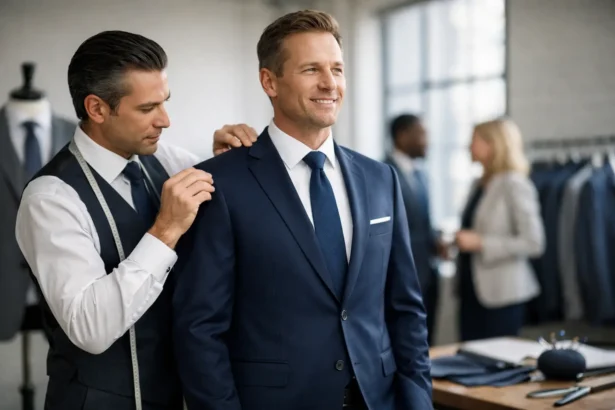
Uniform standardization often fails at the fitting stage. Ordering from generic size charts can produce shirts that pull at the buttons, trousers that need alterations, and jackets that sit poorly at the shoulders. Staff may then avoid wearing the uniform correctly or request exceptions that slowly erode consistency.
A professional measurement process reduces these problems from the beginning. Take measurements where possible, provide fit samples in relevant cuts, and allow employees to assess comfort while moving, sitting, and working. For tailored corporate apparel, individual fitting is especially valuable because a precise fit is central to the garment’s appearance.
Plan for new hires, too. Your standard should not depend on placing a completely new custom order whenever someone joins the team. Maintain a process for measuring new employees, ordering approved replacements, and keeping essential sizes available when operationally necessary.
Make Purchasing and Replacement Easy to Control
A uniform program needs ownership. Without a designated process, departments may place separate orders, employees may purchase lookalike items, and small changes can accumulate until the original standard disappears.
Assign responsibility to an HR, operations, facilities, or procurement contact. That person should maintain approved specifications, order quantities, supplier details, and replacement history. They should also know which styles are current and which have been retired.
For dependable control, set four practical rules:
- Define the number of uniform sets each employee receives and the expected replacement cycle.
- Keep an approved item list with exact colors, fabric references, logo specifications, and sizing options.
- Establish a simple process for damaged, lost, or end-of-life garments.
- Review the program at least once a year for fit feedback, wear performance, and brand alignment.
This structure helps prevent unnecessary spending while ensuring employees always have presentable apparel available. It is particularly useful for businesses with seasonal staffing, multiple locations, or high employee turnover.
Introduce the Standard With Clear Expectations
Even well-designed uniforms need a proper rollout. Employees are more likely to support the program when they understand why it is changing and how it benefits them. Explain that the new standard is intended to improve fit, comfort, professionalism, and brand consistency, not simply impose another rule.
Provide the visual uniform guide before the launch date. Clarify grooming, footwear, layering, and garment-care expectations. Managers should wear the standard correctly from day one, because inconsistent leadership quickly makes a policy feel optional.
Listen carefully to early feedback, especially during the first few weeks. A complaint about a collar, pocket placement, fabric heat, or size range may reveal a genuine issue that can be corrected before the next production run. The objective is not to accommodate every personal preference. It is to refine the program so it performs well for the team and the business.
A tailored uniform partner can bring valuable discipline to this process, from fabric selection and logo execution to measurement and repeat ordering. Velcoor helps businesses turn brand standards into professional apparel programs designed around the people who wear them.
A consistent uniform is most effective when employees do not have to think about it each morning. Give them clothing that fits well, works hard, and clearly represents the organization, and your business image becomes a dependable part of every customer interaction.