English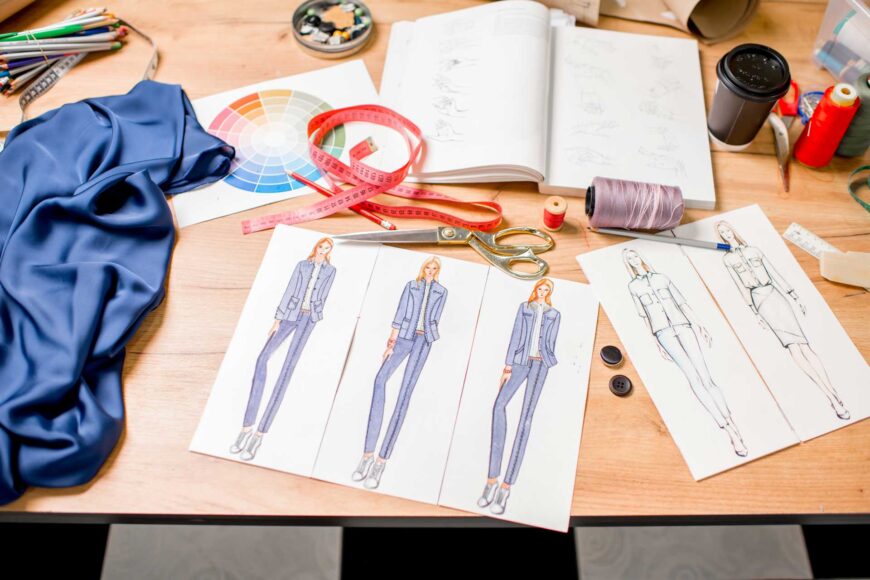
Uniforms play a crucial role in establishing a professional and cohesive image for businesses across various industries. They create a sense of unity among employees and serve as a powerful branding tool. By providing identity, customized uniforms help employees feel more connected to the company culture. In this comprehensive guide, we will provide you with valuable insights and tips on selecting, customizing, and implementing uniforms that will help your business stand out from the competition and enhance your brand visibility.
Introduction
In today’s competitive business landscape, having a distinct and professional appearance is essential. Corporate attire helps convey a sense of professionalism and trustworthiness, fostering an environment of teamwork and unity among employees.
Cutting edge competence and flexibility when you need it. Skilled and certified experts who ensure you get the right return on your technology investment, and who help your enterprise make technology a competitive edge. Our greatest strength is the combination of our strong, local presence and our global ability to deliver from all of the Nordics, Latvia, and India.
Choosing and customizing uniforms for your business is a significant decision that requires careful consideration. By following the guidelines and tips outlined in this comprehensive guide, you can create uniforms that not only enhance your brand image but also meet the functional needs and preferences of your employees. Remember, investing in high-quality, well-designed uniforms not only boosts employee morale but also leaves a lasting impression on your customers.
Approaches For Choosing Uniforms
Understanding your business’s unique needs is vital when it comes to selecting uniforms. Consider the message you want to convey, and how uniforms can enhance that image. Attire can vary greatly from industry to industry. For example, a tech company may opt for casual, comfortable attire, while a law firm may choose more formal, tailored outfits. Recognizing these nuances will help you make informed decisions regarding your corporate uniforms.
Section 1: The Importance of Uniforms
- Discuss the benefits of uniforms, such as creating a professional image, enhancing brand recognition, promoting a sense of belonging, and fostering customer trust.
Beyond the basic benefits of enhancing brand recognition, uniforms can also boost employee morale and create a stronger team dynamic. Employees who wear uniforms often report feeling more confident and professional, which can translate into better performance and customer service.
Engaging your team in the decision-making process regarding attire can lead to better acceptance and satisfaction. Conduct surveys or hold discussions to gain feedback on preferences, which can help in selecting styles, colors, and fit. This approach emphasizes an inclusive work culture where employees feel valued and heard.



Section 2: Assessing Your Needs
- Understand your industry’s requirements and regulations related to uniforms.
- Determine the functional needs of your employees, considering factors like comfort, durability, safety, and ease of movement.
In some industries, such as healthcare or food service, uniforms must adhere to specific standards for safety and hygiene. It’s essential to research any regulations that might apply to your industry to ensure compliance while choosing uniforms. Additionally, consider the physical demands of each job role when assessing attire needs.
Team Discussion For Uniform
Section 3: Designing Your Attire
- Explore different design elements, such as colors, styles, and patterns, to align with your brand identity.
- Discuss the importance of incorporating your logo or company name for brand visibility.
- Highlight the significance of customization options, such as embroidered or printed logos, unique buttons, and personalized name tags.
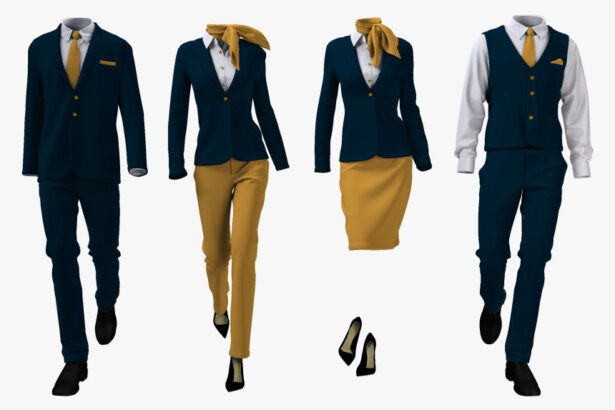
When designing uniforms, you have an opportunity to reflect your brand’s personality and values. Think about how colors and styles can align with your brand identity. For example, bright colors may suggest creativity and innovation, while muted tones can convey professionalism and reliability. Involving employees in the design process can also increase buy-in and ensure that they feel comfortable in their uniforms.
Section 4: Selecting the Right Fabrics
- Provide insights into different fabric options and their suitability for specific industries or work environments.
- Discuss factors like breathability, moisture-wicking properties, wrinkle resistance, and durability.
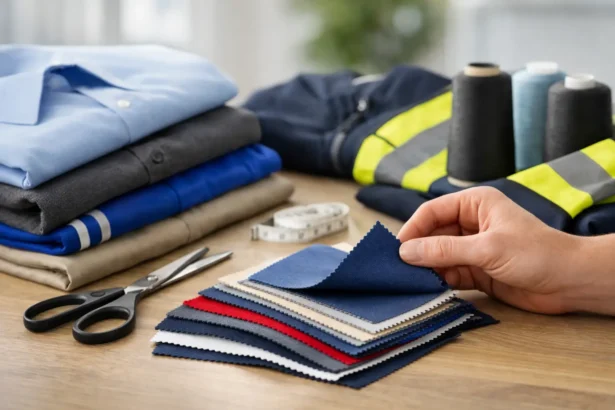
Choosing the right fabrics can significantly impact the comfort and functionality of uniforms. Consider factors such as climate, work environment, and employee preferences. For example, breathable fabrics are essential for outdoor workers in warm climates, while heavier materials might be better suited for colder environments. Look for durable fabrics that can withstand regular wear and tear, as well as those that are easy to clean and maintain.
Steps By Steps
In conclusion, investing in well-designed and appropriate corporate uniforms can significantly impact your business’s image and employee satisfaction. By taking the time to understand your needs, engaging employees in the selection process, and ensuring proper implementation and maintenance, your uniforms can serve as a powerful tool in building a cohesive brand and enhancing workplace culture.
Section 5: Sizing and Fit
- Emphasize the importance of proper sizing and fit for comfort and a professional appearance.
- Provide guidelines for measuring employees accurately, considering body measurements, height, and weight.
Section 6: Ordering and Implementation
- Outline the process of placing orders, including minimum quantities, turnaround time, and payment options.
- Provide recommendations on involving employees in the decision-making process and seeking their feedback.
- Discuss the importance of proper implementation, including clear communication and employee training on uniform policies and maintenance.
Section 7: Maintaining and Updating Uniforms
- Provide tips on uniform care and maintenance to ensure longevity.
- Discuss the importance of periodically evaluating and updating your uniforms to keep them aligned with current trends and industry standards.
Proper fit is crucial in ensuring that uniforms look professional and allow employees to perform their duties effectively. Make sure to provide a range of sizes to accommodate all body types. Consider offering tailored options for employees who may require a more specific fit, ensuring that they feel both comfortable and confident in their uniforms.
Regular maintenance of uniforms is essential for prolonging their lifespan. Provide guidelines for proper care and laundering to your employees to ensure they can keep their uniforms looking professional. Consider scheduling regular evaluations of your uniforms to assess their condition and determine if updates are necessary to stay relevant with current trends.