English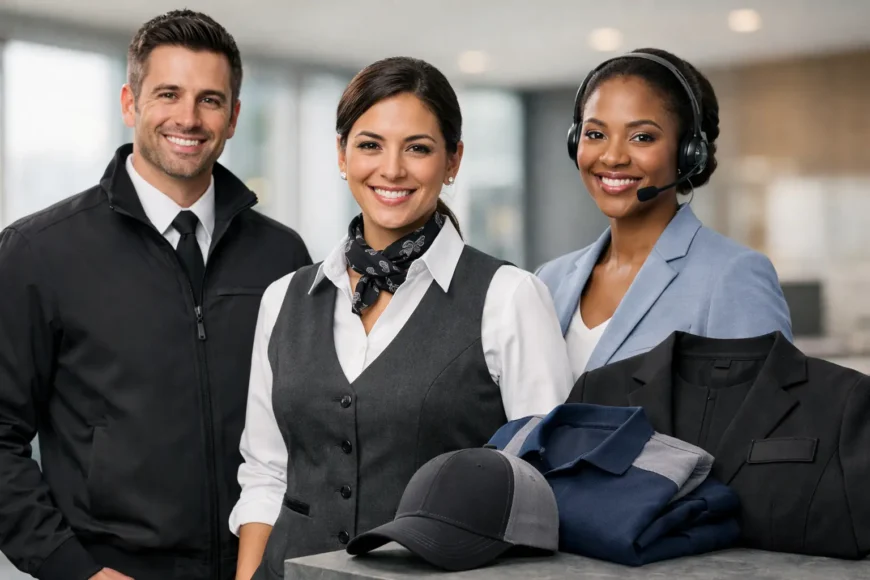
A receptionist whose blazer pulls at the shoulders, a server in a stained, poorly fitted shirt, or a clinic team wearing mismatched scrubs sends a message before anyone speaks. Business uniform customization gives organizations control over that first impression while solving the everyday issues that generic workwear rarely addresses: inconsistent sizing, weak branding, limited comfort, and garments that fail too soon.
For businesses that take presentation seriously, uniforms are not simply clothing purchased in bulk. They are working assets. The right uniform supports employee confidence, makes roles recognizable, reinforces brand standards, and remains presentable through long shifts, repeated laundering, and active work.
Why Business Uniform Customization Matters
A polished team appearance creates immediate visual order. In a hotel lobby, restaurant dining room, financial office, or healthcare reception area, customers should be able to identify staff quickly and feel assured that they are dealing with a professional organization. Uniforms make that possible, but only when the design is aligned with the workplace rather than selected from a standard catalog.
Customization begins with brand identity. Colors, logo placement, trims, buttons, collars, and garment silhouettes should reflect how the organization wants to be perceived. A luxury hospitality brand may require refined blazers and tailored trousers in understated tones. A busy restaurant may need branded polos or shirts with practical fabrics that tolerate frequent washing. A medical practice may prioritize clean lines, mobility, and easy-care performance.
The goal is not to place a logo on any available shirt. It is to build an apparel system that looks intentional across every customer-facing role.
A consistent look without ignoring different roles
One uniform design rarely suits every employee. Front desk personnel, managers, service crews, kitchen teams, delivery staff, and back-office employees have different physical demands and levels of customer interaction. They can still look like one team when the collection uses a coordinated palette, shared branding details, and complementary garments.
For example, a hotel may use tailored blazers and formal shirts for reception, waistcoats or dresses for concierge staff, and branded polos for maintenance teams. Each role is dressed appropriately, yet the overall visual identity remains clear. This is a stronger approach than forcing every department into identical clothing that may be impractical or uncomfortable.
Start With Function, Then Build the Design
The most attractive uniform will not deliver value if employees avoid wearing it or if it deteriorates after a few months. Effective customization starts with an honest assessment of how garments will be used.
Consider the work environment first. Does the team work outdoors, in air-conditioned offices, around food, in clinical settings, or on a busy retail floor? Will employees spend much of the day standing, bending, lifting, walking, or meeting clients? These details influence fabric weight, stretch, breathability, pocket placement, sleeve construction, and the level of formality required.
A corporate office may benefit from wrinkle-resistant dress shirts and tailored separates that retain a crisp appearance during meetings. Restaurant staff may need breathable fabrics, stain-conscious colors, and construction that allows easy movement. Healthcare teams may need lightweight materials designed for long shifts and frequent laundering. There is no universally best fabric or cut. The right choice depends on the job, the climate, and the expected standard of presentation.
Fit is part of performance
Poor fit is one of the most common reasons employees dislike uniforms. Ready-made sizing can be convenient at first, but it often creates uneven results across a diverse team. Sleeves may be too long, waistlines may sit incorrectly, and jackets may restrict movement. Those issues affect both appearance and morale.
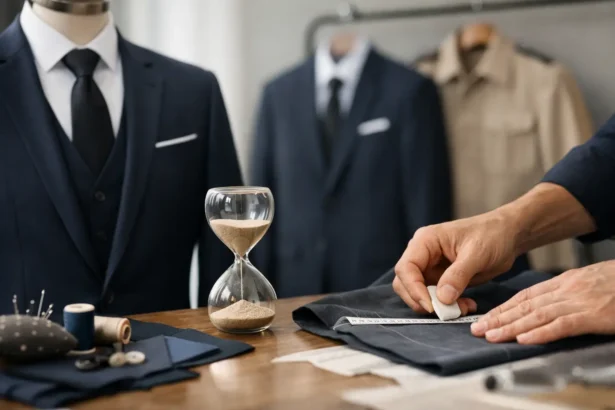
Professional fitting brings greater consistency to the final result. Measurements, size trials, and appropriate adjustments help each employee look put together without compromising comfort. For executive suits, blazers, and formal front-of-house attire, made-to-measure service can be especially valuable because structured garments reveal fitting errors more clearly than casual workwear.
Fit also influences durability. When a garment is too tight across the shoulders, hips, or thighs, stress on seams and closures increases. A well-fitted uniform is more likely to retain its shape and remain serviceable over time.
Select Fabrics for Daily Reality
Fabric selection should balance visual quality with maintenance demands. Premium-feeling materials may enhance a brand image, but organizations also need garments that can withstand regular use. A fabric decision should account for how often the item will be worn, how it will be cleaned, and whether employees have access to professional laundering or wash garments at home.
Natural fibers can offer breathability and a refined hand feel, while blended fabrics often improve wrinkle resistance, shape retention, and ease of care. Stretch content can improve mobility for active roles, but excessive stretch may change the garment’s appearance or long-term recovery. Dark colors can hide minor marks in food service and operational settings, while lighter shades may better support a clean, clinical aesthetic. Each decision involves a trade-off, which is why fabric swatches and wear considerations should be reviewed before production begins.
For teams in warm or humid conditions, breathability deserves particular attention. A formal uniform that looks impressive in a showroom but feels heavy during a full shift will create resistance from staff. Comfortable employees are more likely to wear uniforms correctly and represent the business with confidence.
Use Branding With Precision
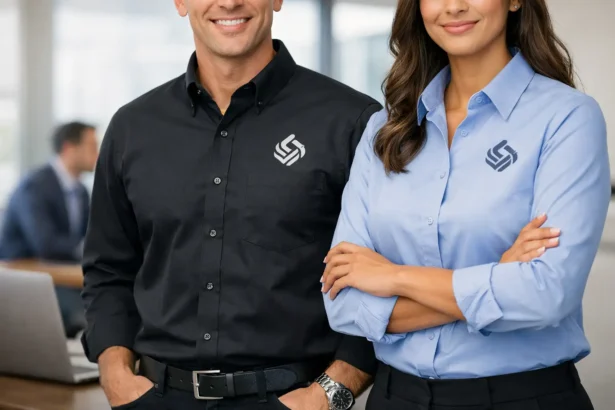
Embroidery, printing, woven labels, name personalization, and custom trims can turn professional apparel into a recognizable brand touchpoint. However, branding should be applied with restraint. An oversized logo, poor thread contrast, or unsuitable print placement can make otherwise refined attire look promotional rather than professional.
Embroidery is often an excellent choice for polos, shirts, blazers, aprons, and outerwear because it provides a durable, elevated finish. Printing may be better suited to larger graphics, event uniforms, or garments where embroidery would be too heavy. The placement should suit the garment and the role. A subtle embroidered logo on the chest may work for corporate teams, while a visible branded apron can be appropriate for restaurant service.
Names and job titles can be useful in hospitality, healthcare, and customer service environments, where clarity and approachability matter. Yet they should be considered carefully for privacy, security, and staff turnover. A reusable role-based uniform may be more practical than individually named garments for certain operations.
Plan the Rollout Like an Operations Project
Uniform projects can become costly when organizations focus only on the final look and leave logistics until later. Before approving a design, establish the number of employees, role categories, sizing requirements, replacement expectations, and budget range. This prevents a polished concept from becoming difficult to manage once production begins.
It is also wise to request samples or conduct a small wear trial for high-volume orders. Ask employees to move, sit, work, and wash the garment as they normally would. Their feedback may reveal issues that are not obvious during a brief fitting, such as a collar that feels restrictive, a fabric that traps heat, or a pocket that is poorly positioned for the role.
A reliable supplier should guide the process from consultation and design through fittings, production, and reorders. This matters as teams grow, new hires join, or seasonal uniforms need replacement. Keeping fabric specifications, logo files, approved colors, and sizing records organized helps maintain consistency over time.
When Custom Is Worth the Investment
Custom uniforms require more planning than purchasing ready-made garments, and the upfront cost may be higher. The return comes from better fit, stronger brand presentation, improved employee acceptance, and fewer compromises in fabric and design. For customer-facing businesses, the difference is often visible from the first interaction.
Customization is particularly valuable when staff appearance directly affects trust. Hotels, restaurants, clinics, financial firms, retail teams, and corporate offices all benefit from attire that signals care and reliability. It is equally useful for organizations with varied departments that need distinct functional garments without losing a unified identity.
Velcoor approaches this work as a professional image-building process, combining consultation, fabric selection, custom branding, fitting, and tailored production for teams that need more than standard workwear.
The most effective uniform is one employees can wear comfortably, managers can maintain confidently, and customers recognize immediately. Begin with the realities of the workday, then let craftsmanship and brand direction shape every detail. That is how a uniform becomes a dependable part of the business, not just another required item in the closet.