English
Inside Corporate Gift Supplier: What Better Design Looks Like
Beyond Logos and Giveaways: How Thoughtful Design, Material Selection, and Brand Consistency Transform Corporate Gifts into Lasting Impressions.
Corporate gifting has evolved beyond the traditional practice of distributing promotional merchandise. Today, a well-planned corporate gift is more than an item carrying a company logo. It is an extension of brand identity, a reflection of corporate values, and an opportunity to build lasting relationships with employees, customers, and business partners.
Whether it is a premium corporate shirt, a personalised polo, an executive jacket, or a thoughtfully assembled welcome package, the most successful corporate gifts share one characteristic: they are designed with purpose, not simply decorated for promotion.
Yet many businesses continue to approach corporate gifting as a purchasing exercise rather than a design opportunity. The discussion often begins with quantities, prices, and delivery dates, while important considerations such as practicality, material quality, brand coordination, and long-term usability receive less attention.
A professional corporate gift supplier should help businesses look beyond individual products and consider how every selected item contributes to a consistent corporate image.
From Promotional Merchandise to Brand Experience
Imagine a company preparing to welcome 100 new employees. Its purchasing department sources branded notebooks, the marketing team orders promotional bags, and human resources arranges corporate polo shirts.
Each department may select products independently. Although every item features the same company logo, the colours, material quality, finishing, and visual presentation can differ significantly.
The result is a collection of branded products rather than a coordinated corporate experience.
A more thoughtful approach begins with one question:
What should someone feel when they receive or wear something representing the company?
Professionalism, creativity, reliability, exclusivity, or sustainability may all be part of the intended brand impression.
For a technology business, this might translate into minimalist designs, contemporary colours, and functional materials. A financial institution may prefer structured silhouettes, restrained detailing, and classic colour combinations. A hospitality company may emphasise elegant presentation, comfort, and coordinated staff apparel.
When corporate gifts and uniforms follow a shared design direction, individual products become part of a recognisable identity.
Good Design Begins Before the Logo
One of the most common misconceptions in corporate merchandise is that branding begins when a logo is applied.
In reality, good design begins much earlier.
The proportions of a garment, the texture of a material, the relationship between colours, and the practicality of the finished product all influence its perceived quality.
A poorly constructed polo shirt does not become premium simply because an expensive embroidered logo is added. Likewise, an ordinary promotional bag may offer little lasting value if its proportions, handles, and materials are unsuitable for everyday use.
The product should be desirable and functional even before the brand identity is introduced.
For corporate apparel, this means evaluating the garment’s silhouette, collar construction, sleeve length, fabric drape, and overall fit. For non-apparel gifts, considerations may include ergonomics, material durability, packaging, storage, and daily usefulness.
A well-designed product encourages repeated use. Every time it is worn, carried, or displayed, it creates another opportunity for the brand to be recognised naturally.
Fabric Selection: Where Appearance Meets Performance
For corporate clothing and textile-based gifts, material selection deserves as much attention as visual design.
A fabric that looks attractive in a catalogue may behave very differently during daily use.
Corporate shirts intended for office environments may benefit from breathable, easy-care materials. Polo shirts for outdoor activities may require lightweight, moisture-managing fabrics. Executive jackets need sufficient structure to maintain a professional silhouette, while promotional T-shirts should balance comfort, durability, and cost.
The correct decision depends on how and where the product will be used.
Important considerations include fabric composition, weight, breathability, stretch, wrinkle resistance, colourfastness, laundering requirements, and compatibility with the chosen branding method.
Even fabric texture can influence the final appearance of a company logo. An embroidered design may sit differently on fine woven cotton than on heavily textured knitted material. Digital printing, silicone applications, and heat-transfer methods also require appropriate fabric compatibility.
This is why physical sampling is valuable.
Before committing to large-scale production, businesses should examine the actual fabric, inspect the finishing under normal lighting, confirm colour expectations, and test how the garment performs during movement and washing.
A professional result is achieved when the material, garment construction, and branding method work together.
The Hidden Challenge: Corporate Gifts and Uniforms Often Look Unrelated
A company’s brand identity should not disappear when its products come from different suppliers.
Consider an organisation with five departments:
Management wears tailored blazers and formal shirts. Reception staff wear coordinated blouses or dresses. Sales teams use branded polo shirts, while warehouse employees require practical T-shirts and operational staff wear functional workwear.
Meanwhile, the marketing department distributes promotional merchandise at exhibitions and corporate events.
These products serve different purposes, but they can still communicate one corporate identity.
The solution is not to make every item identical. It is to establish shared design principles.
A consistent primary colour, carefully selected complementary shades, defined logo proportions, and coordinated finishing techniques can connect very different product categories.
For example, an executive blazer may feature discreet tonal embroidery, while a polo shirt carries a more visible chest logo. A promotional tote bag may use the same brand colour and a simplified version of the approved artwork.
The products remain appropriate for their intended users while expressing a common visual language.
Consistency does not mean repetition. It means recognition.
Branding Details That Separate Ordinary from Premium
Logo placement is one of the smallest design decisions with one of the greatest visual consequences.
A logo that is too large can overpower a garment. Poorly positioned embroidery can disturb the balance of a chest panel. An unsuitable printing process may affect fabric flexibility or the appearance of a finished product.
Premium corporate merchandise relies on proportion, restraint, and appropriate execution.
For apparel, common branding techniques include embroidery, digital printing, silicone logo applications, woven labels, and selected embossing or debossing treatments.
Each method creates a different impression.
Embroidery can communicate tradition and craftsmanship. Silicone logos may provide a contemporary technical appearance. Subtle woven labels can introduce branding without dominating the garment, while carefully executed printing offers versatility for promotional designs.
However, no single method is appropriate for every product.
The choice should consider the material surface, logo complexity, intended use, laundering conditions, required durability, and production budget.
Brand consistency also requires documentation. Approved logo files, colour references, dimensions, placement measurements, and application methods should be recorded before production.
This prevents the same brand from appearing differently whenever another department places an order.
Sizing Is Part of the Corporate Gift Experience
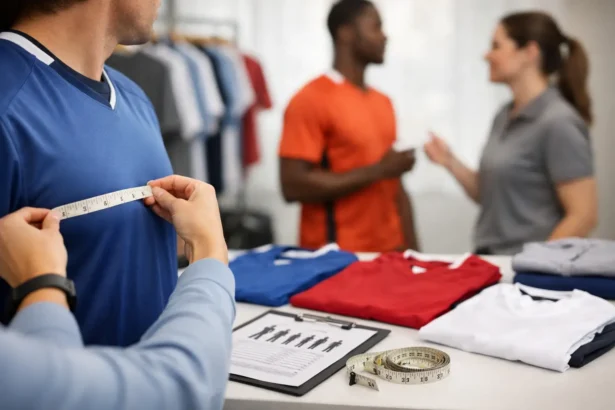
Corporate apparel creates a challenge that ordinary promotional merchandise does not: every recipient has a different body shape.
Employees who receive uncomfortable, poorly proportioned, or incorrectly sized garments are less likely to wear them regularly.
A company may invest in premium fabrics and attractive branding, but those efforts lose value if the finished garment does not fit its intended wearer.
The solution begins with a clearly defined sizing strategy.
For large corporate orders, standard size ranges can simplify production and distribution. However, businesses should consider whether the available sizes adequately accommodate smaller, larger, and less common body proportions.
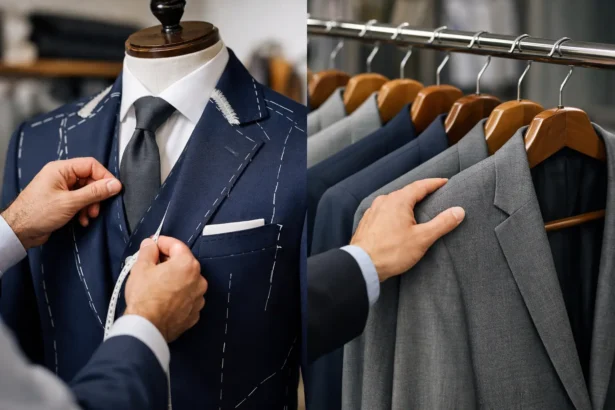
For executive apparel or garments requiring a more precise silhouette, individual measurements or tailor-made options may be more appropriate.
A mixed approach can also be effective: standard sizing for general employees, with made-to-measure solutions for individuals who require additional adjustments.
Most importantly, measurement information and the relevant finished garment specifications should be retained for future reference, subject to appropriate privacy controls.
Without reliable records, every replacement order risks becoming another round of measurement collection, size confusion, and unnecessary administration.
The Reorder File: The Most Overlooked Part of a Corporate Programme
A corporate gifting or uniform project does not necessarily end when the first order is delivered.
Employees join and leave. Existing garments wear out. Departments expand. Corporate events require additional merchandise. A successful initial design may need to be reproduced months or years later.
This creates a problem when the original specifications have not been documented.
A purchasing team may remember that it ordered navy polo shirts, but not the precise fabric reference, colour code, collar style, embroidery dimensions, or approved size chart.
A replacement order from a different production batch—or a different supplier—may therefore look noticeably different.
A professional corporate supply programme should retain:
Approved garment designs, construction details, and fabric references.
Branding artwork, colours, dimensions, and placement specifications.
Size charts, agreed garment measurements, and authorised sizing records.
Original sample approvals and finishing requirements.
Order quantities, production references, and relevant delivery information.
Procedures for replacement orders, additional employees, and design updates.
These details may never be visible to the end user, but they are essential to maintaining brand consistency.
The reorder file is part of the product, even though nobody wears it.
Why the Lowest Quotation Is Not Always the Best Value
Comparing corporate gift suppliers solely by unit price can produce misleading results.
Two quotations may appear to describe the same product while representing very different specifications.
A lower-priced corporate shirt may use a lighter material, simpler construction, or less durable branding method. Another quotation may include different size availability, packaging, finishing, sampling, or delivery requirements.
Without a common specification, the comparison is not meaningful.
Businesses should first define what they expect the product to achieve.
For garments, this includes the material, design, fit, branding method, quantity, size distribution, workmanship expectations, and delivery requirements.
For non-apparel gifts, equivalent details might include dimensions, materials, packaging, customisation, and product testing.
Once the specifications are aligned, suppliers can be evaluated more fairly.
The objective is not necessarily to purchase the most expensive product. It is to select the most appropriate combination of quality, usability, consistency, and cost.
A product that remains useful and presentable for an extended period may deliver greater long-term brand exposure than something that is inexpensive but rarely used.
Velcoor: Bringing Corporate Apparel and Brand Consistency Together
For businesses seeking a coordinated corporate image, Velcoor provides a structured approach to the apparel and uniform component of corporate branding.
Rather than treating each garment as an unrelated purchase, Velcoor’s uniform design workflow can bring together garment styling, fabric selection, sizing, branding applications, and production specifications.
Companies can develop coordinated apparel across management, reception, sales, operations, and technical departments without requiring everyone to wear identical garments.
A shared corporate identity can be expressed through different silhouettes, fabrics, colours, and garment categories according to each department’s practical needs.
Velcoor’s apparel-related services include corporate shirts, polo shirts, suits, blazers, dresses, T-shirts, and selected workwear, with options for standard sizes and customised production.
Branding considerations can include embroidery, printing, woven labels, silicone logos, and other suitable finishing techniques, depending on the product.
Measurement and garment specification records can also support more organised repeat-order planning.
For businesses combining uniforms with non-apparel corporate gifts, the most effective approach is to align the merchandise supplied by relevant gift specialists with the approved apparel branding standards. Availability of non-apparel gifts should be confirmed with the respective supplier.
The result is a more coherent corporate presentation without sacrificing the individual function of each product.
Before Placing a Corporate Gift Order
A successful corporate gifting programme begins with clarity.
Companies should establish the purpose of the products, their intended recipients, the impression they wish to communicate, and the expected frequency of use.
For apparel, this means confirming the garment design, fabric, sizing approach, logo application, and production sample. For other corporate merchandise, suitability, material quality, customisation, packaging, and product-specific requirements should receive equal attention.
Where applicable, safety, environmental, or industry-specific claims should be supported by relevant documentation or verified standards rather than promotional descriptions alone.
A clear approval process also matters. One approved sample, one documented artwork specification, and one consistent set of production requirements can prevent substantial variation across orders.
And when the same products need to be reproduced, accurate records help preserve the original design intent.
The Future of Corporate Gifting Is Thoughtful Design
Corporate gifts are no longer simply objects exchanged during events or distributed as promotional giveaways.
They can become part of how employees experience their workplace, how customers perceive a company, and how business partners remember a relationship.
A well-designed shirt can become a favourite piece of workwear. A practical branded accessory can remain useful long after an event. A coordinated corporate wardrobe can strengthen recognition across an entire organisation.
The strongest corporate gift programmes consider how products look, feel, function, and remain consistent over time.
For businesses choosing a corporate gift supplier, the important question is not simply how many products can be printed with a logo.
It is how thoughtfully those products can represent the company behind them.
Because a truly distinctive corporate identity is not created by placing a logo on everything. It is created by designing everything with the same purpose.
Velcoor — Corporate Uniform Design, Fabric Selection, Customisation and Branding Solutions.