English
A receptionist’s blazer, a clinician’s scrub top, and a restaurant manager’s shirt all do more than identify a role. They set the standard for how customers read the business before a conversation begins. Corporate uniform trends 2026 are moving away from generic, logo-first garments and toward professional apparel that feels considered: tailored to the job, aligned with the brand, and comfortable enough for a full working day.
For decision-makers, the objective is not to chase fashion for its own sake. It is to create a consistent, credible staff appearance that supports daily operations. The strongest uniform programs will balance polish with practicality, using fabric, fit, color, and branding with greater intention.
Corporate Uniform Trends 2026: A More Refined Standard
The central shift is clear. Businesses are treating uniforms as part of their brand experience rather than a procurement afterthought. A well-designed uniform can make a hospitality team look more attentive, give a clinic a stronger sense of order, or help a corporate office present a united and confident image.
That does not mean every employee should wear the same garment. Uniform consistency in 2026 is increasingly achieved through a coordinated wardrobe system. Front-of-house staff may wear structured blazers or tailored dresses, while operations teams wear matching shirts and performance trousers in the same color palette. The visual language remains consistent, but each role receives clothing appropriate to its movement, environment, and customer contact.
This approach is especially valuable for organizations with mixed departments. A hotel, for example, can maintain one brand identity across concierge, housekeeping, food service, and management without forcing one impractical style across every function.
Tailored Comfort Is No Longer Optional
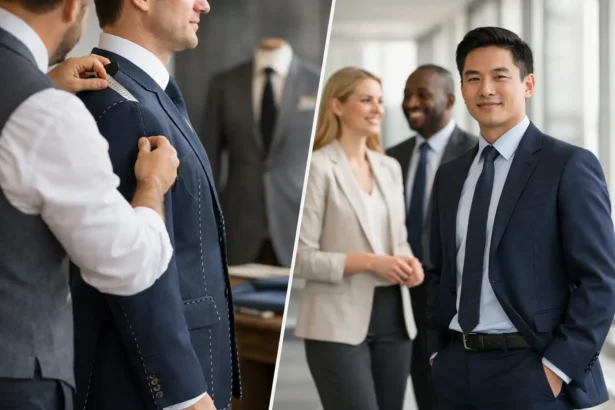
Employees notice poor fit immediately. Tight shoulders restrict movement, oversized shirts look untidy, and trousers that do not sit correctly affect both confidence and productivity. As businesses place greater emphasis on employee experience, precise measuring and fitting are becoming a defining part of uniform quality.
The direction for 2026 favors clean, modern silhouettes with room to work. Think softly structured blazers, shirts with better shoulder mobility, trousers with a tailored line rather than an overly slim cut, and skirts designed for comfortable movement. The goal is a polished profile without the stiffness often associated with traditional corporate clothing.
Fit personalization also matters for inclusion. Teams are not made to a single body type, and a one-size-fits-all approach can create unnecessary frustration. Offering a sensible size range, alternative cuts, and professional fitting support helps every employee present the brand with confidence. Made-to-measure options are particularly valuable for executive teams, client-facing staff, and roles where formal presentation is central to the business.
There is a practical trade-off. Highly individualized sizing requires more planning than ordering stock garments, particularly for large teams or new hires. Yet the reduction in alterations, replacement requests, and employee dissatisfaction can make a carefully managed fitting process the more efficient choice over time.
Performance Fabrics With a Professional Finish
Uniform fabric selection is becoming more strategic. Businesses want garments that retain their shape and color, resist creasing, and remain comfortable through long shifts. But performance should not come at the expense of appearance. A fabric may be technically durable, yet still look too casual for a private clinic, financial office, or premium restaurant.
The right material depends on the working environment. Hospitality and retail teams often benefit from breathable, easy-care fabrics that maintain a neat finish under frequent movement. Healthcare staff may need materials selected for comfort, washability, and workplace hygiene requirements. Corporate teams may prioritize suiting fabrics with structure, refined texture, and dependable drape.
In warm climates or demanding indoor environments, lightweight blends and breathable constructions deserve close attention. A uniform that looks sharp at the start of a shift but becomes uncomfortable by midday will not deliver the intended result. Fabric swatches should be assessed in the actual workplace, not only under showroom lighting.
Durability remains essential. Uniform programs should consider laundering frequency, colorfastness, pilling resistance, and how well embroidery or printing will hold over time. The lowest initial cost rarely represents the lowest long-term cost when garments fade, lose shape, or need replacing after limited wear.
Understated Branding, Stronger Recognition
In 2026, professional branding is becoming more refined. Oversized logos and excessive contrast can make a uniform feel promotional rather than premium. Many businesses are choosing subtle embroidery, tonal logos, branded buttons, contrast piping, or a signature lining detail to create recognition without overwhelming the garment.
Color is doing more of the brand work. Deep navy, charcoal, black, earth tones, and crisp neutrals remain reliable foundations because they communicate professionalism and wear well across departments. A distinctive accent color can then appear in a scarf, tie, collar detail, apron, pocket trim, or name badge to make the uniform unmistakably yours.
The most effective choice depends on the brand position. A luxury hotel may benefit from restrained embroidery and elegant dark tones, while a family-focused restaurant can carry more warmth and color. The design should reflect how customers are meant to feel when they meet the team: reassured, welcomed, energized, or confident in the service ahead.
Wardrobe Systems Replace Single Uniform Orders
One of the most useful corporate uniform trends 2026 is the shift from single-item purchasing to flexible wardrobe systems. Rather than issuing one shirt and one pair of pants to every employee, businesses are creating approved combinations that preserve consistency while giving staff practical choices.
A typical system might include a branded shirt, polo, blouse, tailored pants, skirt option, jacket, cardigan, and outer layer. Employees can wear role-appropriate combinations within clearly defined standards. This is not a relaxed dress code. It is a controlled collection designed to work across seasons, job demands, and individual fit preferences.
For organizations, this model can simplify replenishment. Instead of redesigning uniforms whenever roles change, they can add compatible pieces to an established collection. It also creates a more professional result when employees need layers for air-conditioned offices, outdoor arrivals areas, or variable shift conditions.
The key is discipline. Too many colors, cuts, or optional items can dilute the visual identity. A uniform partner should help define which elements are fixed, which are flexible, and how each garment supports the wider brand standard.
Sector-Specific Design Has Greater Value
Generic uniforms are losing ground because different industries solve different problems. A restaurant needs garments that can handle service movement and frequent laundering. A medical practice needs clothing that feels reassuring, clean, and appropriate for patient interaction. A finance or legal office may need tailored suiting that reinforces discretion and credibility.
Design should begin with observation. How often do employees move between indoor and outdoor spaces? Do they greet customers at close range? Are they standing for hours, carrying equipment, or working around food and cleaning products? These operational details shape the right fabric, cut, fastening, and color.
A consultation-led process prevents expensive mistakes. It gives decision-makers the opportunity to compare fabric options, review samples, test branding placement, and align the final design with real working conditions. Velcoor approaches corporate apparel as a crafted business tool, combining fitting precision with custom design choices that serve both the employee and the brand.
How to Plan a Uniform Program for 2026
Start with the experience your business wants to deliver, then work backward to the garments. Define the impression staff should create, identify the demands of each role, and establish non-negotiables such as washability, modesty requirements, mobility, or formal presentation. From there, build a focused color palette and select fabrics that perform in the intended setting.
Before full production, review fitted samples with representatives from each department. Their feedback often reveals issues that a design review alone will miss, such as pocket placement, sleeve length, heat retention, or the need for an additional layer. This stage protects both the budget and the final standard.
Finally, plan for continuity. Keep records of approved fabrics, colors, logo specifications, and measurements so new employees can be outfitted consistently. A uniform program earns its value when the hundredth garment looks as intentional as the first.
The best corporate uniforms in 2026 will not simply place a logo on clothing. They will give employees apparel they can move in, customers a visual signal they can trust, and businesses a standard of presentation that holds up every day.