English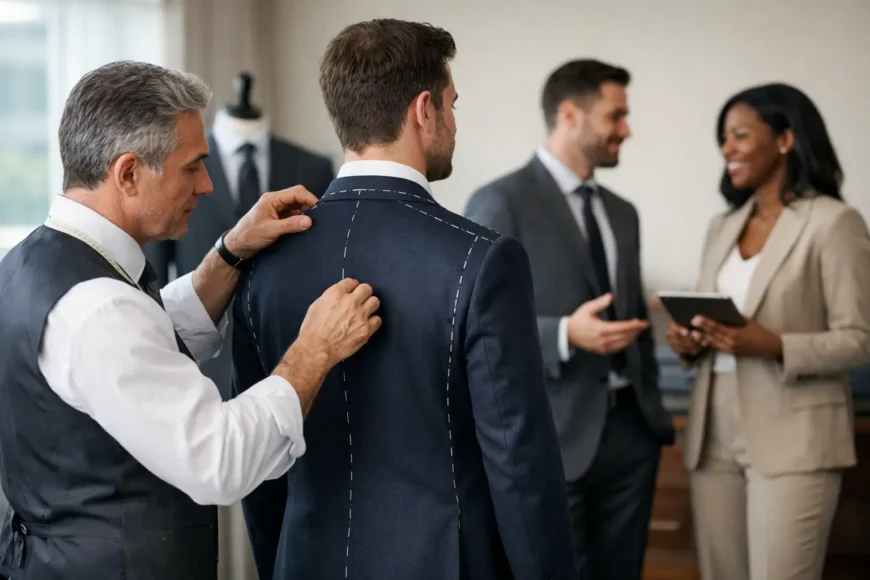
A suit that pulls across the shoulders, breaks awkwardly at the trouser hem, or looks different on every employee weakens a professional image before a word is spoken. This made to measure suits guide is designed for business leaders who need staff attire to look refined, feel comfortable through long working days, and represent the organization consistently.
For corporate offices, hotels, restaurants, financial firms, and client-facing teams, made-to-measure suiting is not simply a personal wardrobe choice. It is a practical investment in presentation, confidence, and brand standards. The right program accounts for individual proportions while maintaining one cohesive visual identity across the team.
A Made to Measure Suits Guide for Business Teams
Made-to-measure suits begin with an established base pattern that is adjusted to an employee’s measurements, posture, and fit requirements. This is different from buying ready-made sizes and making minor alterations afterward. It is also different from full bespoke tailoring, where a pattern is drafted from the ground up for one individual.
For most organizations, made-to-measure offers the strongest balance of fit, consistency, production efficiency, and cost control. Employees receive garments designed around their body shape, while managers retain clear standards for fabric, color, styling, and branding.
The value is especially clear when a team includes a broad range of sizes and builds. Ready-made suits may force some employees to compromise on shoulder fit, jacket length, sleeve length, or trouser rise. Those compromises are visible, and they often affect comfort. A made-to-measure program gives each employee a more credible, natural fit without turning every order into a separate design exercise.
Start With the Role, Not the Suit Style
The best suit is determined by the work being done. A finance team meeting clients in a formal office has different requirements from hotel reception staff standing for extended periods. Restaurant managers may need sharp tailoring with more freedom through the arms, while executive teams may prioritize a structured silhouette for presentations and events.
Before selecting a fabric or lapel, define how the garment will be used. Consider the employee’s level of customer contact, hours of wear, movement throughout the day, indoor and outdoor conditions, and laundering expectations. These details influence every major decision, from jacket construction to trouser fabric weight.
A polished corporate wardrobe also needs hierarchy without visual fragmentation. Senior leaders may wear a more elevated suit construction or distinct styling details, while front-of-house teams use a coordinated blazer-and-trouser combination. The color palette, shirt standard, and finishing details should still make it clear that everyone represents the same organization.
Fit Is the First Measure of Quality
A suit can use excellent fabric and still look unconvincing if the fit is wrong. The shoulders should sit cleanly at the natural shoulder point, with no divots or overhang. The jacket chest should close comfortably without pulling, and the collar should rest against the shirt collar rather than standing away from it.
Jacket length, sleeve length, waist suppression, and vent placement should be selected for the wearer rather than assumed from a standard size chart. For trousers, a proper fit includes the waist, seat, thigh, knee, and hem break. Employees who sit at desks for much of the day may need different ease than staff who are constantly walking, greeting guests, or carrying materials.
Good fitting is also a matter of dignity. When employees feel restricted, exposed, or untidy in their uniform, they are less likely to wear it with confidence. Precise measurements and a fitting review help prevent common issues before full production begins.
Plan for fitting consistency at scale
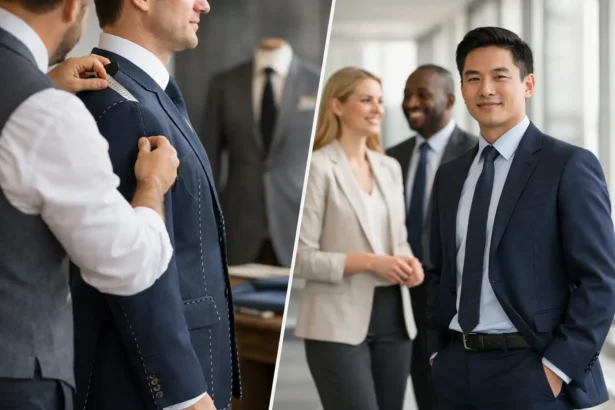
For a team order, measurement should follow a documented process. Measurements need to be taken by trained fitters, recorded consistently, and checked against the selected garment block. A fitting sample or first-piece review is valuable for larger teams because it confirms that the agreed style works in real conditions.
This stage should not be rushed. Small adjustments to sleeve length, trouser rise, jacket waist, or skirt length can significantly improve comfort and appearance. It also creates reliable records for future onboarding, replacement garments, and repeat orders.
Choose Fabrics for Performance, Not Just Appearance
Fabric selection affects how a suit drapes, breathes, resists wrinkles, and survives repeated wear. For business uniforms, appearance matters, but durability and maintenance matter just as much. A fabric that looks luxurious in a showroom may not be the best choice for an employee who wears it five days a week.
Wool blends are often a strong option for corporate suits because they offer a professional drape, breathability, and resilience. Blends with performance fibers can add durability and wrinkle resistance, which is useful for hospitality, sales, and travel-facing roles. Lightweight fabrics are often preferable in warm climates or active workplaces, while a slightly heavier cloth can provide more structure in highly formal settings.
Color should support the brand while remaining practical. Navy, charcoal, black, and mid-gray are established choices because they photograph well, coordinate easily, and maintain a formal appearance. However, the right shade depends on the surrounding environment, lighting, and brand palette. A very dark suit can feel authoritative in a corporate office but may look severe in a wellness clinic or relaxed hospitality setting.
Ask how the garment will be cleaned, pressed, stored, and replaced. Fabric decisions should consider the entire life of the uniform, not only the first day it is worn.
Build Brand Recognition Into the Details
A corporate suit should look intentional even when an employee is not wearing a name badge. The strongest branding is often subtle: a selected lining color, contrast piping, custom buttons, a coordinated pocket square, or an embroidered logo placed where it remains refined and durable.
Over-branding can make formal attire look promotional rather than premium. A large logo may suit event staff or casual uniforms, but executive and client-facing suiting usually benefits from restraint. The goal is recognition without compromising the garment’s professional character.
Consistency also extends beyond the jacket. Shirts, blouses, trousers, skirts, scarves, ties, and belts should work together as a complete system. A well-designed program gives employees enough flexibility to feel comfortable while avoiding the inconsistent appearance that comes from individually sourced items.
Select Construction That Matches Daily Use
Suit construction influences shape, weight, longevity, and price. A more structured jacket provides a formal silhouette and can be appropriate for leadership teams, financial services, and high-level client meetings. A softer construction may feel lighter and allow more movement, making it a better fit for hospitality teams and employees who spend much of the day on their feet.
There is no single best construction for every organization. The right choice depends on wear frequency, climate, role, budget, and the desired level of formality. What matters is that the construction supports the purpose of the uniform rather than adding cost for details employees will not benefit from.
Durable internal finishing, reliable seams, quality buttons, and carefully reinforced stress points are essential for professional garments. These details are rarely the first things a customer notices, but they are often what determine whether a uniform continues to look polished after months of wear.
Manage the Order as a Long-Term Uniform Program
A made-to-measure suit order works best when treated as an ongoing program rather than a one-time purchase. Establish clear standards for approved fabrics, garment styles, branding placement, and fit records. This makes future orders more efficient and helps new employees join the team without disrupting the visual standard.
It is also wise to plan for turnover, promotions, seasonal needs, and replacement cycles. Some organizations maintain a small reserve of common items, while others schedule periodic fitting days for new hires. The right approach depends on team size and staffing patterns, but both options reduce last-minute purchasing and inconsistent substitutes.
At Velcoor, the process is built around consultation, precise fitting, fabric selection, custom branding, and dependable production support. That approach allows organizations to create attire that reflects their standards while giving employees garments they can wear comfortably and confidently.
A well-made suit should do more than make an employee look prepared. It should make the business look considered, credible, and consistent at every client meeting, guest interaction, and professional occasion.