English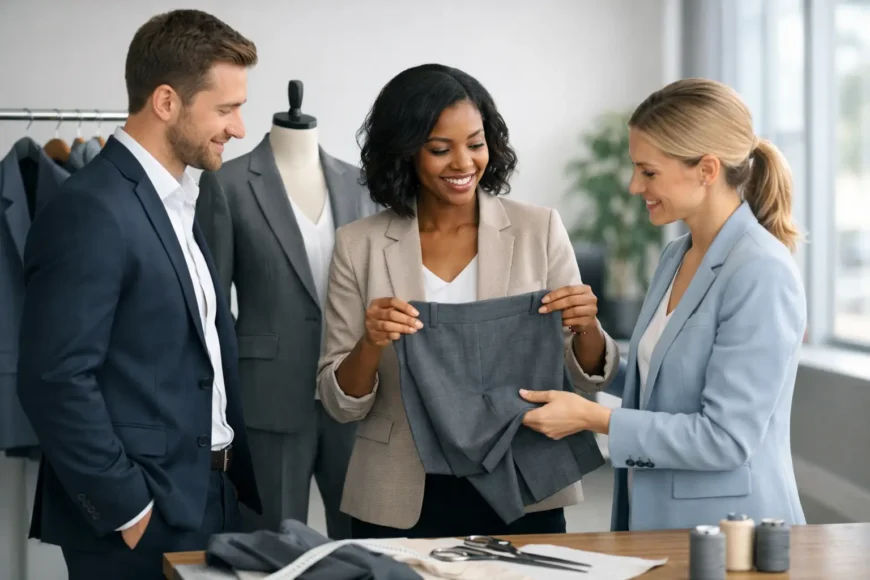
A staff uniform can look excellent in a concept presentation and still fail the people expected to wear it for nine hours. A jacket that pulls at the shoulders, a shirt that turns transparent under office lighting, or pants that restrict movement quickly weaken employee confidence. Office wear tailoring for teams solves this practical business problem by treating professional apparel as part of operations, not an afterthought.
For companies that take their presentation seriously, tailored office attire creates a standard employees can wear with comfort and pride. It aligns departments, supports brand recognition, and gives clients a clear first impression before a conversation begins. The right program balances visual consistency with the realities of different body types, job duties, climate conditions, and work environments.
Why office wear tailoring for teams matters
A coordinated team signals discipline. In a corporate office, this may mean fitted blazers, crisp shirts, and trousers in a controlled color palette. In hospitality, it may mean polished front-of-house uniforms that remain comfortable through long shifts. In healthcare administration or a client-facing clinic, it may mean professional garments that are easy to maintain and appropriate for frequent movement.
Ready-made apparel can appear convenient at the start, particularly for a small order. The trade-off is often inconsistent sizing, limited fabric choices, and an appearance that feels generic rather than intentional. When employees have noticeably different fits or are forced into standard sizes that do not suit them, the team loses the composed image the clothing was meant to create.
Tailoring gives businesses more control. Measurements can be taken across the team, patterns can be adjusted for comfort, and each garment can retain the same design language. The result is a professional look that does not ask every employee to fit one rigid template.
Start with the role, not the garment
The most effective uniform project begins by defining what each team member does during a typical day. A receptionist, a sales consultant, a hotel manager, and a restaurant supervisor may all need formal clothing, but their performance requirements are different.
Reception and front-desk personnel benefit from garments that look composed while allowing comfortable sitting and standing throughout the day. Sales and executive teams often need structured pieces that maintain their shape during meetings, travel, and client visits. Operational supervisors may require greater ease through the shoulders, waist, and knees. A design that looks refined on a mannequin is not necessarily suitable for a role involving constant movement.
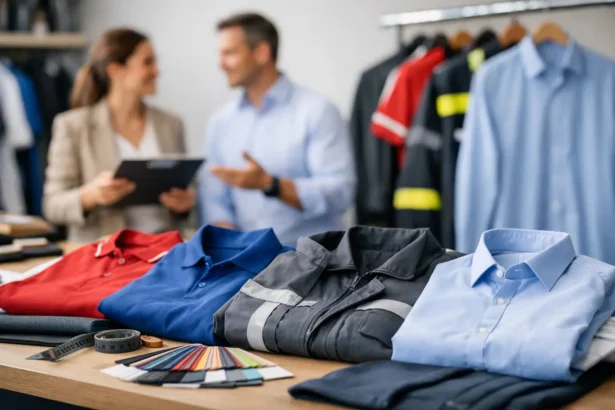
This is why a single uniform for every department is not always the right answer. A cohesive collection can use shared colors, trims, logos, and fabrics while offering role-appropriate pieces. For example, a company may choose matching navy blazers and branded shirts for client-facing staff, with more flexible pants and lighter layers for employees who move between office, site, and service areas.
Define the level of formality
Before selecting fabrics or finalizing cuts, establish how formal the organization needs to look. Financial services, legal offices, premium hospitality brands, and executive-facing teams may require suits or blazers with a sharper structure. Creative offices and modern service businesses may prefer tailored shirts, overshirts, dresses, or smart separates that feel more approachable.
The key is consistency. A formal brand does not need every employee in identical suits, but it should avoid a mix of unrelated colors, fits, and garment styles. Similarly, a relaxed workplace should not confuse casual with careless. Tailored garments provide shape and intention at every level of formality.
Choose fabrics for daily performance
Fabric selection affects comfort, durability, garment care, and the way employees feel at work. It should be discussed early, not treated as a final decorative choice. A fabric may have the right color and texture but be unsuitable if it traps heat, wrinkles heavily, fades after repeated washing, or cannot withstand the demands of the role.
For office environments, breathable blends are often practical because they provide a clean appearance with manageable care requirements. Structured suiting fabrics create a more formal silhouette, while stretch components can improve mobility for teams that spend long periods sitting, walking, or greeting customers. Shirt fabrics should hold their shape and remain comfortable against the skin, especially in warm conditions.
There is no universal best fabric. A premium wool blend may be appropriate for executive suiting and high-end hospitality, while a durable poly-cotton or performance blend may better serve a large customer-service team that needs frequent laundering. The right decision depends on wear frequency, climate, maintenance capacity, and the image the company wants to project.
Build durability into the specification
Daily professional wear receives far more use than occasional formal attire. Reinforced seams, reliable closures, quality linings, and colorfast materials make a meaningful difference over time. These details are rarely the first things clients notice, but employees notice them immediately when a button loosens, a seam twists, or a garment loses its structure after a few washes.
A well-specified uniform program also considers replacement planning. New hires, role changes, and normal wear are part of business growth. Keeping core fabrics, colors, and design specifications documented helps maintain consistency when additional garments are needed later.
Make branding feel integrated, not added on
A logo can strengthen a uniform, but placement and execution matter. Oversized branding may feel promotional rather than professional, particularly in corporate, healthcare, or premium hospitality settings. Subtle embroidery on a chest pocket, sleeve, collar, or blazer can create recognition while preserving a refined appearance.
Brand alignment goes beyond the logo. Color choices, button finishes, contrast piping, collar styles, and garment cuts all communicate something about the organization. A luxury hotel may choose restrained tones and elegant finishing. A restaurant group may use a distinctive accent color that helps staff remain recognizable in a busy dining room. A corporate office may favor understated neutrals that support credibility across client meetings.
Customization should support the brand’s identity, not compete with it. A consultation-led approach helps companies choose the details that will remain appropriate as the business grows and the uniform is worn across multiple locations or departments.
The fitting process protects the investment
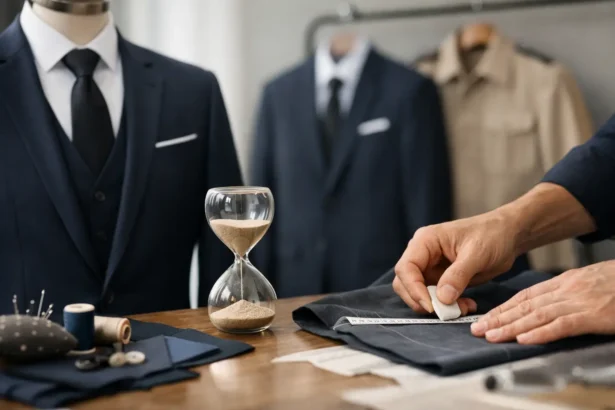
Fitting is where a tailored program becomes visibly different from a bulk apparel purchase. Accurate measurements allow garments to sit properly at the shoulders, chest, waist, hips, and inseam. Small adjustments can change how confidently an employee carries the garment and how polished the entire team appears.
For larger teams, organization is essential. Measurements should be scheduled efficiently, employee preferences should be recorded where relevant, and sample garments should be reviewed before full production. This reduces avoidable size issues and gives decision-makers the opportunity to assess the collection in real conditions.
It is also wise to consider inclusivity from the beginning. Teams need options that respect different body shapes, modesty preferences, and functional needs without fragmenting the company image. Offering complementary cuts, rather than forcing one silhouette on everyone, is usually a better route to both comfort and consistency.
Treat uniforms as a business standard
Professional apparel performs best when employees understand the standard behind it. Clear guidance on what to wear together, how to care for garments, and when items should be replaced protects the look the company has invested in. This need not be restrictive. It simply gives teams confidence that they are representing the business correctly.
Velcoor approaches corporate tailoring as a complete presentation system, bringing together consultation, fabric selection, measurement, custom design, branding, and production. That level of coordination is particularly valuable for businesses that want a reliable result across a varied team rather than a collection of individual purchases.
The right office attire should make employees feel prepared the moment they put it on. When fit, function, fabric, and brand identity are considered together, the uniform becomes a quiet but persuasive part of every client interaction.