English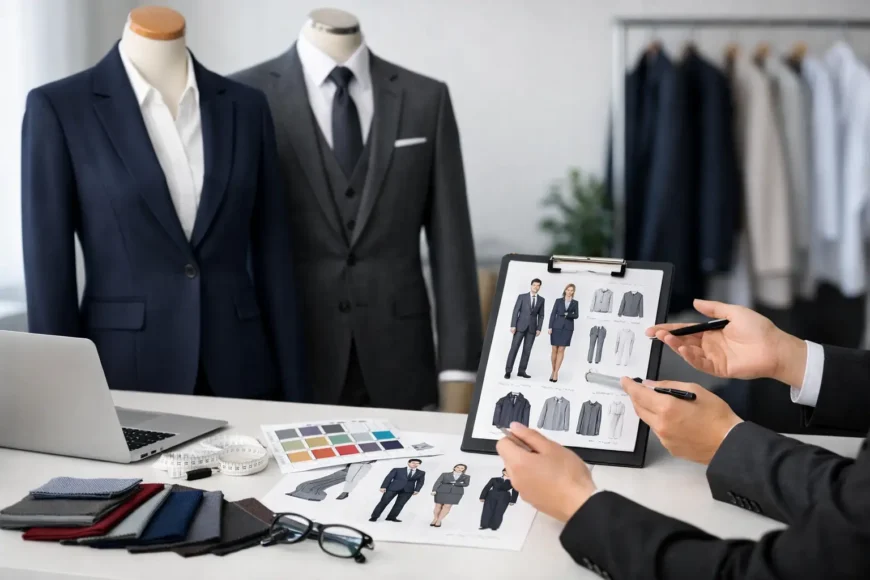
When a front desk team wears three different shades of navy, a restaurant manager keeps adjusting an ill-fitting blazer, or a clinic staff struggles with fabric that traps heat through a full shift, the issue is not just clothing. It is brand presentation, employee comfort, and day-to-day performance. That is exactly why a corporate uniform design service guide matters for businesses that want staff apparel to work as hard as their people do.
Uniform decisions often get pushed into procurement too late, as if they are a simple order of shirts or jackets. In practice, good uniform design is closer to brand planning combined with technical garment development. The best result is not the cheapest item that matches a logo. It is a coordinated system of garments built around role, industry, environment, and appearance standards.
What a corporate uniform design service should actually cover
A true corporate uniform design service goes far beyond supplying standard ready-made pieces. It should begin with consultation, because a hotel concierge, a finance executive, and a healthcare administrator do not need the same silhouette, fabric weight, or finishing details. Their uniforms serve different purposes, and the garments need to reflect that.
The design process should account for brand identity first. That includes color alignment, dress code level, logo placement, and the overall visual message the business wants to send. A premium hospitality brand may need tailored blazers and crisp shirts that communicate refinement. A restaurant group may need more flexibility between front-of-house polish and back-of-house practicality. A clinic may prioritize breathable, easy-care fabrics with a clean and reassuring appearance.
From there, the service should move into garment planning. This means deciding which pieces are needed across departments, how they coordinate, and what level of fit customization makes sense. For some organizations, a made-to-measure approach for client-facing teams is the right investment. For others, a blended model with graded sizing and selected fit adjustments is more efficient.
Start with function, not just appearance
Many businesses begin with the question, “What should the uniform look like?” A better first question is, “What does the uniform need to do?” This changes the quality of every decision that follows.
A blazer worn in an air-conditioned corporate office can be more structured than one used in a busy hotel lobby where movement is constant. Shirts for restaurant service staff need to maintain a sharp appearance through repeated washing and long shifts. Trousers for administrative teams may prioritize shape retention, while healthcare uniforms may demand softer hand feel, breathability, and easier maintenance.
This is where trade-offs matter. A fabric that looks luxurious may wrinkle faster. A heavily structured jacket may appear more formal but feel restrictive during active service. A lighter fabric may improve comfort in warmer climates, but it may not hold the same crisp line as a denser weave. Good uniform design weighs these details early, before production begins.
The role of fit in professional image
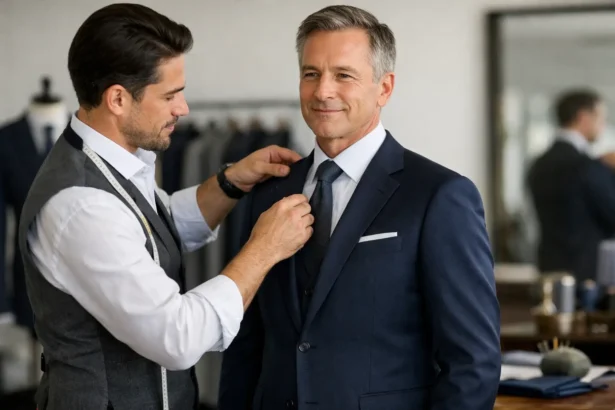
Fit is one of the biggest differences between a basic uniform order and a serious image-building program. Even strong fabrics and excellent branding details lose impact when garments pull at the shoulders, sag at the waist, or create inconsistent silhouettes across the team.
For businesses with client-facing staff, fit affects perception immediately. A well-cut suit or blazer suggests discipline, confidence, and attention to standards. That matters in finance, hospitality, executive offices, and premium retail environments where trust is shaped by visual cues before a word is spoken.
Fit also affects employee experience. Staff are more likely to wear uniforms properly when those garments feel balanced and comfortable. That means enough ease for movement, sleeve and hem proportions that look intentional, and sizing that respects real body variation across a team. A professional uniform program should never assume one pattern shape will suit everyone equally.
Fabric selection is where many uniform programs succeed or fail
In any corporate uniform design service guide, fabric deserves more attention than it usually gets. Decision-makers often focus on style first, but performance comes from fabric choice.
The right fabric depends on use case. Hospitality uniforms often need durability, crease resistance, and comfort under long hours. Corporate suiting may require a more refined finish with shape retention and a polished drape. Restaurant apparel usually benefits from practical weaves that handle frequent laundering while still presenting well during service. In warmer conditions, breathability becomes especially important.
Fabric selection should also reflect maintenance realities. If the team cannot reasonably care for the garment, the design is not practical. Dry-clean-only pieces may suit some executive environments, but they are often not ideal for larger operational teams. Easy-care fabrics can reduce replacement frequency and simplify uniform management, provided they still meet the expected visual standard.
Branding details should be deliberate
A logo on a shirt does not automatically create strong brand identity. The details need to be considered as part of the garment, not added as an afterthought.
Embroidery, printing, piping, button choice, lining color, contrast panels, and collar details all influence the final impression. Subtle branding often works better than excessive branding, especially in formal sectors. A well-placed embroidered mark on a blazer chest or shirt sleeve may communicate far more sophistication than oversized graphics.
At the same time, visibility requirements vary by industry. Some businesses want immediate recognition from across a lobby or floor. Others need a quieter, more executive presentation. The right choice depends on brand personality, customer interaction, and the formality of the setting.
One uniform rarely fits every department
A common mistake is trying to force all employees into one identical look, even when roles differ significantly. Consistency matters, but so does role-specific design.
A strong program usually creates a coordinated uniform family rather than a single garment formula. Front desk staff may wear tailored blazers, shirts, and trousers or skirts. Supervisors may have elevated details or alternate jacket styles. Operational staff may need more movement, easier care, or weather-appropriate versions. The visual system stays unified, but the garments are adapted to actual work.
This approach usually produces better compliance and a stronger appearance. Employees feel appropriately dressed for their role, and the business still presents a cohesive image.
What to expect from the design and production process
A reliable provider should guide the project in stages. Consultation comes first, followed by style direction, fabric selection, branding decisions, sizing strategy, and fit review. Sampling is often where important refinements happen. A collar may need adjustment, a fabric may need a different weight, or a trouser cut may need more ease for movement.
After approval, production should be controlled and consistent. That includes pattern accuracy, stitching quality, color consistency, and dependable finishing. For larger teams, size records and reorder capability become especially valuable. Uniforms are not a one-time event. Teams grow, staff change, and replacement cycles need to be manageable.
This is where working with a consultative specialist makes a measurable difference. A company like Velcoor supports businesses through design, fitting, customization, and production with a level of precision that generic uniform supply models often cannot match.
How decision-makers can evaluate a uniform partner
The right partner should be able to discuss more than pricing. They should ask about your brand, work environment, staff functions, laundering realities, and image goals. If the conversation begins and ends with a product catalog, the service is probably too limited for businesses that care about presentation.
Look for evidence of fabric range, fitting capability, customization options, and sector understanding. Ask how they handle team sizing, repeat orders, logo application, and style consistency across different garments. If your organization has both formal and operational roles, ask how they would build a coordinated program rather than a single-item order.
It is also reasonable to ask about timelines and minimums early. A highly customized project offers better brand alignment, but it may require more planning than off-the-shelf supply. For most businesses, that trade-off is worthwhile when the uniform is central to customer experience and internal standards.
Why this investment pays back over time
A well-designed uniform does more than make teams look polished. It improves consistency across locations, supports stronger first impressions, and helps employees feel part of a professional organization. It can also reduce the hidden costs of poor purchasing decisions, including premature replacement, employee dissatisfaction, and inconsistent brand presentation.
For businesses in hospitality, healthcare, dining, and corporate environments, uniforms are part of operations. They affect how staff move, how customers perceive service, and how the brand is remembered. That is why the right approach is not to buy garments quickly. It is to design them carefully.
When uniform choices are built on fit, fabric, function, and branding, the result is not just apparel. It is a visible standard your team can wear with confidence every day.