English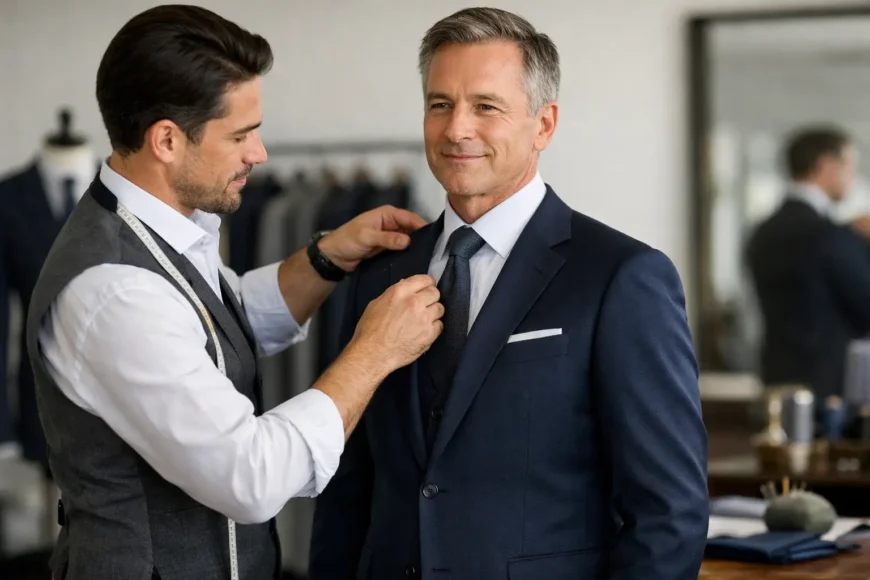
A staff member’s appearance communicates before the first greeting, consultation, or handshake. Corporate tailoring services give businesses control over that first impression, replacing mismatched off-the-rack clothing with professional apparel designed around the people wearing it and the brand they represent.
For hotels, clinics, financial firms, restaurants, and corporate offices, a uniform is not simply a dress code. It is a visible operating standard. When garments fit well, hold their shape, and reflect a consistent visual identity, employees look more prepared and customers feel more confident in the business behind them.
Why Corporate Tailoring Is a Business Decision
Ready-made garments can appear convenient at the point of purchase, but they often create problems once they reach the workplace. Different body types, inconsistent sizing between brands, limited color options, and fabrics that lose their structure after repeated washing can leave a team looking uneven. These issues are especially noticeable in customer-facing roles, where employees represent the company throughout the day.
A tailored corporate apparel program addresses those challenges at the source. It considers fit, function, fabric performance, brand colors, job requirements, and the practical realities of daily wear. The result is a coordinated wardrobe that supports both employee comfort and brand presentation.
The value is not limited to formal suits. A front desk team may need polished blazers and shirts that remain comfortable through long shifts. Restaurant staff may require breathable, stain-conscious fabrics with clear role identification. Healthcare administrators may need professional uniforms that are easy to maintain while allowing unrestricted movement. Each environment calls for different construction and material choices.
That is why the right solution depends on the role, not just the logo. A single uniform style for every department may be appropriate for a small office, while a larger organization often benefits from a coordinated collection with different garments for reception, management, service, and operations teams.
What Professional Corporate Tailoring Services Should Include
A strong corporate tailoring partner does more than take an order for shirts or blazers. The process should begin with consultation. Before fabric samples or sketches are selected, the provider needs to understand the organization’s industry, team size, work environment, visual guidelines, budget range, and expected wear frequency.
Design That Supports the Brand
Professional apparel should look like it belongs to the business, not like a generic uniform with a logo added at the end. Design choices such as lapel style, shirt collar, piping, button finish, skirt length, and color blocking can all reinforce a company’s character.
A finance or legal team may favor restrained tones, structured jackets, and classic silhouettes that project authority. A hospitality brand may require warmer colors and more distinctive details that align with its guest experience. For restaurants and cafés, contemporary cuts and practical aprons can make the uniform feel intentional without losing functionality.
Custom embroidery and printing add another level of recognition, but placement matters. A logo should be visible without overwhelming the garment. Thread color, scale, and positioning should remain consistent across shirts, blazers, outerwear, and accessories to maintain a disciplined brand image.
Fabric Chosen for Daily Performance
Fabric selection is one of the most consequential decisions in a corporate apparel project. A garment can look excellent at fitting and still disappoint if the fabric is too warm, wrinkles easily, fades quickly, or lacks enough stretch for active roles.
The best choice depends on the working conditions. Breathable blends can suit teams in warm climates or high-movement environments. Structured suiting fabrics provide a sharper silhouette for executive and client-facing roles. Easy-care materials may be more practical for teams whose garments require frequent laundering. In many cases, a blended fabric offers the best balance of comfort, durability, appearance, and maintenance.
There are trade-offs. Natural fibers can feel refined and breathable, but some require more attentive care. Synthetic blends can improve durability and wrinkle resistance, though the quality of the blend affects comfort. A professional tailoring consultation should make these choices clear rather than pushing one fabric for every application.
Precise Measurement and Fitting
A polished design loses value when the fit is poor. Sleeves that are too long, trousers that pull at the waist, shirts that gap at the chest, or jackets that restrict movement affect both confidence and comfort. They also create a visibly inconsistent team appearance.
Measure-and-fitting services help account for individual proportions while preserving a unified style. This is particularly important when outfitting a diverse workforce. Employees should not have to choose between a uniform that fits the shoulders and one that fits the waist.
For larger teams, a structured fitting process also reduces administrative frustration. Clear size records, sample fittings, adjustment procedures, and approval checkpoints can prevent avoidable errors before full production begins. This planning is more valuable than rushing into a bulk order based only on standard size charts.
Building a Uniform Program That Works Across Departments
A corporate wardrobe should make it easy for customers to identify who does what while ensuring every role remains connected to the same brand. The most effective programs use consistency as the foundation, then adapt garments to the demands of each department.
A hotel, for example, may use tailored suits or blazers for front office staff, coordinated waistcoats or shirts for concierge teams, and durable workwear-inspired pieces for housekeeping and maintenance. The color palette, logo treatment, and finishing details create continuity, while the garments themselves remain appropriate to the work.
The same principle applies in healthcare and professional services. Administrative teams may wear tailored shirts and trousers, while clinical support staff need more flexible, easy-care uniforms. A cohesive program does not require every employee to wear identical pieces. It requires every piece to feel unmistakably part of the same organization.
This approach also improves procurement over time. When specifications are documented, reorders become simpler and new employees can be added without redesigning the program. Businesses can maintain continuity even as teams grow, locations expand, or seasonal garment needs change.
Questions to Resolve Before Production Begins
The most successful orders are defined before the first garment is cut. Decision-makers should establish whether the apparel is intended for daily wear, special events, client meetings, or a combination of uses. They should also identify who approves the final design and how feedback from employees will be collected during sampling.
Budget should be considered in terms of service life, not only unit cost. A lower-priced garment that loses its color or shape quickly may create higher replacement costs and weaken the professional image it was meant to support. Conversely, investing in premium materials for every role may not be necessary when durable, well-designed blends can meet operational needs effectively.
It is also wise to plan for growth. Ordering only for the current headcount can make future additions difficult if fabric availability changes or specifications were never standardized. A corporate tailoring provider should be able to advise on reorder planning, sizing records, and production consistency from the beginning.
The Difference Craftsmanship Makes
Corporate garments are judged in motion, under workplace lighting, after repeated use, and across many different body types. That is where craftsmanship becomes visible. Clean stitching, properly aligned patterns, stable collars, reinforced stress points, secure buttons, and careful finishing all contribute to how a uniform looks and lasts.
Velcoor approaches professional apparel as part of a company’s visual identity, not as a generic bulk purchase. Through consultation, fabric guidance, customized design, branding options, fitting, and production support, businesses can create attire that is appropriate for their sector and credible in front of the people they serve.
The objective is not to make employees look identical. It is to give every team member clothing that feels considered, performs reliably, and presents the business with confidence. When staff can move comfortably and look polished doing their work, the uniform becomes a practical expression of the standards your organization stands for.