English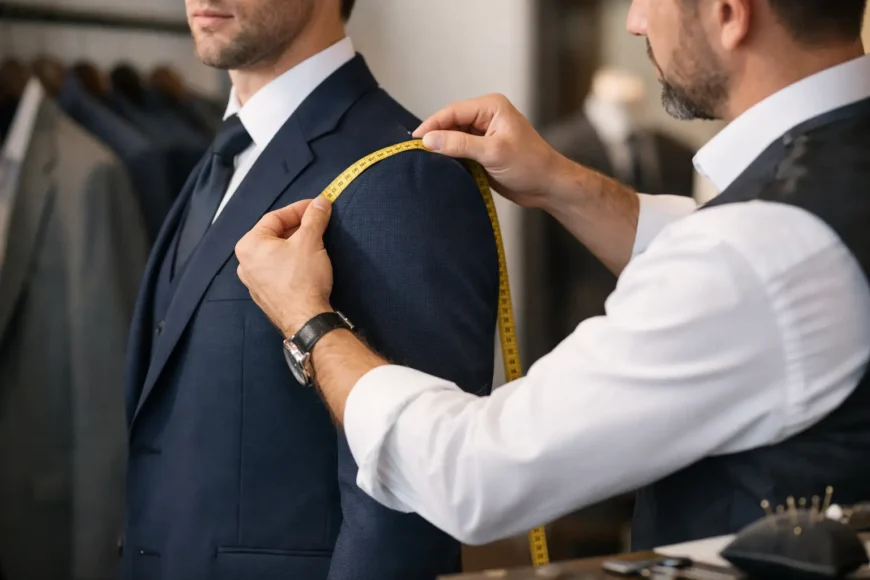
A custom suit can elevate how a team is seen before a word is spoken. In corporate settings, hospitality venues, front-office roles, and executive environments, poor fit sends the wrong message fast. That is why knowing how to measure for a custom suit matters – not only for appearance, but for comfort, mobility, and the consistency of your brand presentation.
A well-made suit does more than follow body dimensions. It has to reflect job function, wearing conditions, fabric behavior, and the level of structure the wearer needs throughout the day. Measuring correctly is the foundation, but good results also depend on understanding what those measurements are meant to achieve.
Why accurate suit measurements matter
When businesses invest in custom tailoring, they are not simply ordering formalwear. They are shaping a professional image that clients, guests, and partners will associate with the organization. A suit that fits cleanly through the shoulders, chest, sleeves, and trousers communicates discipline and credibility. A suit that pulls, sags, or bunches can make even premium fabric look ordinary.
Fit also affects performance. Staff who spend long hours standing, walking, greeting clients, or moving between departments need clothing that looks refined without restricting movement. This is especially relevant for hotels, restaurants, clinics, sales teams, and corporate offices where presentation and practicality must work together.
Before you measure for a custom suit
The measuring process should begin with the right setup. The wearer should stand naturally, not stiffly, in a lightweight shirt and well-fitted trousers. Heavy clothing adds bulk and can distort the final numbers. Shoes also matter, especially when measuring trouser length, because heel height changes where the hem should fall.
Use a soft measuring tape, keep it level against the body, and avoid pulling it too tight. The tape should sit close to the body without compressing it. If the measurement is being taken for a business uniform program rather than a one-off personal suit, consistency is critical. The same method should be applied across all employees so the final garments maintain a uniform standard.
How to measure for a custom suit: the key body measurements
Neck and shoulder measurements
Start with the neck. Measure around the base of the neck where a shirt collar would normally sit. This should feel comfortable, not constricted. A neck measurement that is too tight can affect both shirt collar fit and the way the jacket sits around the upper body.
For the shoulders, measure straight across the back from one shoulder point to the other. This is one of the most important numbers in suit construction because the shoulder line influences the entire silhouette. If the shoulders are too narrow, the jacket will pull. If they are too wide, the suit will look oversized even when the chest and waist are correct.
Chest and waist measurements
The chest should be measured around the fullest part, usually just under the armpits and across the shoulder blades. The wearer should breathe normally and keep arms relaxed. For corporate tailoring, this measurement should allow enough room for natural movement without creating excess volume.
The waist measurement depends on the garment. For a jacket, the natural waist helps shape the body line and define the fit. For trousers, the measurement should be taken where the trousers are intended to sit, which may be slightly below the natural waist for some wearers. This is where fit preferences matter. A higher-rise trouser and a lower-rise trouser require different measurements and produce a different visual effect.
Seat, hip, and jacket length
Measure the seat or hips around the fullest part of the lower body. This is essential for trouser comfort, especially for staff who sit often or move actively during service hours. Skipping precision here often leads to pulling across the back or excess fabric through the legs.
Jacket length is measured from the high shoulder point down to the desired hem. There is no single perfect length for every suit. A more traditional business suit may run longer for a balanced, formal look, while a modern cut may be slightly shorter. The decision should reflect the wearer’s proportions, the workplace, and the image the company wants to project.
Sleeve length and bicep
Sleeve length should be measured from the shoulder seam area down to the wrist bone, with the arm relaxed and slightly bent. A proper jacket sleeve usually allows a small amount of shirt cuff to show. That detail may seem minor, but in professional tailoring it makes a visible difference.
The bicep should also be measured at its fullest point. This is particularly important for wearers who need range of motion throughout the day. A clean sleeve line must still allow lifting, reaching, and natural movement.
Inseam, outseam, thigh, and knee
For trousers, the inseam runs from the crotch down to the desired trouser hem. The outseam runs from the waistband to the hem along the outside leg. Together, these help establish balance, rise, and overall trouser proportion.
Thigh and knee measurements are useful when a more tailored trouser is required. In business settings, this becomes important because many teams want a sharp silhouette without a tight fit. Slim does not always mean practical. The right trouser cut depends on the role, the fabric, and how often the wearer will be on the move.
Measurements alone are not enough
This is where many people misunderstand custom tailoring. Two individuals can share similar body measurements and still need different suit patterns. Posture, shoulder slope, body symmetry, and personal fit preference all influence the final result.
For example, a hospitality manager who spends the day walking the floor may need more ease through the back and armhole than an executive who is mostly office-based. A clinic administrator may prioritize breathable fabric and comfortable movement, while a front-desk team may require a more structured appearance to reinforce a premium brand image. The measurement process must account for these realities.
Common mistakes when measuring for a custom suit
One of the most common mistakes is measuring over bulky clothing. Another is pulling the tape too tightly in an attempt to achieve a slimmer fit. That usually creates the opposite result because the final garment becomes restrictive and strains at key points.
Another issue is ignoring posture. If a wearer naturally leans forward, stands with rounded shoulders, or has one shoulder lower than the other, a basic tape measure reading will not tell the full story. This is why experienced tailoring consultation adds so much value. Good measuring is technical, but good fitting is interpretive.
Businesses also run into problems when they treat every employee as if one fit model will work for all. Team uniforms and custom suits should look consistent, but consistency does not mean identical shaping. It means every wearer looks polished within a shared visual standard.
How professional fitting improves business image
For organizations, the return on custom tailoring is not limited to appearance. Better fit typically means better wearer confidence, fewer complaints, more consistent presentation, and stronger brand alignment across departments. It can also reduce replacement issues caused by strain, poor movement allowance, or garments that employees avoid wearing because they feel uncomfortable.
When a company measures carefully and fits garments with intention, it creates a more credible visual identity. Clients notice when a hotel team looks coordinated, when a restaurant front-of-house staff appears sharp, or when office personnel present a clean, unified standard. Those details support trust.
This is especially true when suits are part of a wider corporate wardrobe that may include blazers, shirts, trousers, skirts, or branded uniform elements. The tailoring process should support the business as a whole, not just the individual garment.
When to rely on a tailoring partner
If the goal is a single personal suit, basic self-measurement may be enough to start the conversation. If the goal is outfitting a team, launching a new uniform program, or refining a company image, professional measurement and fitting are the safer choice.
An experienced tailoring partner does more than record numbers. They assess role-specific requirements, fabric suitability, wear frequency, maintenance expectations, and how the finished suit should represent the brand. Velcoor approaches this process as part of a larger image-building service, helping businesses align fit, fabric, and customization with the standards they want their teams to reflect.
That kind of support is especially valuable when different departments need different levels of formality, when body types vary widely across staff, or when garments must balance premium presentation with daily durability.
A better fit starts with better intent
Learning how to measure for a custom suit is a useful first step, but the best results come from treating measurement as part of a broader professional standard. A suit should not only fit the body. It should fit the role, the environment, and the impression your business wants to leave. When those elements come together, tailoring stops being a clothing decision and starts becoming a business asset.